The legal history of the United States is full of laws designed to exclude and segregate the racialized other. This reading list recommends scholarship that sheds light on that history.


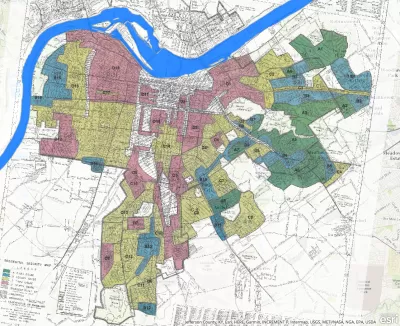
Desiree Valadares presents a reading list that explores "the law’s historical role in the constitution of space, place, the body, and various other modalities of belonging in the U.S."
"The focus lies primarily on integrating legal history texts into architectural scholarship to examine race (and its intersections) and to trace changing legal notions of property, territory, nationhood, and citizenship," explains Valaderes.
Reading recommendations on two themes, exclusion and segregation, follow.
The first theme, Exclusion, is concerned with the ways in which the Right of First Possession, Trespass Laws, Vagrancy Laws, Nuisance Laws, Zoning and Eviction excludes and “others” undesirable groups.
The second, Segregation, looks at Alien Land Acts, Zoning Laws, Restrictive Covenants, Historic Districting, Redlining, Utility Easements, and Right-of-Way isolates and divides space.
FULL STORY: Race, Space, and the Law

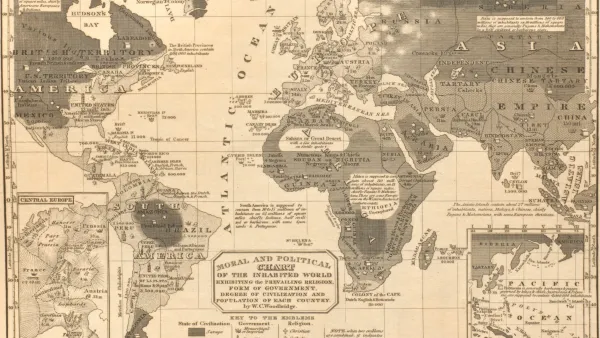
The Pseudoscientific Foundations of Racist Planning Practices
Racist and colonialist narratives in old geography textbooks help explain the prevalence of segregationist and discriminatory policies and other nasty planning practices. It’s time to understand and reconcile.
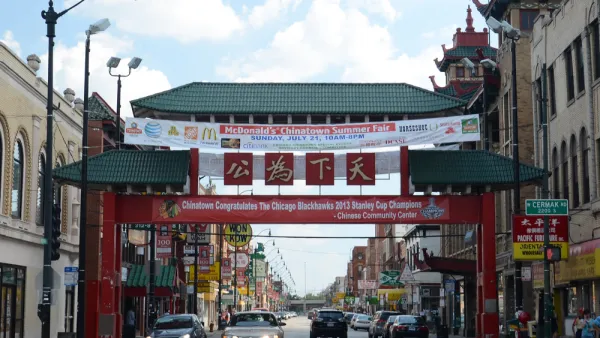
In Defense of Asian American Neighborhoods
How do you address a history of anti-Asian housing discrimination? Not by destroying Asian American communities.
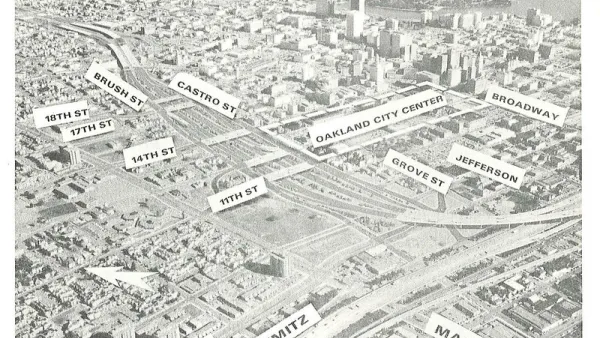
Removing Urban Highways Can Improve Neighborhoods Blighted by Decades of Racist Policies
More money from the infrastructure bill now moving through Congress should go toward dismantling racist infrastructure in the United States, according to this article.

Planetizen Federal Action Tracker
A weekly monitor of how Trump’s orders and actions are impacting planners and planning in America.

The state-sanctioned urbicide of Austin
People don’t kill cities. Freeways do.

US to reduce Colorado River water deliveries to Mexico
A new Colorado Treaty amendment reduces Mexico’s Colorado River water allocation by 250,000 acre feet.

Baltimore to break ground on $50 million Transit Priority Project
The project will bring faster bus trips, safer streets and better bike connections to Baltimore.

Airbnb launches $250 million 'last-dollar financing' housing accelerator, makes first investment in Austin
The company will put $6.4 million towards affordable housing development in Texas’ capital.

Guerilla urbanists are building DIY bus stop benches in Chicago
A before-and-after of one of the bus stops with a new bench. The new benches are not officially sanctioned or permitted, but the residents who placed them hope they will be the start of a network of DIY benches across the city.

FREE Course: Walkable City 1: Why Walkability?
After describing his path towards focusing on walkability as the essence of good planning, Jeff Speck marches through his five principal reasons for making more walkable places.
Reinventing Malls: Planning Alchemy—Turning Gray Fields Into Gold
The course focuses on the opportunities and imperatives that shape reinvention of mall sites.

Eagle County Government
Harvard University Graduate School of Design
Nashville Planning Department
The Architects Foundation
University of Cincinnati Online
The Pocatello Development Authority
The Urban Renewal Agency of the City of Pocatello
Journal of the American Planning Association