Thousands of news residents and apartment units, along with almost a billion dollars of development investments, arrived in Downtown Minneapolis in 2017.



"Downtown Minneapolis is now home to nearly 50,000 people, thanks to newcomers who have moved into apartment towers rising from the Mill District to the North Loop to Loring Park," reports Miguel Otárola. The area's population jumped by 14.5 percent in 2017, the largest jump in more than a decade, but growth has been steady for years.
Otárola details the large developments giving residents new housing options—mostly at the upper end of the market. An article from May 2018 describes the market in Loring Park as a building boom. "About half of the $1.8 billion in new construction permits were issued in downtown wards, according to the association. Currently, 2,321 apartment rental units are under construction," according to Otárola.
The next step in Downtown's evolution, according to stakeholders and local politicians, are more retail and entertainment offerings. Steve Cramer, president and CEO of the Downtown Council, is quoted in the article saying he expects new downtown residents to demand more park and open spaces as well.
FULL STORY: Almost 50,000 people now calling downtown Minneapolis home


Portland Adjusts Residential Infill Plan to Minimize Displacement
Portland wants to add density but doesn't want to displace current residents of low- and middle-income neighborhoods.
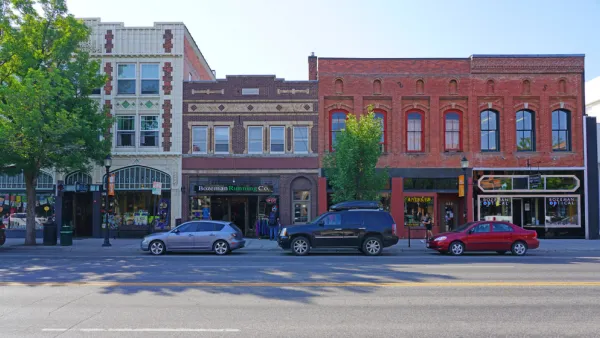
Small Towns Prioritize Main Street for Economic and Population Growth
Downtown revitalization can be a small town planning priority too.
Apartment Units Fill Fastest in Seattle
Demand for housing in and around Seattle is way up—so much so that the region led the entire country in the number of apartments it has filled so far this year.

The state-sanctioned urbicide of Austin
People don’t kill cities. Freeways do.

US to reduce Colorado River water deliveries to Mexico
A new Colorado Treaty amendment reduces Mexico’s Colorado River water allocation by 250,000 acre feet.

New Jersey’s second-largest city bans standalone data centers
Jersey City will continue to allow co-location facilities, such as those meant for research institutions that store their own data.

Amtrak not solely to blame for New Jersey commuter rail's unreliability, report finds
A new study from the Garden State Initiative found that NJ Transit’s budget grew 20% across a 4 year period, but reliability declined significantly over the same period.

EPA erases limits on planet-warming pollution from power plants
Under Monday’s plan, power plants would still have some limits on how much mercury, arsenic and other contaminants they can emit.

Phoenix announces new on-demand transit service, more frequent RAPID buses
Both new services will launch in October, and are part of Phoenix's Project Effective Access Solutions for Easing Congestion.

FREE Course: Walkable City 1: Why Walkability?
After describing his path towards focusing on walkability as the essence of good planning, Jeff Speck marches through his five principal reasons for making more walkable places.
Reinventing Malls: Planning Alchemy—Turning Gray Fields Into Gold
The course focuses on the opportunities and imperatives that shape reinvention of mall sites.

Eagle County Government
Harvard University Graduate School of Design
Nashville Planning Department
The Architects Foundation
University of Cincinnati Online
The Pocatello Development Authority
The Urban Renewal Agency of the City of Pocatello
Journal of the American Planning Association