Republicans talked about raising taxes to fund infrastructure programs during a U.S. Housing Committee on Transportation and Infrastructure hearing this week.


Despite the President Trump's brevity on the subject of infrastructure in the State of the Union earlier this week, it seemed, for one day at least, that a bipartisan consensus emerged from the president's words.
That is Chris Teale's take on a Thursday hearing of the U.S. Housing Committee on Transportation and Infrastructure, two days after the State of the Union.
"During a Thursday hearing of the House Committee on Transportation and Infrastructure, elected officials from both sides of the aisle said the timing for such a package appears to be perfect, given both parties’ willingness to tackle it, in addition to President Donald Trump mentioning such a plan in his recent State of the Union address," writes Teale.
Public figures testifying before the committee included Los Angeles Mayor Eric Garcetti and former Transportation Secretary Ray LaHood, both of whom testified in favor of raising the federal gas tax as a means for paying for a federal infrastructure program.
"The issue of how to pay for those infrastructure investments has traditionally flummoxed politicians at all levels, especially with the Highway Trust Fund quickly running out of money," writes Teale. "But after an election cycle where Americans at the local and state level favored raising local gas taxes, there appears to be a renewed push to increase the federal gas tax, which has not been touched since 1993."
The committee’s ranking member, Rep. Sam Graves, R-MO, spoke in favor of introducing a Vehicle Miles Traveled (VMT) tax.
Read the full story: 'Stars align' on infrastructure, willingness to up federal gas tax

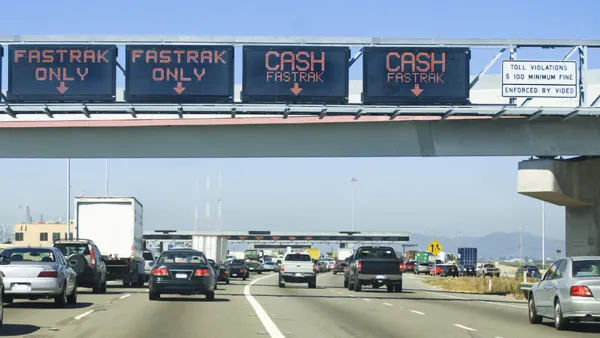
Funding Biden's Infrastructure Plan: Should Users or Corporations Pay?
After determining the size and scope of President Biden's infrastructure package, the next biggest challenge is determining how to pay for it. The partisan divide is steep, but Roll Call exposes division within the Democrats' ranks.
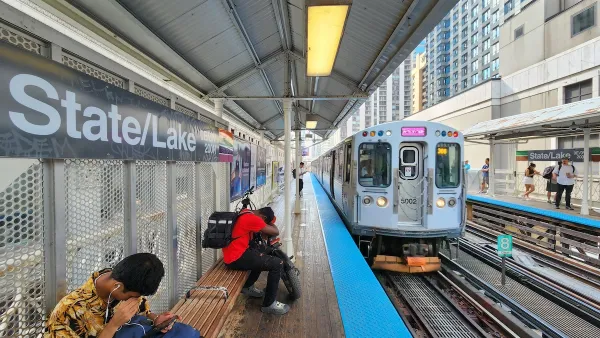
Trump Freezes $2.1 Billion for Chicago Transit and Infrastructure Projects
The administration plans to revoke federal funding over what it calls “discriminatory, illegal, and wasteful contracting practices.”
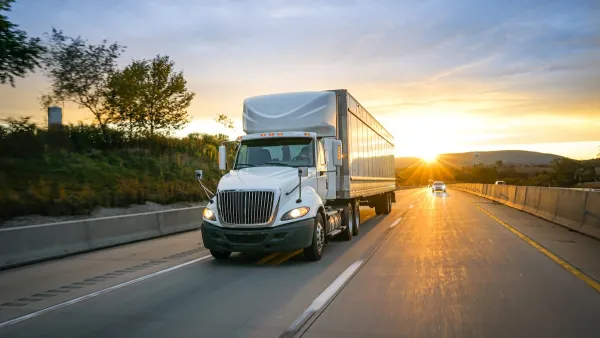
How a Truck Tax Could Save the Highway Trust Fund
The freight trucking industry is a prime candidate for a mileage tax that would boost road maintenance revenue.

Planetizen Federal Action Tracker
A weekly monitor of how Trump’s orders and actions are impacting planners and planning in America.

The state-sanctioned urbicide of Austin
People don’t kill cities. Freeways do.

US to reduce Colorado River water deliveries to Mexico
A new Colorado Treaty amendment reduces Mexico’s Colorado River water allocation by 250,000 acre feet.

Nation's most wind-powered state turns to coal as data centers increase energy demand
For the first time in decades, Iowa has increased its generation of coal power.

NYC cools commuters with city's first rain garden above a bus stop
New York City officials say the plants in the rain garden can absorb 16 gallons of rainwater during heavy storms.

Brightline West’s future may rely on $6 billion federal loan
The company has until Nov. 2 to make a $400 million equity investment into its proposed high-speed rail line.

FREE Course: Walkable City 1: Why Walkability?
After describing his path towards focusing on walkability as the essence of good planning, Jeff Speck marches through his five principal reasons for making more walkable places.
Reinventing Malls: Planning Alchemy—Turning Gray Fields Into Gold
The course focuses on the opportunities and imperatives that shape reinvention of mall sites.

Eagle County Government
Harvard University Graduate School of Design
Nashville Planning Department
The Architects Foundation
University of Cincinnati Online
The Pocatello Development Authority
The Urban Renewal Agency of the City of Pocatello
Journal of the American Planning Association