Hundreds of cars in the system will be going offline in coming years, and the agency is looking at a variety of ideas for what to do with them.


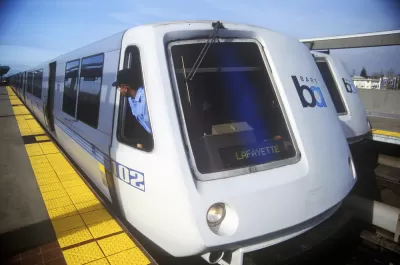
By 2022, about 670 train cars in the Bay Area Rapid Transit system will be replaced with new vehicles, reports Joe Fitzgerald Rodriguez. The BART board of directors is considering a wide array of possibilities for the decommissioned cars.
They could be sold to another operator or for scrap or recycling. The cars also could be repurposed for housing or restaurants. "One party has even reached out to the agency about buying BART cars to use for Airbnb listings," says Rodriguez.
BART could also donate the cars to museums, the military, or schools for training and educational use. Another idea is to donate them for use as homeless or temporary shelters.
Rodriguez notes that the decision on the final destination of the trains might be influenced by the fact that BART will owe the Federal Transit Administration 70 percent of the value of the cars since the FTA helped pay for them. As a result, any donations may end up costing the agency.
Read the full story: Soon-to-be-retired BART cars could become Airbnb hotels, homeless shelters or housing

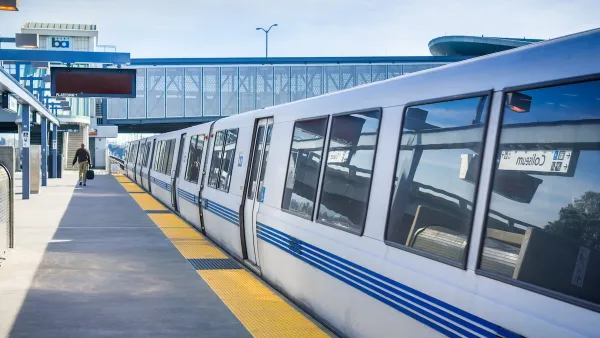
San Francisco’s BART Awarded $545 Loan for Upgraded Rail Cars
The agency plans to modernize its fleet with more efficient rail cars equipped with new safety features.

BART Gets 10 New Rail Cars
Fewer seats and more room for standing commuters are among the updates to the rail cars coming to BART.
BART approves 2027 budget with no cuts, banking on November ballot measure for new funding
The Bay Area transit agency hopes to move forward without service cuts or fare increases.

Planetizen Federal Action Tracker
A weekly monitor of how Trump’s orders and actions are impacting planners and planning in America.

California plans to bury El Niño’s downpour
If the state plays its cards right, it may be able to store a billion acre-feet of El Niño’s water in aquifers.

Chicago breaks ground on $3 billion megadevelopment
The new neighborhood, titled Foundry Park, will one day host 3,700 residences.

California High-Speed Rail Authority CEO resigns after $600,000 scandal
Under Ian Choudri, the authority used taxpayer dollars to fund first class flights and trips to nightclubs.

Want to study the Missouri River? Soon, you may need unanimous approval from 10 states
Legislation would require 10 governors’ permission to study or build projects moving water outside the basin.

Desperate measures: Advocates weigh draining Lake Powell to fill Colorado River
Draining the reservoir could reduce evaporation losses by a couple hundred thousand acre-feet.

FREE Course: Walkable City 1: Why Walkability?
After describing his path towards focusing on walkability as the essence of good planning, Jeff Speck marches through his five principal reasons for making more walkable places.
Reinventing Malls: Planning Alchemy—Turning Gray Fields Into Gold
The course focuses on the opportunities and imperatives that shape reinvention of mall sites.

City of Rosemead
Rutgers University, Edward J. Bloustein School of Planning and Public Policy
One Hundred Miles
Hunter College, City University of New York (CUNY)
The Architects Foundation
University of Cincinnati Online
City of Cambridge
Montrose County
The Pocatello Development Authority