New measures will greatly reduce vehicle traffic in the city center as Oslo moves to put pedestrians, cyclists, and air quality before cars.


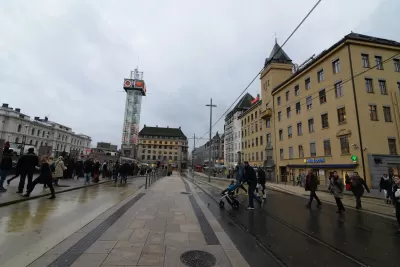
Oslo wants the city to be more pedestrian friendly and environmentally sustainable, and it is restricting vehicle access to the city center, reports Jonathan Wolfe:
The city designated certain streets for pedestrians or public transit only, restricted the ability of nonresidents to drive through the center, and removed hundreds of parking spots from city streets while creating designated parking spots for disabled citizens and businesses that require a car.
The plan to get rid of cars in the city center started in 2015, and officials overcame resistance from business owners concerned that a full ban on cars would lead to a decrease in customers.
Wolfe notes that other cities are also instituting measures to decrease car traffic, promote zero-emissions zones, and improve cycling and pedestrian access. Madrid and London have car bans in place, and Madrid, Paris, Athens, and Mexico City have pledged to ban diesel cars from their city centers by 2025.
FULL STORY: Oslo Puts Up a Stop Sign

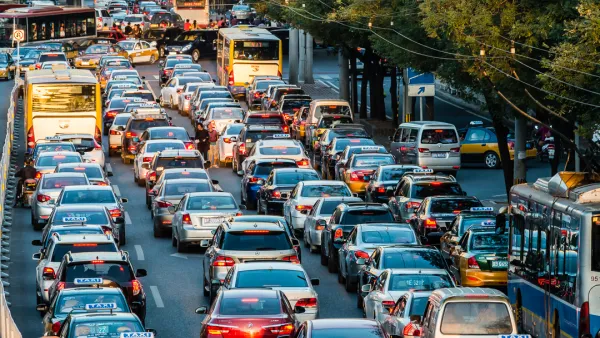
Cities Have Tried to Rein in Cars, and the Results Have Been Mixed
Vehicle pollution is making cities around the world unlivable. Some cities have taken steps to curb auto use and emissions, with varying levels of success.

These Streets Were Made for Walking
Many streets and cities are designed for vehicles instead of for pedestrians. But policies and programs in cities around the world, and even in the United States, might be signaling a shift in priorities.
Car-Free Movement Gaining Steam in Europe and Elsewhere
Athlyn Cathcart-Keays of The Guardian-Cities chronicles the advancement of the international urban car-free movement as well as auto regulations that focus on air pollution. The most recent city to join the growing list is Oslo, Norway

The state-sanctioned urbicide of Austin
People don’t kill cities. Freeways do.

US to reduce Colorado River water deliveries to Mexico
A new Colorado Treaty amendment reduces Mexico’s Colorado River water allocation by 250,000 acre feet.

New Jersey’s second-largest city bans standalone data centers
Jersey City will continue to allow co-location facilities, such as those meant for research institutions that store their own data.

Amtrak not solely to blame for New Jersey commuter rail's unreliability, report finds
A new study from the Garden State Initiative found that NJ Transit’s budget grew 20% across a 4 year period, but reliability declined significantly over the same period.

EPA erases limits on planet-warming pollution from power plants
Under Monday’s plan, power plants would still have some limits on how much mercury, arsenic and other contaminants they can emit.

Phoenix announces new on-demand transit service, more frequent RAPID buses
Both new services will launch in October, and are part of Phoenix's Project Effective Access Solutions for Easing Congestion.

FREE Course: Walkable City 1: Why Walkability?
After describing his path towards focusing on walkability as the essence of good planning, Jeff Speck marches through his five principal reasons for making more walkable places.
Reinventing Malls: Planning Alchemy—Turning Gray Fields Into Gold
The course focuses on the opportunities and imperatives that shape reinvention of mall sites.

Eagle County Government
Harvard University Graduate School of Design
Nashville Planning Department
The Architects Foundation
University of Cincinnati Online
The Pocatello Development Authority
The Urban Renewal Agency of the City of Pocatello
Journal of the American Planning Association