The state of New Jersey makes it difficult, and expensive, to obtain liquor licenses. Some say that policy makes economic development much harder than it could be.


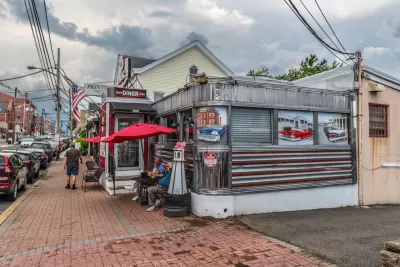
Nicholas Pugliese and Esther Davidowitz report on a political movement to change "New Jersey’s notoriously restrictive laws governing who can sell alcohol."
"Those laws, which date back to the post-Prohibition era, limit municipalities to one liquor license per 3,000 residents. In places where demand is high, licenses can sell for $1 million or more — if they are available at all," according to the article.
Many restaurants in the state allow customers to "Bring Your Own Bottle (BYOB), but many agree that less restrictive liquor license laws would be an economic development win.
The State Legislature has repeatedly come up short in passing laws to loosen liquor license regulations. But, according to the article, "[m]omentum is growing around a proposal from Assemblyman John Burzichelli, D-Gloucester, to let restaurants purchase much cheaper permits to serve alcohol. Existing license holders who suffer losses would be compensated, possibly through state tax credits."
The article also discusses the importance of restaurants and vibrant night life scenes in revitalizing urban neighborhoods. New housing and redevelopment projects would benefit from less restrictive liquor license regulations as well, according to the article.
Read the full story: Liquor licenses in New Jersey cost $350K and it's crippling the state's dining scene

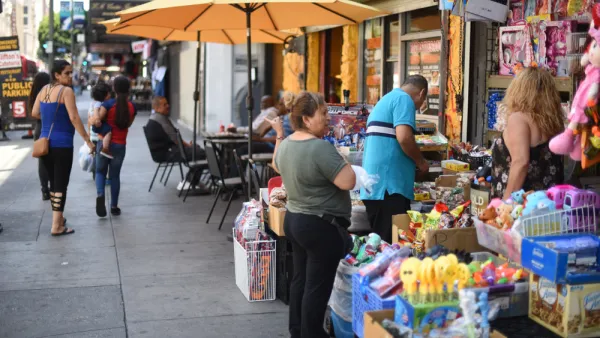
A Sprinkle of Stores: Wrestling With Jacobs's Uncertainty
Jane Jacobs used vague terms to describe the number of stores necessary for a safe and vibrant streetscape. Here, author Fanis Grammenos attempts to discover a more specific number to attach to this prescription.
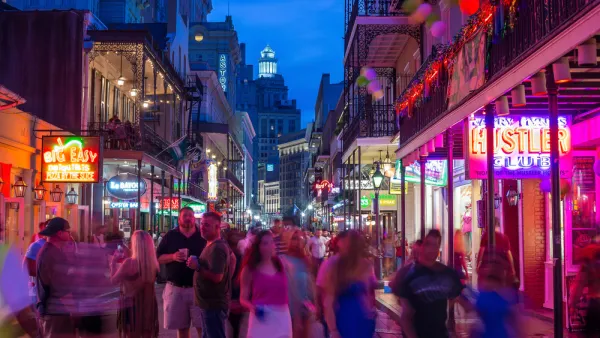
Massive Surveillance Expansion Would Focus on Nightlife in New Orleans
The city of New Orleans wants to watch you party.
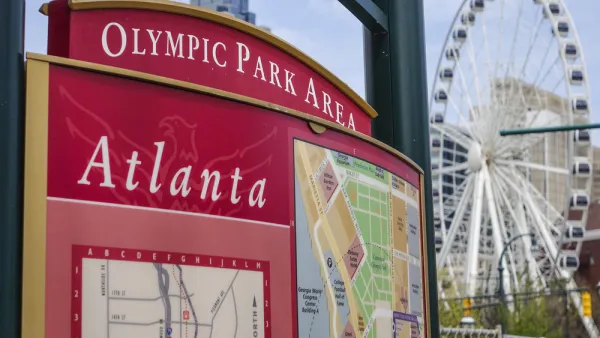
Atlanta to Create New Downtown Sign District
Not everybody has the same definition of vibrant, but Atlanta recently chose the way of Times Square and the Sunset Strip.

Planetizen Federal Action Tracker
A weekly monitor of how Trump’s orders and actions are impacting planners and planning in America.

The state-sanctioned urbicide of Austin
People don’t kill cities. Freeways do.

US to reduce Colorado River water deliveries to Mexico
A new Colorado Treaty amendment reduces Mexico’s Colorado River water allocation by 250,000 acre feet.

Nation's most wind-powered state turns to coal as data centers increase energy demand
For the first time in decades, Iowa has increased its generation of coal power.

NYC cools commuters with city's first rain garden above a bus stop
New York City officials say the plants in the rain garden can absorb 16 gallons of rainwater during heavy storms.

Brightline West’s future may rely on $6 billion federal loan
The company has until Nov. 2 to make a $400 million equity investment into its proposed high-speed rail line.

FREE Course: Walkable City 1: Why Walkability?
After describing his path towards focusing on walkability as the essence of good planning, Jeff Speck marches through his five principal reasons for making more walkable places.
Reinventing Malls: Planning Alchemy—Turning Gray Fields Into Gold
The course focuses on the opportunities and imperatives that shape reinvention of mall sites.

Eagle County Government
Harvard University Graduate School of Design
Nashville Planning Department
The Architects Foundation
University of Cincinnati Online
The Pocatello Development Authority
The Urban Renewal Agency of the City of Pocatello
Journal of the American Planning Association