The Willamette Week put out a call for tips about electric scooter users acting badly. They got an earful of the unexpected.


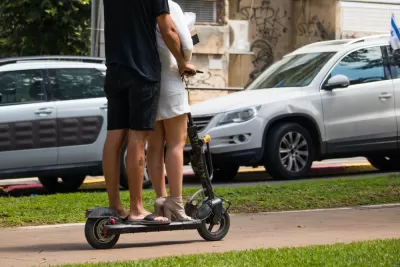
Electric scooters are one of the hottest topics in planning—provoking hand wringing, controversy, and some of the fastest legislating in recent memory. But there's also more and more evidence that the loudest voices of opposition are necessarily in the majority on the issue.
In addition to a game-changing study, published recently by Populous that found evidence of widespread popularity for the new mobility devices, at especially high rates among low-income users and women, there is this mea culpa from Willamette Week.
Last week, dockless electronic scooters arrived by the hundreds on the streets of Portland. These rental scooters have been the target of widespread ire in California cities where they've launched. So WW asked readers on Twitter to send reports of questionable scooting choices to [email protected].
It didn't work.
Instead of stories of scooters gone wild, "[a]lternative transit activists seized the opportunity to remind us that, in their view, the real menace on Portland's streets are cars," according to the article. "In dozens of sarcastic emails, respondents reported bad driver behavior."
The bulk of the article is devoted to presenting the case for scooters—which the Willamette Week was at least gracious enough to admit it had stumbled upon inadvertently.
FULL STORY: We Asked Portlanders to Tell Us About Scooter Riders Behaving Badly. Instead, We Got Tips About Cars.

The Electric Scooter Rebound
The nascent electric scooter rental industry came close to total collapse during the pandemic, but riders are back in bigger numbers than ever and the companies hope to build momentum on growing concerns about the climate impacts of transportation.
E-Scooter Helmet Laws Could Harm Ridership
Transportation experts warn that mandatory helmet laws for shared e-scooters could cripple the nascent industry and discourage casual rides.
Pilot Bike and Scooter Share Program Inspires Protest in Santa Monica
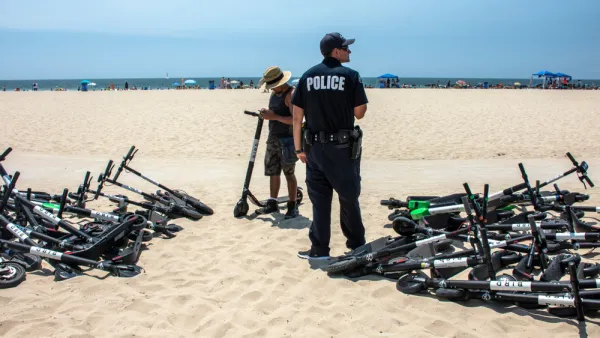
Bird and Lime launched their "Day Without A Scooter" protest this week.

Planetizen Federal Action Tracker
A weekly monitor of how Trump’s orders and actions are impacting planners and planning in America.

The state-sanctioned urbicide of Austin
People don’t kill cities. Freeways do.

US to reduce Colorado River water deliveries to Mexico
A new Colorado Treaty amendment reduces Mexico’s Colorado River water allocation by 250,000 acre feet.

5 New England states march closer to 800 megawatt wind energy project
Securing federal approval for the project may be complicated under the Trump administration, which has historically been hostile towards domestic wind power.

Baltimore to break ground on $50 million Transit Priority Project
The project will bring faster bus trips, safer streets and better bike connections to Baltimore.

Airbnb launches $250 million 'last-dollar financing' housing accelerator, makes first investment in Austin
The company will put $6.4 million towards affordable housing development in Texas’ capital.

FREE Course: Walkable City 1: Why Walkability?
After describing his path towards focusing on walkability as the essence of good planning, Jeff Speck marches through his five principal reasons for making more walkable places.
Reinventing Malls: Planning Alchemy—Turning Gray Fields Into Gold
The course focuses on the opportunities and imperatives that shape reinvention of mall sites.

Eagle County Government
Harvard University Graduate School of Design
Nashville Planning Department
The Architects Foundation
University of Cincinnati Online
The Pocatello Development Authority
The Urban Renewal Agency of the City of Pocatello
Journal of the American Planning Association