The brother of former Toronto Mayor Rob Ford decisively won the election on June 7 to be the next premier of Ontario, ousting current Premier Kathleen Wynne. His first order of business: end the province's emissions trading program.


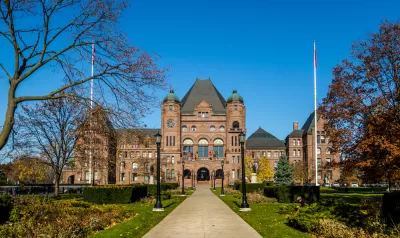
Ontario’s Progressive Conservatives (PC) "ended 15 years of Liberal power in the province, riding a wave of popular resentment against [Premier] Kathleen Wynne," notes The Globe and Mail's "election explainer" on the outcome of the June 7 Ontario general election. Doug Ford, the populist head of the PC party since winning an election in March, has been compared to President Donald Trump.
A May 7 post indicated that if elected, Ford would open the Ontario Greenbelt to development. But that won't be his first order of environmental rollbacks, reports Antonella Artuso for the Toronto Sun on June 15.
The Ontario cap-and-trade program that adds 4.3 cents to every litre of gasoline sold is gone, Premier-designate Doug Ford says.
A Ford cabinet’s first act will be to cancel the Kathleen Wynne plan and notify the federal government that Ontario will fight any proposal to impose a carbon tax on it, he vows.
The province began the emissions trading program on Jan. 1, 2017. A year later, it formally entered the Québec-California carbon market, known as the Western Climate Initiative.
Upon hearing that the premier-designate Ford would end the program, California and Quebec took immediate action to "prevent companies from dumping some $2.8-billion in emissions allowances," reports Shawn McCarthy for The Globe and Mail on June 17.
While Mr. Ford’s decision could provoke lawsuits from companies that purchased allowance, the province is also set to join Saskatchewan’s legal fight over the federal government’s right to impose its carbon tax where provinces have not levied their own carbon price, whether by direct tax or cap-and-trade system.
Companies could face a higher levy if Ottawa wins its court case and imposes a levy that will kick in at $20 a tonne in January, rising to $50 in 2022. The Ontario carbon price – which is incurred by companies, but passed on to consumers at the gas pump and on the heating bills – is forecast to be about $25 in 2022.
Gasoline prices may have played a factor in the PC's victory on June 7, according to Artuso's article.
“And during the election I promised we would take immediate action to lower gas prices by scrapping the carbon tax and ending cap and trade. Today I want to confirm in Ontario the carbon tax’s days are numbered," stated Ford.
Just to clarify, a province can either have a carbon tax or cap and trade, not both. Premier Justin Trudeau plans to impose a carbon tax on provinces that lack carbon pricing by Jan. 1, 2019.
FULL STORY: Cap-and-trade program is first to go: Ford

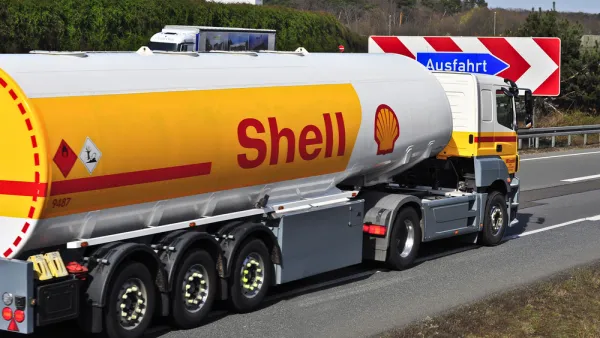
Royal Dutch Shell: Big Oil with a Conscience?
Big Oil companies are not all alike. Royal Dutch Shell is the first one to part ways with a major oil industry trade group over differences on climate change. It's also linking executive pay to goals to reduce the company's carbon footprint.
Prime Minister Trudeau Extends Carbon Pricing Throughout Canada
A carbon tax-and-dividend plan goes into effect on January 1 in the four Canadian provinces that don't price carbon emissions. Revenues will be rebated to residents, small businesses, and public institutions as Climate Action Incentive payments.
A 'Brand New, Improved' Cap-and-Trade System for California
A California state senator has proposed to overhaul California’s cap-and-trade system explains the changes he wants to see.

Planetizen Federal Action Tracker
A weekly monitor of how Trump’s orders and actions are impacting planners and planning in America.

The state-sanctioned urbicide of Austin
People don’t kill cities. Freeways do.

US to reduce Colorado River water deliveries to Mexico
A new Colorado Treaty amendment reduces Mexico’s Colorado River water allocation by 250,000 acre feet.

5 New England states march closer to 800 megawatt wind energy project
Securing federal approval for the project may be complicated under the Trump administration, which has historically been hostile towards domestic wind power.

Baltimore to break ground on $50 million Transit Priority Project
The project will bring faster bus trips, safer streets and better bike connections to Baltimore.

Airbnb launches $250 million 'last-dollar financing' housing accelerator, makes first investment in Austin
The company will put $6.4 million towards affordable housing development in Texas’ capital.

FREE Course: Walkable City 1: Why Walkability?
After describing his path towards focusing on walkability as the essence of good planning, Jeff Speck marches through his five principal reasons for making more walkable places.
Reinventing Malls: Planning Alchemy—Turning Gray Fields Into Gold
The course focuses on the opportunities and imperatives that shape reinvention of mall sites.

Eagle County Government
Harvard University Graduate School of Design
Nashville Planning Department
The Architects Foundation
University of Cincinnati Online
The Pocatello Development Authority
The Urban Renewal Agency of the City of Pocatello
Journal of the American Planning Association