Thanks largely to one alderperson’s efforts, the city has made mini-roundabouts a key piece of its road safety strategy.


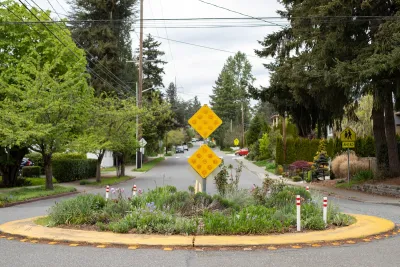
Although not all residents may understand their role, Chicago’s neighborhood roundabouts are an effective traffic calming measure.
Championed by Alderperson Mary Ann Smith in the 1990s, roundabouts are an effective way to slow traffic on neighborhood streets without forcing cars to come to a complete stop, explains Shawn Allee in an article for WBEZ Chicago.
“Most of Chicago’s traffic circles have been built by alderpeople who requested one via the aldermanic menu program, a discretionary budget reserved for infrastructure projects such as alley resurfacing, speed humps and various traffic calming devices.” According to Ald. Andre Vasquez, this process leads to a piecemeal approach that could leave out streets with the highest needs, and wants to see City Hall take a more active role in the installation of traffic circles.
Read the full story: Why Chicago goes round and round with traffic circles

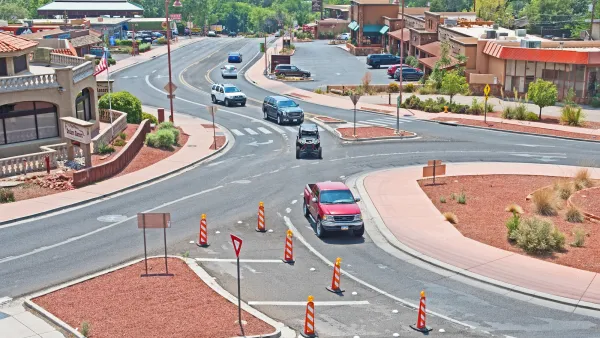
Study: Roundabouts are Primarily in Wealthier Neighborhoods
A North Carolina study sheds light on inequities in road safety interventions.
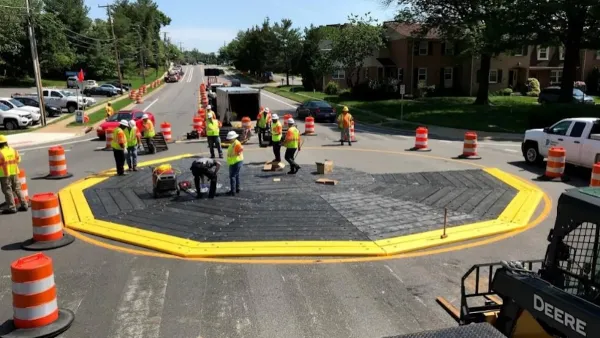
‘Modular Roundabouts’ Offer Quick-Build Traffic Safety Solution
The prefabricated roundabouts can be installed more quickly and at a much lower cost than traditional concrete traffic circles.
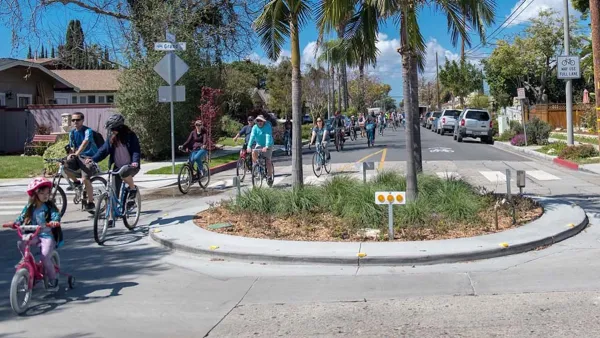
Long Beach Has Installed Nearly 100 Traffic Circles
They range from large traffic circles that reduce congestion to small neighborhood roundabouts designed to slow local traffic.

Planetizen Federal Action Tracker
A weekly monitor of how Trump’s orders and actions are impacting planners and planning in America.

Amtrak, CN end decades-long dispute with eight-year agreement
The new operating agreement establishes an updated framework for the companies to work together, including processes to resolve disputes.

Colorado’s Largest Data Center Could Rise Next to Homes — Without a Public Hearing
The proposed campus would consume 11 times the power of Denver International Airport; as it has across the country, opposition mounts.

'This is going to be painful:’ Virginia stares down $1.7 billion funding gap for highway maintenance
The state may address the deficit by shifting $290 million from its construction budget to maintenance projects.

Judges permit Denver to divert 77,000 acre feet from the Colorado River for reservoir expansion
Overuse and climate change have caused the Colorado River’s water levels to plummet.
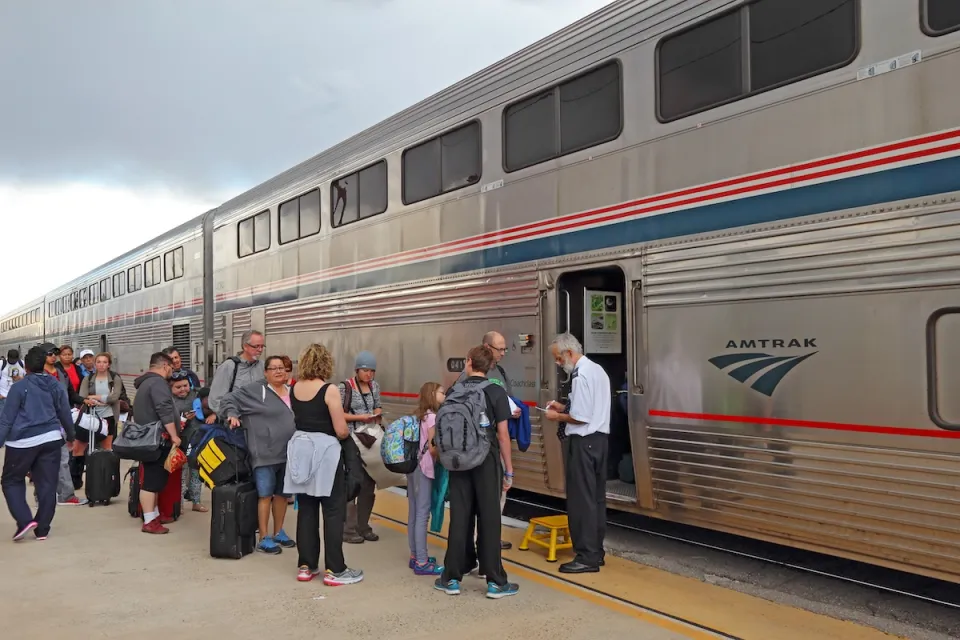
Amtrak, CN end decades-long dispute with eight-year agreement
The new operating agreement establishes an updated framework for the companies to work together, including processes to resolve disputes.

FREE Course: Walkable City 1: Why Walkability?
After describing his path towards focusing on walkability as the essence of good planning, Jeff Speck marches through his five principal reasons for making more walkable places.
Reinventing Malls: Planning Alchemy—Turning Gray Fields Into Gold
The course focuses on the opportunities and imperatives that shape reinvention of mall sites.

KFH Group Inc.
Greater Baltimore Committee
Eagle County Government
The Architects Foundation
University of Cincinnati Online
The Pocatello Development Authority
The Urban Renewal Agency of the City of Pocatello