The prefabricated roundabouts can be installed more quickly and at a much lower cost than traditional concrete traffic circles.


A new type of modular roundabout installed in Ashland, Nebraska costs less than half as much as traditional roundabouts and can be installed in less time.
As Ben Thorpe reports in Equipment World, “NDOT's new modular roundabout in Ashland won the "Best Use of Technology and Innovation, Small Project" in the 2024 America's Transportation Awards. The project converted a two-way stop with a roundabout installed in pieces over the existing pavement.”
The roundabout’s manufacturer, ZKxKZ, has installed 15 roundabouts in five states so far. According to ZKxKZ vice president Adam Lanik, “Our primary objective is basically to reduce cost and reduce the time to install. That's what we continue to do to this day, leveraging this quick-build approach. It may sound like a temporary solution, and it can be used in that fashion, but this is designed for a permanent solution.” The roundabouts are designed to last 10 to 15 years and can bear weight up to 80,000 pounds.
While Lanik doesn’t expect his roundabouts to replace permanent installations, the quick-build approach can help cities introduce roundabouts to residents at a lower cost.
Read the full story: What's a "Modular Roundabout"? And Why are More DOTs Installing Them?

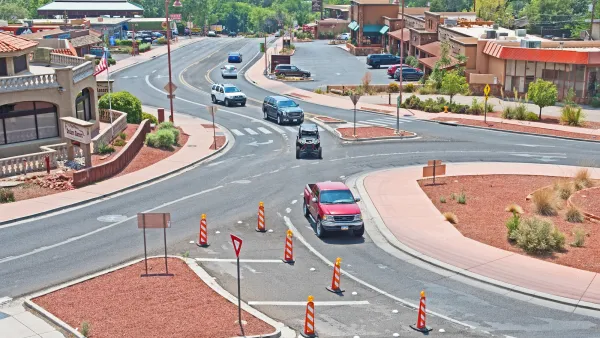
Study: Roundabouts are Primarily in Wealthier Neighborhoods
A North Carolina study sheds light on inequities in road safety interventions.
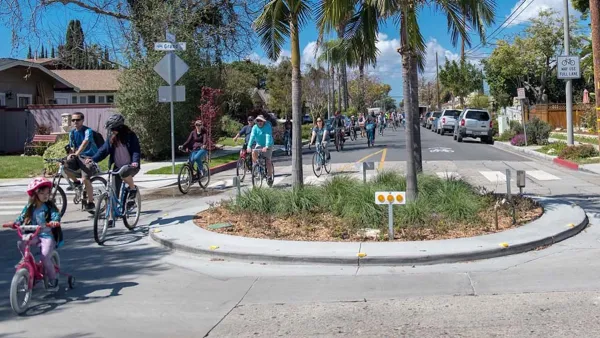
Long Beach Has Installed Nearly 100 Traffic Circles
They range from large traffic circles that reduce congestion to small neighborhood roundabouts designed to slow local traffic.
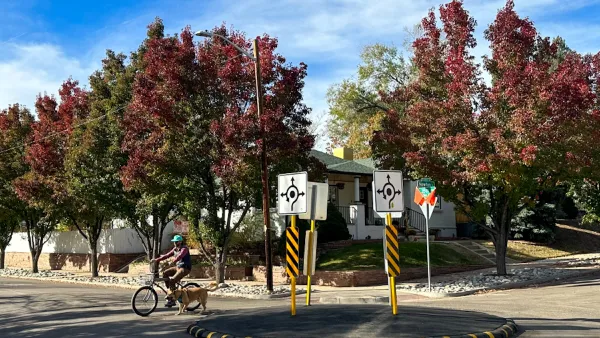
Denver Could Put Pause on New Traffic Circles
The city’s fire department has asked for a moratorium on new traffic circles, installed as a traffic calming mechanism.

Planetizen Federal Action Tracker
A weekly monitor of how Trump’s orders and actions are impacting planners and planning in America.

‘Going backwards:’ Baltimore mayor, students rally against state's transit funding plan
Maryland's proposed six-year plan provides no funding for Baltimore’s BMORE bus program and reduces its road maintenance funding.

Detroit to transform waterfront with $2.2 billion investment
Developers will convert about 18 acres of unused parking lot space into civic spaces.

After $600,000 wasted, CA high-speed rail board limits CEO’s power
Ian Choudri will no longer be able to sign, change or manage contracts.

Lithium mines leech water from surrounding communities. Soon, they’ll run dry
Researchers concluded that most lithium mines won't have enough water to meet industry demands by 2050.

El Niño takes lives, infrastructure as U.S. storm systems prove ill-prepared
About two-thirds of America's culverts are in states with outdated design standards.

FREE Course: Walkable City 1: Why Walkability?
After describing his path towards focusing on walkability as the essence of good planning, Jeff Speck marches through his five principal reasons for making more walkable places.
Reinventing Malls: Planning Alchemy—Turning Gray Fields Into Gold
The course focuses on the opportunities and imperatives that shape reinvention of mall sites.

One Hundred Miles
County of Mendocino
planning NEXT
The Architects Foundation
University of Cincinnati Online
Montrose County
Northern Illinois Transit Authority (NITA)
The Pocatello Development Authority