A new report from the New York City Department of Transportation opens the administrations of Governor Andrew Cuomo and Mayor Bill de Blasio to criticism from Streetsblog NYC.


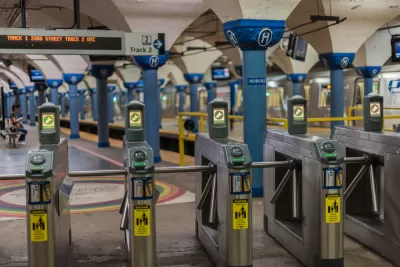
Ben Fried reports on the new Mobility Report released by the New York Department of Transportation this week. The report "screams" for the projects and investments called for in the Fast Forward plan, writes Fried.
This is DOT’s first Mobility Report release since 2016, and the big picture is more alarming than it was two years ago. New York is a growing city where transit ridership is shrinking, and streets are choking on car traffic. Despite rising population, employment, and tourism, subway and bus ridership both fell in 2017. Meanwhile, propelled by the growth of ride-hailing trips, congestion continues to intensify.
The article includes several representative infographics pulled from the report. Fried also identifies a few rare positive trends, mostly connected to transit ridership on the Upper Eastside of Manhattan after the Second Avenue Subway opened at the beginning of 2017.
Read the full story: Eight Essential Charts and Maps From NYC DOT’s New Mobility Report
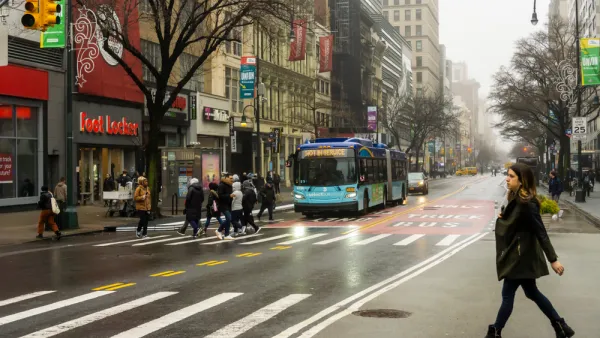
New York City Council Pushing for Major Investments in Bus and Bike Lanes
The $3.1 billion requested by the New York City Council to build 500 miles of new bus lanes and 500 miles of protected bus lanes isn't included in New York Mayor Eric Adams's proposed budget.
New York, Boston Transit Agencies Back Off Proposed Cuts
News of a potential economic stimulus package in Congress is followed by news that two of the nation's most prominent transit systems are reducing cuts proposed to address plummeting revenues.
How to Improve Buses, the Overlooked but Essential Part of Urban Mobility
A new book argues that buses are an integral part of successful mobility networks and that better bus systems improve cities in ways benefiting all residents.

Planetizen Federal Action Tracker
A weekly monitor of how Trump’s orders and actions are impacting planners and planning in America.

Washington state to charge fee to drivers with fuel-efficient cars
Revenue from the fee will go towards supporting the state’s highways.

Illinois considers spending $1 billion in taxpayer money on data center
A quantum computing campus and data center are currently under construction in Chicago.

‘Demolition of our heritage:’ Some US tribes speak out against BAAJA
A coalition of indigenous groups in the United States are concerned about provisions in the bill that may weaken their ability to halt large energy projects.

How LA’s new mayor plans to tackle affordable housing crisis
Mayor-elect Nithya Raman has proposed overhauling the city’s permitting process.

Interactive map reveals Pennsylvania's abandoned oil, gas wells — many on residential property
It is difficult for residents to know if a well is near their home, or if it poses a threat to them.

FREE Course: Walkable City 1: Why Walkability?
After describing his path towards focusing on walkability as the essence of good planning, Jeff Speck marches through his five principal reasons for making more walkable places.
Reinventing Malls: Planning Alchemy—Turning Gray Fields Into Gold
The course focuses on the opportunities and imperatives that shape reinvention of mall sites.

City of Charlotte
City of Rosemead
Rutgers University, Edward J. Bloustein School of Planning and Public Policy
University of Michigan School for Environment and Sustainability (SEAS)
Hunter College, City University of New York (CUNY)
The Architects Foundation
University District Partnership