Are the urban revival and the future of mobility already rendering parking lots obsolete? Chicago provides a case study of a new generation of skyscrapers rising were cars once parked.


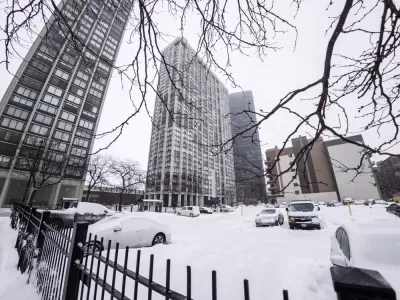
"Years into a residential construction boom downtown, and amid broader adoption of ride-hailing apps such as Uber and Lyft, real estate developers are gobbling up surface lots they can cover with high-rises," reports Ryan Ori from Chicago.
Ori shares a list of anecdotal evidence that the practice of developing new uses on former surface parking lots is expanding along with Chicago downtown's urban revival. In Chicago, some of the splashiest development projects in the city will break ground on former surface parking lots. "The lowly surface lot will play a role in reshaping Chicago’s skyline, with plans for two of the city’s tallest buildings in the works on parcels now used for parking," adds Ori.
Ori speaks with developers who say that the rising cost of land in downtown is applying pressure on surface parking lots from one side. Another factor is decreasing revenue at parking lots—as much as 30 percent at some lots. According to a report by Green Street Advisors cited in the article, "U.S. parking needs will be cut in half during the next three decades…"
If one were looking for other signs that perhaps recent changes in mobility were reducing demand for parking in urban areas, see also the list of cities reducing curbside parking to make room for other purposes, such as pick-up and drop-off for ride-hailing companies, and an emerging industry of technology meant to take advantage of the evolution in mobility.
FULL STORY: Parking lots disappearing in ride-sharing era as downtown construction booms


Editorial Board Calls for Tax Increment Financing Reform in Chicago
The Chicago Tribune says the city of Chicago can't be trusted with tax increment financing (TIF), so it's time for a do-over.
Editorial: Save Space for Parks in Chicago's Next Big Mega-Development
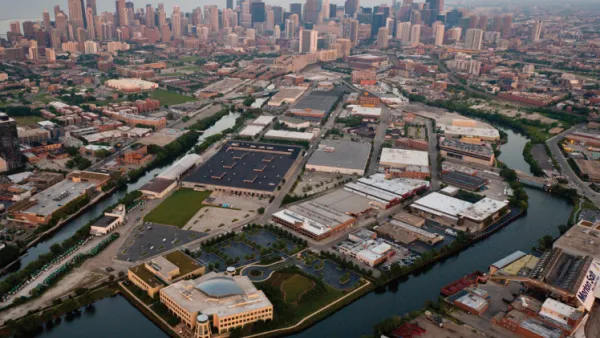
The 760-acre North Branch Industrial Corridor could be a game changer for the North Side, but the Chicago Tribune wants to make sure that quality of life is considered along visions of economic development.
Uber says more Waymos are good for Uber too
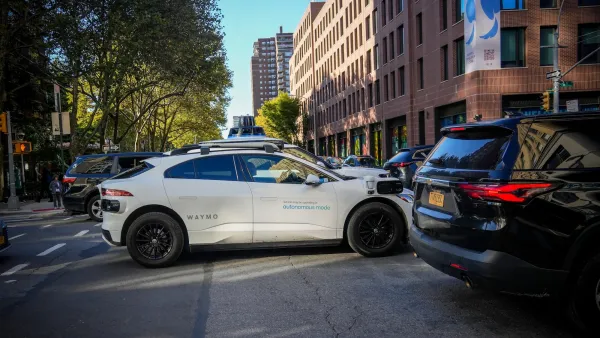
The company believes robotaxis are spurring growth in the ride-hailing sector as a whole.

The state-sanctioned urbicide of Austin
People don’t kill cities. Freeways do.

US to reduce Colorado River water deliveries to Mexico
A new Colorado Treaty amendment reduces Mexico’s Colorado River water allocation by 250,000 acre feet.

New Jersey’s second-largest city bans standalone data centers
Jersey City will continue to allow co-location facilities, such as those meant for research institutions that store their own data.

Amtrak not solely to blame for New Jersey commuter rail's unreliability, report finds
A new study from the Garden State Initiative found that NJ Transit’s budget grew 20% across a 4 year period, but reliability declined significantly over the same period.

EPA erases limits on planet-warming pollution from power plants
Under Monday’s plan, power plants would still have some limits on how much mercury, arsenic and other contaminants they can emit.

Phoenix announces new on-demand transit service, more frequent RAPID buses
Both new services will launch in October, and are part of Phoenix's Project Effective Access Solutions for Easing Congestion.

FREE Course: Walkable City 1: Why Walkability?
After describing his path towards focusing on walkability as the essence of good planning, Jeff Speck marches through his five principal reasons for making more walkable places.
Reinventing Malls: Planning Alchemy—Turning Gray Fields Into Gold
The course focuses on the opportunities and imperatives that shape reinvention of mall sites.

Eagle County Government
Harvard University Graduate School of Design
Nashville Planning Department
The Architects Foundation
University of Cincinnati Online
The Pocatello Development Authority
The Urban Renewal Agency of the City of Pocatello
Journal of the American Planning Association