The 760-acre North Branch Industrial Corridor could be a game changer for the North Side, but the Chicago Tribune wants to make sure that quality of life is considered along visions of economic development.


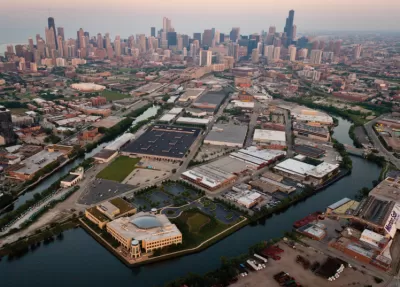
The Editorial Board of the Chicago Tribune puzzles over the proposed 760-acre North Branch Industrial Corridor, "which City Hall and developers envision as home to canyons of high-rises" and the catalyst for "$4.2 billion in economic output each year, along with 23,000 jobs and up to 5,000 new residences."
The concern is what kind of impact the 50,000 people who would live and work in the North Branch Industrial Corridor would have on quality of life in this corner of the North Side.
The Editorial Board's purpose is to tout one idea for ensuring the development is a benefit to quality of life:
But a makeover of that scale cannot be all girders and plate glass. It has to include added traffic and transit capacity, and enough green space to make the revamp livable. On the former, traffic studies are in the works. On the latter, we’ve argued for an excellent option — a new park larger than most cities have the room to build.
The Editorial Board is referring specifically to an idea proposed in March, when "Ald. Michele Smith, 43rd, and Ald. Scott Waguespack, 32nd, urged the city to consider turning a 24-acre plot of largely dormant industrial land into a sprawling riverfront park — the North Branch Park and Nature Preserve."
Despite growing political support, the Editorial Board warns that the parcel could just as easily be bought and turned into another "become yet another cluster of high-rises."
Read the full story: Most cities couldn't build this park. Will Chicago?
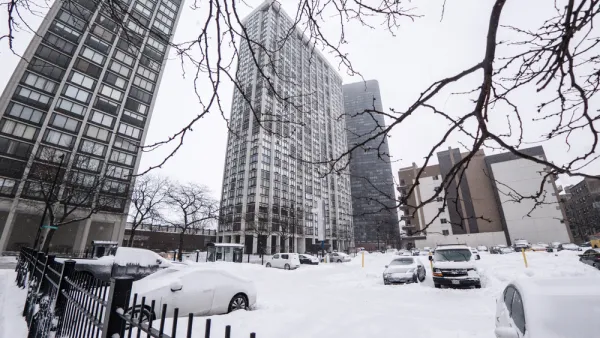
Surface Parking Lots Making Way for Higher Uses
Are the urban revival and the future of mobility already rendering parking lots obsolete? Chicago provides a case study of a new generation of skyscrapers rising were cars once parked.
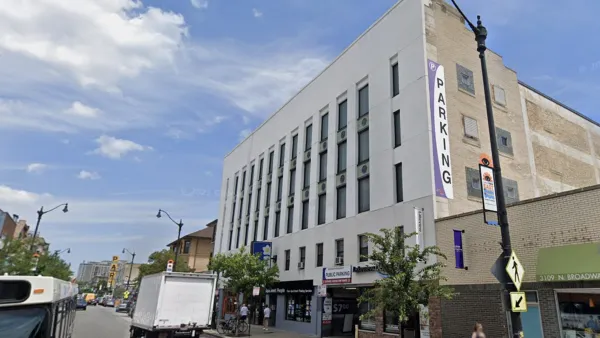
Chicago Garage Becomes 72-Unit Apartment Building
The East Lakeview project is within easy walking distance of local businesses and transit.
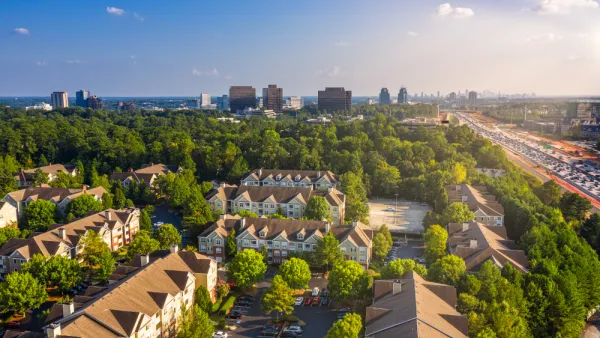
Report Links Housing Growth and Climate Resilience
Data from three U.S. metro areas show a failure to address land use and sprawl as a key factor driving climate change.

Planetizen Federal Action Tracker
A weekly monitor of how Trump’s orders and actions are impacting planners and planning in America.

California plans to bury El Niño’s downpour
If the state plays its cards right, it may be able to store a billion acre-feet of El Niño’s water in aquifers.

Desperate measures: Advocates weigh draining Lake Powell to fill Colorado River
Draining the reservoir could reduce evaporation losses by a couple hundred thousand acre-feet.

Housing is the top priority of Seattle’s sole new councilmember
Jenks campaigned on building 1,000 new units of affordable housing.

New tax cuts may slash $1.5 billion in funding for Miami transit, public parks
Amendment 3 will save Miami-Dade homeowners $2,700 in 2028.

Arizona, Wisconsin, Pennsylvania hope to finally advance climate goals post-midterms
The three states have spent years under Republican or divided control.

FREE Course: Walkable City 1: Why Walkability?
After describing his path towards focusing on walkability as the essence of good planning, Jeff Speck marches through his five principal reasons for making more walkable places.
Reinventing Malls: Planning Alchemy—Turning Gray Fields Into Gold
The course focuses on the opportunities and imperatives that shape reinvention of mall sites.

City of Rosemead
Rutgers University, Edward J. Bloustein School of Planning and Public Policy
One Hundred Miles
University of Michigan School for Environment and Sustainability (SEAS)
Hunter College, City University of New York (CUNY)
The Architects Foundation
City of Cambridge
Montrose County
The Pocatello Development Authority