A proposed bill in the California State Assembly would make it easier for local jurisdictions to set lower speed limits, sidestepping the controversial 85th percentile rule.



Citing a correlation between vehicle speeds and pedestrian fatalities, Melanie Curry writes, "State authorities, to prevent local jurisdictions from creating speed traps—where speed limits are abruptly lowered so that local police can charge drivers for speeding and thus make money for a municipality—have severely restricted the way speed limits can be set in California."
Unsafe speeds often trace their origins to the 85th percentile rule, by which traffic engineers are supposed to set speed limits. Now, California Assemblymember Laura Friedman (D-Glendale) has put forward a bill "creating another exception to the 85 percent rule." Under the bill, cities would be able to use data from collision surveys to lower limits.
"Her staffers say Friedman is working with a number of organizations, including the city of L.A., the L.A. County Bicycle Coalition, CalBike, California Walks, and the CHP, to come up with a definition or guidance on what such a collision survey would entail."
Read the full story: Bill Could Make it Easier for Cities to Lower Speed Limits


Philly Speed Camera Program Cuts Fatalities in Half
Excessive speeding along dangerous segments of Roosevelt Boulevard dropped by 90 percent after the city installed automated enforcement cameras.
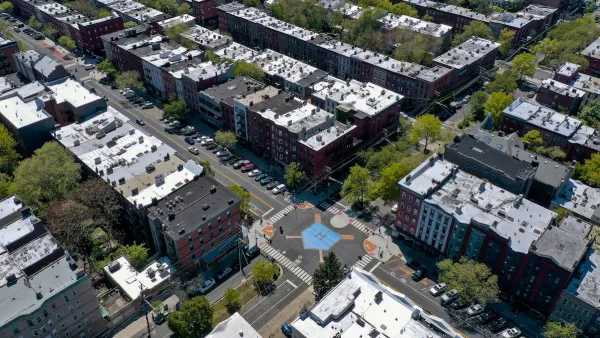
Vision Zero at Work: Hoboken Celebrates Seven Years of Zero Traffic Deaths
The New Jersey city implemented simple yet impactful changes to eliminate traffic fatalities.
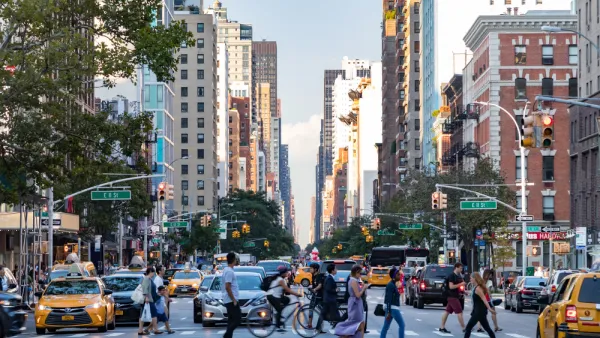
Study: Streets With High Foot Traffic Also See High Driving Speeds
A detailed study of where people walk reveals that driving speeds on many of the streets most used by pedestrians in U.S. cities are higher than recommended speeds, putting pedestrians at higher risk for serious injuries and death.

Planetizen Federal Action Tracker
A weekly monitor of how Trump’s orders and actions are impacting planners and planning in America.

Colorado’s Largest Data Center Could Rise Next to Homes — Without a Public Hearing
The proposed campus would consume 11 times the power of Denver International Airport; as it has across the country, opposition mounts.

US to reduce Colorado River water deliveries to Mexico
A new Colorado Treaty amendment reduces Mexico’s Colorado River water allocation by 250,000 acre feet.

'This is going to be painful:’ Virginia stares down $1.7 billion funding gap for highway maintenance
The state may address the deficit by shifting $290 million from its construction budget to maintenance projects.

Judges permit Denver to divert 77,000 acre feet from the Colorado River for reservoir expansion
Overuse and climate change have caused the Colorado River’s water levels to plummet.

Amtrak, CN end decades-long dispute with eight-year agreement
The new operating agreement establishes an updated framework for the companies to work together, including processes to resolve disputes.

FREE Course: Walkable City 1: Why Walkability?
After describing his path towards focusing on walkability as the essence of good planning, Jeff Speck marches through his five principal reasons for making more walkable places.
Reinventing Malls: Planning Alchemy—Turning Gray Fields Into Gold
The course focuses on the opportunities and imperatives that shape reinvention of mall sites.

KFH Group Inc.
Greater Baltimore Committee
Eagle County Government
The Architects Foundation
University of Cincinnati Online
The Pocatello Development Authority
The Urban Renewal Agency of the City of Pocatello