85th Percentile

The Weird Way US Cities Set Speed Limits — and Why it’s Changing
The ‘85% rule’ guides speed limits based on how fast most drivers travel, sometimes prompting cities to raise speed limits.

Cars Are Outgrowing Their Parking Spaces
As American vehicles grow taller, wider, and longer, more of them are having a hard time fitting in traditional parking spaces.

The 85th Percentile Rule, Explained
A video explainer of the notorious traffic law that explains why some cities have to raise speed limits to enforce traffic safety.

It's Time To Reconsider How Speed Limits Are Set
Speed limits are currently determined by a calculation that considers only the status quo of vehicular velocity. Standard practices for speed limit setting and legislators should prioritize the safety of community members, according to this article.
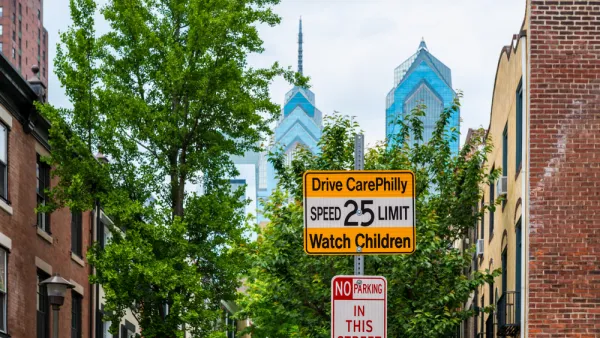
NACTO Recommends Default Safety Setting for Speed Limits
A step toward an overhaul of the way speed is managed on city streets around the country.

How the Law Enshrines Car Dependence
Land use regulations provide exhibit A in this indictment of the American legal system's support for a murderous and destructive dependence on automobiles for transportation.
California Bill Sets Its Sights on Lower Speed Limits
A proposed bill in the California State Assembly would make it easier for local jurisdictions to set lower speed limits, sidestepping the controversial 85th percentile rule.

Raising Speed Limits in the Name of Traffic Safety
Business Insider offers a platform for an argument favored by the National Motorists Association and a particularly vocal Michigan state police officer: that speed limits are too slow to be safe.
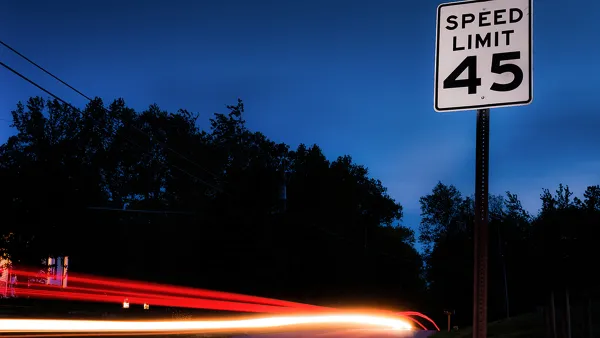
The Origins of Speed Limits
Motor vehicle crashes claim over 30,000 lives per year, with related costs in the hundreds of billions. While we sometimes view that frightening statistic as inevitable, there are reasons to reexamine speed limits and how we set them.

FREE Course: Walkable City 1: Why Walkability?
After describing his path towards focusing on walkability as the essence of good planning, Jeff Speck marches through his five principal reasons for making more walkable places.
Reinventing Malls: Planning Alchemy—Turning Gray Fields Into Gold
The course focuses on the opportunities and imperatives that shape reinvention of mall sites.

City of Rosemead
Rutgers University, Edward J. Bloustein School of Planning and Public Policy
One Hundred Miles
University of Michigan School for Environment and Sustainability (SEAS)
Hunter College, City University of New York (CUNY)
The Architects Foundation
City of Cambridge
Montrose County
The Pocatello Development Authority









