Climate change is real, and happening now — but exactly what that means for coastal cities is surprisingly uncertain. Engineers at Princeton’s Form Finding Lab choose flexibility over fortification to protect coastal cities from flooding.


We associate inflatable structures with ludic landscapes like the bounce castle and hippie hangout. Impractical technoutopias all. But for engineer Sigrid Adriaenssens and her Form Finding Lab, inflatables could offer a very practical response to the growing threat of storm surge flooding and the uncertainty of climate change. More air bag than pleasure dome, inflatable sea walls could be an affordable and flexible solution to protect coastal cities from rising tides. Adriaenssens and her collaborator Steven Strauss make the case below. Whether building a sea wall or replacing a neighborhood with a swale, soft and hard infrastructures both come with high costs and take a long time to put in place. Ready in three years and deployable in three hours, inflatable rubber barriers present a different direction for life on the water.
Read the full story: Blow-Up Bulwark
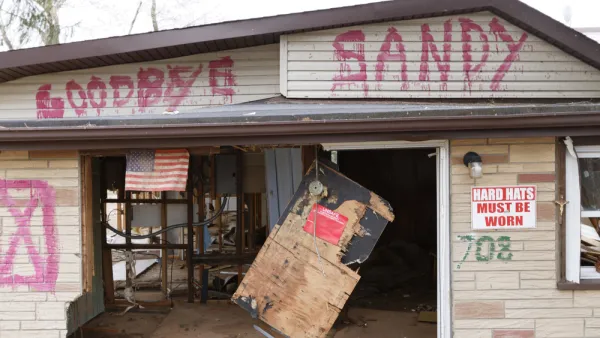
Watch: Sea Walls and the Future of Resilience
Vox and Curbed provide multi-media coverage of a Staten Island sea wall project as an example of the necessity of resilient infrastructure, and the shortcomings of our ability to predict the needs of the built environments in changed climates.
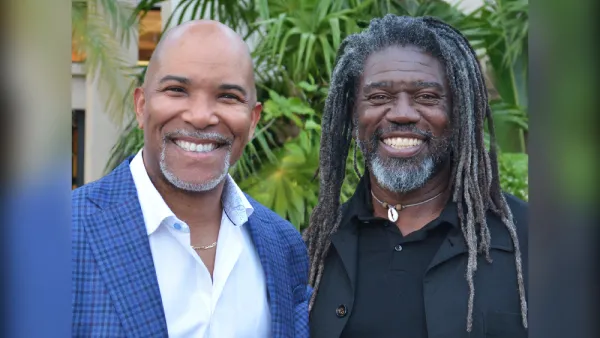
In a Warmer, Wetter and More Disaster-prone World: “Nature is the Greatest Designer”
A conversation with the American Society of Landscape Architects’ CEO Torey Carter-Conneen and board president Kona Gray.
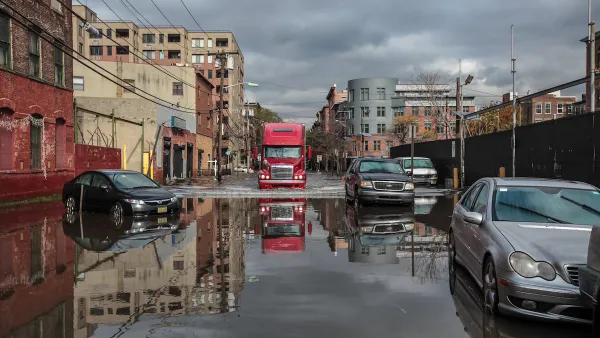
FEMA Resilience Program Cuts Grant Funding
The Building Resilient Infrastructure and Communities program funded projects from flood prevention to power station upgrades.

Planetizen Federal Action Tracker
A weekly monitor of how Trump’s orders and actions are impacting planners and planning in America.

Washington state to charge fee to drivers with fuel-efficient cars
Revenue from the fee will go towards supporting the state’s highways.

Trump to blast ‘hydrocarbon highway’ through ‘world’s longest art gallery’
Environmental and historic preservation groups are suing to stop the project.

A data center developer is going back on its promises to nearby residents
Data center developer HostDime originally promised free at-home Wi-Fi to residents of Eatonville, Florida.

Trump administration takes another swing at Solar for All
Since the Environmental Protection Agency announced its intent to end Solar for All in August 2025, two federal judges have ruled in favor of protecting it.

The MTA wants to entice international bus manufacturers to set up shop in America
The MTA hopes to create more competition for better bus options while still "buying American."

FREE Course: Walkable City 1: Why Walkability?
After describing his path towards focusing on walkability as the essence of good planning, Jeff Speck marches through his five principal reasons for making more walkable places.
Reinventing Malls: Planning Alchemy—Turning Gray Fields Into Gold
The course focuses on the opportunities and imperatives that shape reinvention of mall sites.

City of Charlotte
City of Rosemead
Rutgers University, Edward J. Bloustein School of Planning and Public Policy
University of Michigan School for Environment and Sustainability (SEAS)
Hunter College, City University of New York (CUNY)
The Architects Foundation
University District Partnership