For a city in the middle of a rent crisis, the Tacoma Housing Authority project can't come too soon.


More than many U.S. cities, in recent years Seattle has made significant investments in public transit, and significant efforts to increase density.
And though the city has been at least somewhat successful, rents in Seattle are soaring, and some of the steepest increases have been driven by transit. (Also, there's Amazon.)
That's a problem, considering people who need transit the most are people who can't afford cars.
The Regional Equitable Development Initiative (REDI) was developed with the goal of increasing affordability—it's basically a revolving loan program that gives out low-interest loans to developers who plan to build affordable housing near transit.
The first REDI loan was announced this week; the fund will give $4 million to the Tacoma Housing Authority to build a mixed-income development it's calling James Center North.
Sarah Anne Lloyd writes:
"Near transit," for REDI purposes, means sited within one-half mile of a light rail station or one-quarter mile of a frequent-service bus stop. In this case, the project is located across the street from the Tacoma Community College (TCC) and the nearby transit center, which currently features intercity bus service and will eventually become Sound Transit’s southernmost light rail stop.
More details on the development are at Curbed Seattle.
FULL STORY: First REDI-funded affordable housing project planned for Tacoma

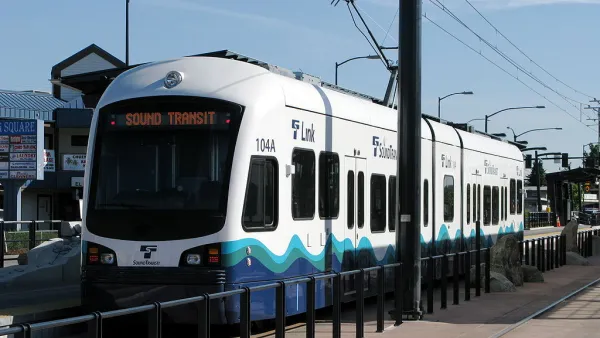
Seattle Light Rail Expansion Brings Redevelopment Boom
The city’s Northgate Link extension has spurred development around the new stations, and one neighborhood is poised to change dramatically.
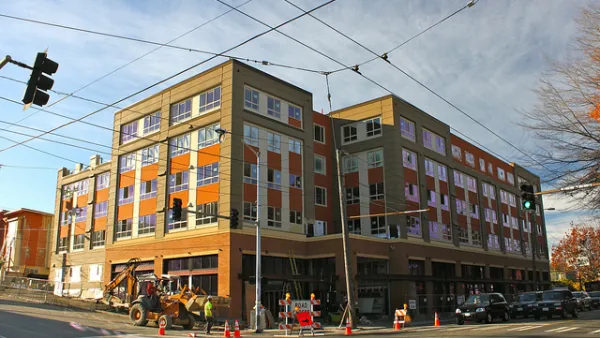
New Seattle Loan Fund Finances Affordable Housing
As excitement builds around Seattle's voter-approved transit expansion plan, the REDI Fund will preserve space for low and middle-income residents in new transit-oriented developments.
King County, Sound Transit Announce $83 Million for Transit Oriented Development
A new regional transit oriented development initiative in Seattle will focus on affordable housing and walkable communities. The Executive's Transit Station Housing and Development Initiative will partner King County and Sound Transit.

Planetizen Federal Action Tracker
A weekly monitor of how Trump’s orders and actions are impacting planners and planning in America.

The state-sanctioned urbicide of Austin
People don’t kill cities. Freeways do.

US to reduce Colorado River water deliveries to Mexico
A new Colorado Treaty amendment reduces Mexico’s Colorado River water allocation by 250,000 acre feet.

5 New England states march closer to 800 megawatt wind energy project
Securing federal approval for the project may be complicated under the Trump administration, which has historically been hostile towards domestic wind power.

Baltimore to break ground on $50 million Transit Priority Project
The project will bring faster bus trips, safer streets and better bike connections to Baltimore.

Airbnb launches $250 million 'last-dollar financing' housing accelerator, makes first investment in Austin
The company will put $6.4 million towards affordable housing development in Texas’ capital.

FREE Course: Walkable City 1: Why Walkability?
After describing his path towards focusing on walkability as the essence of good planning, Jeff Speck marches through his five principal reasons for making more walkable places.
Reinventing Malls: Planning Alchemy—Turning Gray Fields Into Gold
The course focuses on the opportunities and imperatives that shape reinvention of mall sites.

Eagle County Government
Harvard University Graduate School of Design
Nashville Planning Department
The Architects Foundation
University of Cincinnati Online
The Pocatello Development Authority
The Urban Renewal Agency of the City of Pocatello
Journal of the American Planning Association