Daniel Borenstein points out the irony that while the Bay Area may be the world's top tech hub, BART has no real plans to consider driverless trains.


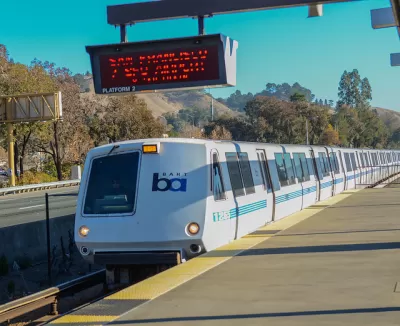
Daniel Borenstein criticizes Bay Area Rapid Transit (BART), writing that "BART directors have given lip service to the notion of driverless trains, but when it comes to spending billions of dollars on upgrades, they're sticking with the status quo — no matter the long-term cost."
He points to the many Bay Area companies working on self-driving car concepts, and to driverless train models already implemented elsewhere. "This is not just about getting on board with the latest new, new thing. Driverless trains merit serious consideration for much-needed labor cost savings [...]."
According to Borenstein, labor is the force fending off autonomous trains. "But most BART board members are unwilling to risk the wrath of labor unions and the campaign muscle they control. They're unwilling to even discuss the issue. [...] As for BART staff members, they insist that train operators are needed for safety. Never mind that train systems elsewhere in the world are successfully and safely operating without them."
FULL STORY: Borenstein: BART scoffs at driverless train technology

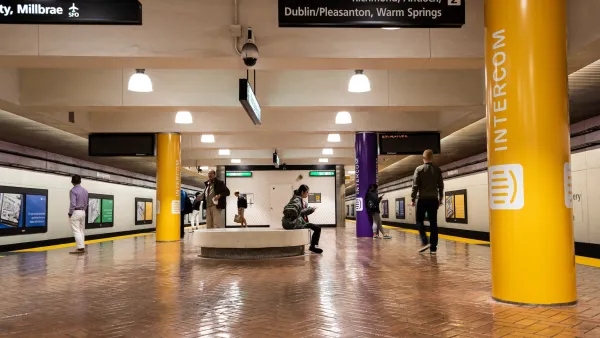
BART Announces Major Service Cuts, Fare Increases in Face of $376M Deficit
If a November ballot measure fails to bring new funding, BART’s ‘alternative service plan’ would reduce frequencies to 30 minutes, raise fares by 30%, and close up to 15 stations.
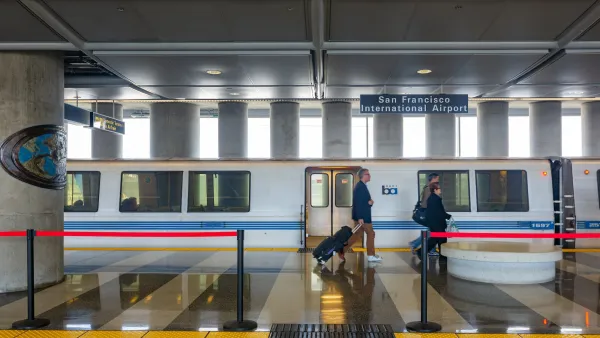
BART Adds Uber to its App Without Board Approval
Riders will now see a link to the Uber app at the top of BART’s own transit planning app.
California Revives $750M Loan to Save Bay Area Transit
The state approved a $750 million loan as a stopgap measure to fund regional transit agencies until a 2026 ballot measure that could bring more permanent funding.

The state-sanctioned urbicide of Austin
People don’t kill cities. Freeways do.

US to reduce Colorado River water deliveries to Mexico
A new Colorado Treaty amendment reduces Mexico’s Colorado River water allocation by 250,000 acre feet.

New Jersey’s second-largest city bans standalone data centers
Jersey City will continue to allow co-location facilities, such as those meant for research institutions that store their own data.

Amtrak not solely to blame for New Jersey commuter rail's unreliability, report finds
A new study from the Garden State Initiative found that NJ Transit’s budget grew 20% across a 4 year period, but reliability declined significantly over the same period.

EPA erases limits on planet-warming pollution from power plants
Under Monday’s plan, power plants would still have some limits on how much mercury, arsenic and other contaminants they can emit.

Phoenix announces new on-demand transit service, more frequent RAPID buses
Both new services will launch in October, and are part of Phoenix's Project Effective Access Solutions for Easing Congestion.

FREE Course: Walkable City 1: Why Walkability?
After describing his path towards focusing on walkability as the essence of good planning, Jeff Speck marches through his five principal reasons for making more walkable places.
Reinventing Malls: Planning Alchemy—Turning Gray Fields Into Gold
The course focuses on the opportunities and imperatives that shape reinvention of mall sites.

Eagle County Government
Harvard University Graduate School of Design
Nashville Planning Department
The Architects Foundation
University of Cincinnati Online
The Pocatello Development Authority
The Urban Renewal Agency of the City of Pocatello
Journal of the American Planning Association