Fewer parking spaces, more sober rides home. Sounds like a recipe for a good night out.



Washington, D.C. recently launched a pilot program meant to cut down on congestion on Connecticut Avenue, just south of Dupont Circle, at closing time for the nightlife that coalesces there.
"In a new year-long pilot program, they’re taking 60 parking spaces out of commission on Connecticut Avenue between Thursday night and Sunday morning, reserving them instead for pickup and dropoff zones," reports Benjamin Schneider. The configuration responds to the practice of ride-hailing companies and taxis double and triple parking while waiting for passengers.
According to Schneider, this seemingly small pilot project could be a "serious trendsetter" as cities look for new ways to deal with the conflicts that arise when crowds gather, and then need to get home all at the same time.
Schneider includes a lot more details of the project, including an account of the planning and outreach process that preceded its implementation.
Read the full story: D.C. Gives Uber and Lyft a Better Spot in Nightlife

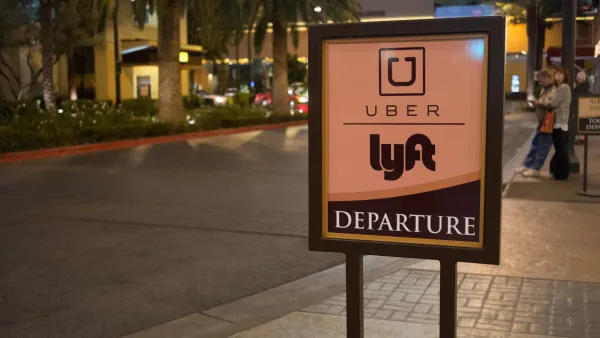
More Cities Replacing Parking With Drop-Off Zones for Ride-Hailing Companies
More than one city has ditched parking in response to the congestion and conflicts created by ride-hailing pick-ups and drop-offs .
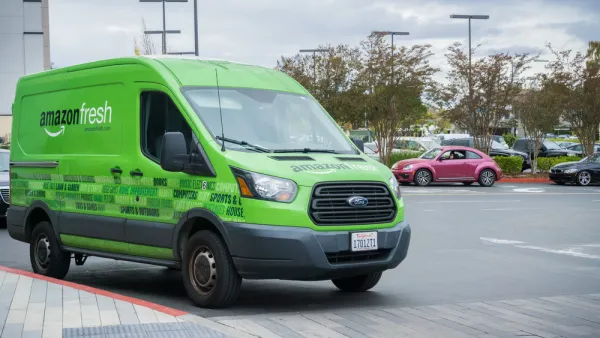
Delivery Drivers Can Reserve Curb Space Ahead of Time in D.C.
An innovative pilot project is under way in Washington, D.C., which is pursuing radical steps to rethink the use of on-street curb spaces in an era of transformative transportation technology.
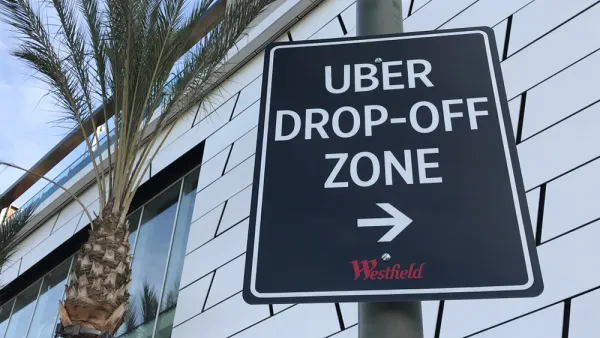
New Wrinkles for D.C.'s Curb Management Program
Washington, D.C. continues its leadership in the management of curb space as transportation modes change. First, the District experimented with curb areas for ride-hailing companies; now the focus shifts to app-based delivery services.

Planetizen Federal Action Tracker
A weekly monitor of how Trump’s orders and actions are impacting planners and planning in America.

California plans to bury El Niño’s downpour
If the state plays its cards right, it may be able to store a billion acre-feet of El Niño’s water in aquifers.

Chicago breaks ground on $3 billion megadevelopment
The new neighborhood, titled Foundry Park, will one day host 3,700 residences.

Satanic Place Names
From streams and lakes to valleys and canyons, I mapped more than 1,000 places named after the Devil.

California High-Speed Rail Authority CEO resigns after $600,000 scandal
Under Ian Choudri, the authority used taxpayer dollars to fund first class flights and trips to nightclubs.

Want to study the Missouri River? Soon, you may need unanimous approval from 10 states
Legislation would require 10 governors’ permission to study or build projects moving water outside the basin.

FREE Course: Walkable City 1: Why Walkability?
After describing his path towards focusing on walkability as the essence of good planning, Jeff Speck marches through his five principal reasons for making more walkable places.
Reinventing Malls: Planning Alchemy—Turning Gray Fields Into Gold
The course focuses on the opportunities and imperatives that shape reinvention of mall sites.

City of Rosemead
Rutgers University, Edward J. Bloustein School of Planning and Public Policy
One Hundred Miles
Hunter College, City University of New York (CUNY)
The Architects Foundation
University of Cincinnati Online
City of Cambridge
Montrose County
The Pocatello Development Authority