A Minneapolis bike lane protest sets a new bar for opposition to bike lanes—Godwin's law was definitely in play.


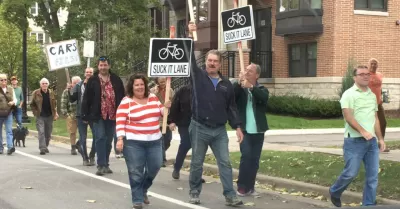
Angie Schmitt relays the details of a anti-bike lane protest that took place in Minneapolis over the weekend, describing the protest that included sings that read "Nazi Lane" and "Suck It Lane" as the most angry in the history of Streetsblog.
"Minneapolis Council Member Lisa Bender shared photos of the anti-bike lane rally in a Facebook post that quickly went viral," according to Schmitt, and it's clear why from the images. Schmitt also wonders if the tone and language of this protest, "could reflect where local bike lane politics are headed in the Trump-era culture wars."
For more local coverage of the protest, see a post by John Edwards that details the genesis and operation of the protest, including a collection of images from social media. According to Edwards, "the idea for this protest began on social media as a hoax, but became very real after spreading to credulous bike-haters on Facebook." Attendees at the protest included "two candidates for City Council, David Schorn (Ward 10) and Joe Kovacs (Ward 7); and former Ward 10 City Council member Meg Tuthill; and let's not forget the group of people carrying "Nazi Lane" signs dripping with red paint intended to look like blood."
FULL STORY: These People Lost Their Minds Over a Bike Lane


Bikelash in Boise
Parents don’t want bike lanes to interfere with the pick up and drop off zone near two churches and schools in Boise.
Lessons From Past Bike Lane Controversies Rarely Inform Present Debates
History repeats itself with the political controversies created by bike lanes.

Bikelash Wins in Phoenix
Neighborhood opposition overwhelmed a plan to reduce the number of vehicles lanes on North Central Avenue to make space for a new bike lane, despite evidence of the benefits of the proposed street reconfiguration.

The state-sanctioned urbicide of Austin
People don’t kill cities. Freeways do.

US to reduce Colorado River water deliveries to Mexico
A new Colorado Treaty amendment reduces Mexico’s Colorado River water allocation by 250,000 acre feet.

New Jersey’s second-largest city bans standalone data centers
Jersey City will continue to allow co-location facilities, such as those meant for research institutions that store their own data.

Amtrak not solely to blame for New Jersey commuter rail's unreliability, report finds
A new study from the Garden State Initiative found that NJ Transit’s budget grew 20% across a 4 year period, but reliability declined significantly over the same period.

EPA erases limits on planet-warming pollution from power plants
Under Monday’s plan, power plants would still have some limits on how much mercury, arsenic and other contaminants they can emit.

Phoenix announces new on-demand transit service, more frequent RAPID buses
Both new services will launch in October, and are part of Phoenix's Project Effective Access Solutions for Easing Congestion.

FREE Course: Walkable City 1: Why Walkability?
After describing his path towards focusing on walkability as the essence of good planning, Jeff Speck marches through his five principal reasons for making more walkable places.
Reinventing Malls: Planning Alchemy—Turning Gray Fields Into Gold
The course focuses on the opportunities and imperatives that shape reinvention of mall sites.

Eagle County Government
Harvard University Graduate School of Design
Nashville Planning Department
The Architects Foundation
University of Cincinnati Online
The Pocatello Development Authority
The Urban Renewal Agency of the City of Pocatello
Journal of the American Planning Association