Exclusives
BLOG POST
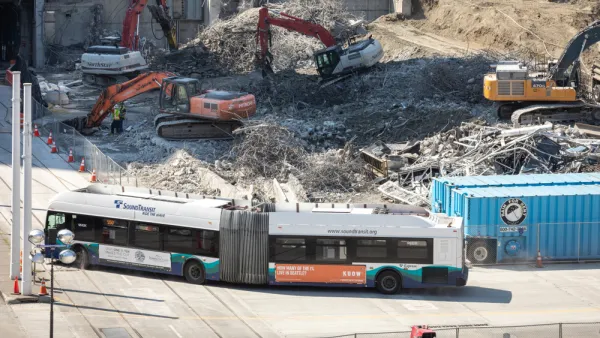
Key Considerations for Urban Demolition Planning
Demolition can be a lot of fun for the people holding the sledge hammers and swinging the wrecking balls, but demolition is serious business with a large number of significant social and environmental consequences.

BLOG POST
Does Dispersion Help?
Only 7 percent of U.S. residents live in the nation's largest metropolitan area (New York). Has that made coronavirus less deadly?
BLOG POST
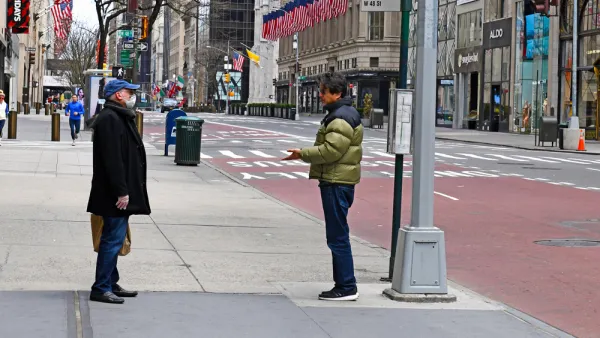
Lessons from Pandemics: Comparing Urban and Rural Risks
Many people assume that infectious disease risks make cities dangerous, but this is generally untrue. Other factors have more effect on pandemic risk and mortality rates, making cities safer and healthier than rural areas overall.
FEATURE
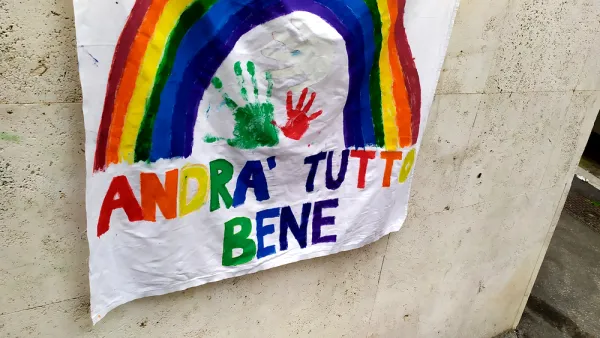
Overcoming Social Distance
People are finding new ways to connect digitally across physical spaces during the coronavirus pandemic, and these temporary solutions could have a lasting impact on the way we live.
FEATURE
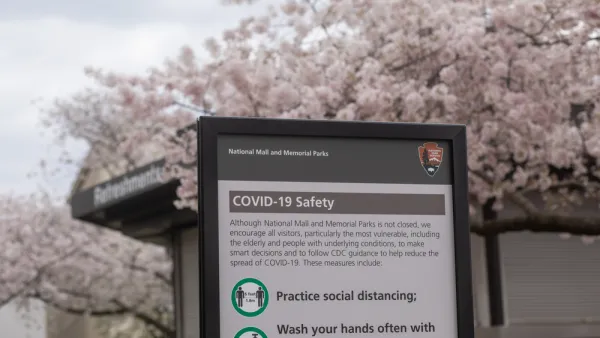
The Geography of Occupations: Some Neighborhoods Will Suffer More Than Others Under COVID-19
Census Bureau data shows we live near people with similar occupations, and right now frontline jobs are riskier for both health and economic well-being than working from home.
FEATURE
Rent Crisis Deferred
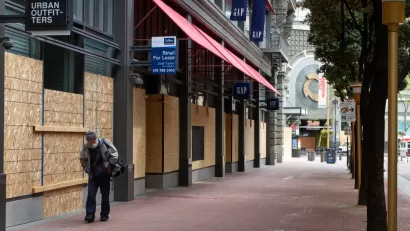
One-third of tenants didn't pay rent in April, according to a data released today by the National Multifamily Housing Council.

FEATURE
Lessons Emerge as Cities Cede Public Space to Contain the Pandemic
One of the dominant themes to emerge from the spread of COVID-19 is the conflict between the need to be in nature for health and well-being while avoiding public space as much as possible to prevent the spread.

BLOG POST
A Cheer (Or Maybe Even Two) For Redundancy
Is government too efficient to protect us from epidemics?
BLOG POST
Cities Should Take Advantage of Low Car Traffic to Accelerate Transit Construction
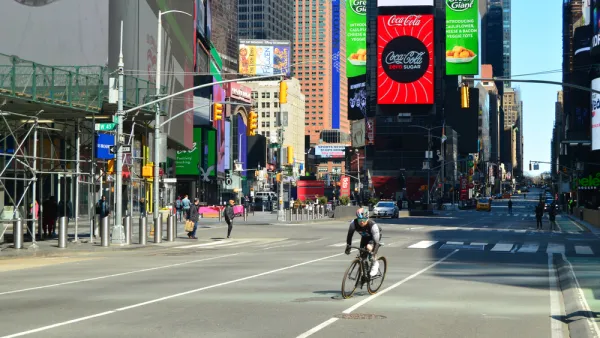
Beverly Hills is taking advantage of empty streets by accelerating construction on the Purple Line Subway extension currently cutting its way across Los Angeles. More cities should follow Beverly Hills' lead.

BLOG POST
COVID-19 Appreciation Day
April Fool's Day is a good day to consider life from a virus's perspective. Our tiny friends have many positive attributes.

FEATURE
The Dots of Connectivity and Broken Cultural Links
Connectivity is not just a question of geometry, according to this article by Fanis Grammenos. It's critical to consider what people connect for and how.
BLOG POST
Will Infrastructure Planners Become Responsible for Facial Recognition Systems?
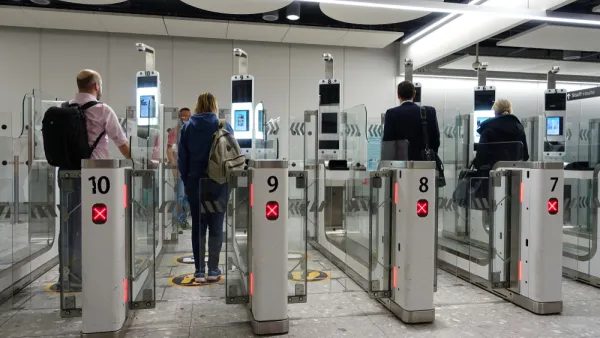
Facial recognition offers both benefits and risks. Planners can have a role in ensuring more of the former than the latter.
BLOG POST
Disparate Impact Won't Save Us From Exclusionary Zoning
The Fair Housing Act (FHA) imposes liability upon landlords and governments whose policies have a discriminatory effect against racial minorities. However, the courts have interpreted this doctrine narrowly.

BLOG POST
Planners and Pandemics: Identifying Problems and Providing Solutions
Planners are professional problem solvers. Let’s see how our methods can be applied to the COVID-19 pandemic.
FEATURE
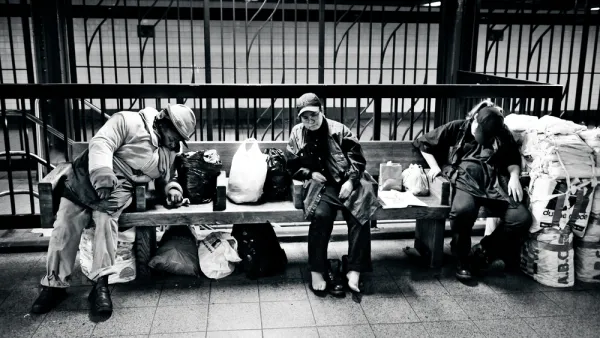
The Crisis Within the Crisis: Homelessness and Housing Pushed to the Brink by COVID-19
Cities, states, and the federal government are trying to prevent a repeat of 2008 while still facing the challenges of inequality and poverty that grew out of the previous recession.

BLOG POST
Planning Healthy Communities—Beyond the Hype
Evidence-based research can help planners create truly healthy communities. No junk-science please.

PLANOPEDIA
What Is High-Speed Rail?
Beginning with Japan in the 1960s, more and more countries are embracing high-speed trains to streamline domestic travel. Operating at speeds often in excess of 160 mph, high-speed rail networks are now well-developed across Europe and, more recently, in China.

BLOG POST
Debating the Future of Cities, and Urban Density, After the Pandemic
Numerous writers and experts are already examining the question about what happens to ideas about urbanism in a future forever altered by recent events.
FEATURE
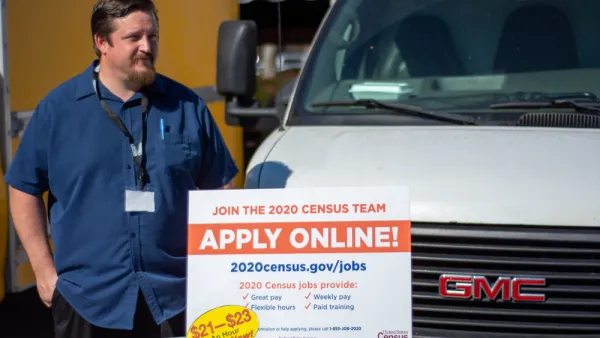
2020 Census Adapting Quickly to the Coronavirus Pandemic
Delayed operations and recommendations for how college students should report their living conditions are key to the Census response to COVID-19 so far. The Census is still expected to wrap up by the end of July 2020.
BLOG POST
How We Got Here
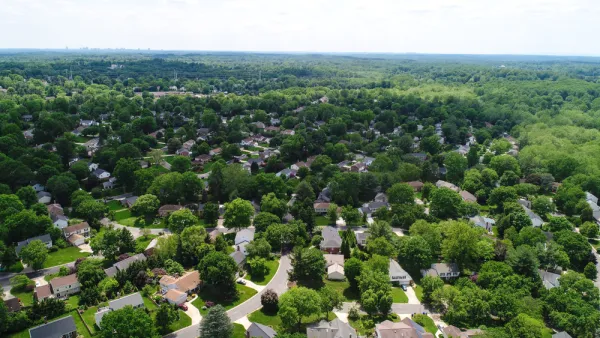
In "A History of Street Networks," Lawrence Aurbach discusses the intellectual movements driving the growth of suburban-style street design.
Harvard University Graduate School of Design
KFH Group Inc.
Greater Baltimore Committee
The Architects Foundation
University of Cincinnati Online
The Pocatello Development Authority
The Urban Renewal Agency of the City of Pocatello

FREE Course: Walkable City 1: Why Walkability?
After describing his path towards focusing on walkability as the essence of good planning, Jeff Speck marches through his five principal reasons for making more walkable places.
Reinventing Malls: Planning Alchemy—Turning Gray Fields Into Gold
The course focuses on the opportunities and imperatives that shape reinvention of mall sites.