Environment
Massive Oil Slick Revives Memories of 1969 Santa Barbara Spill
Tuesday's pipeline spill resulted in an oil slick off the Santa Barbara coast. While incomparable in size to the 1969 spill resulting from an oil platform blowout, it is yet another reminder of environmental consequences of oil dependency.
Washington Declares Statewide Drought Emergency
With snowpack down to 16 percent of normal levels, Washington officials are bracing for drought.
Obama Administration Policy Announced to Protect Honeybee Habitat
At scale, the secret life of bees provides $15 billion in benefits to the country's agriculture industry each year.
The Price of Global Energy Subsidies: $5.3 Trillion
An IMF working paper determined that global energy subsidies totaled $5.3 trillion this year, the worst offenders are China and the U.S. Placing a price on these subsidies, which include air pollution and carbon emissions, may be key to mitigation.
Study: Golden State Should Change Name to Greenest State
California's economy is not only the "least carbon-intensive" in the United States, it's the second lowest in the world when measured per economic output, according to a new study that evaluates economics and environment.
'General Welfare' for the Next Generation
The "health, safety, and general welfare" of our communities are poorly served by the outcomes of the status quo.
Adding the Environment to the 'Progressive Agenda'
The 13-point 'Progressive Agenda' announced by high profile liberal political leadership earlier this week neglected environmental policies. Can progressives get two birds with one stone?
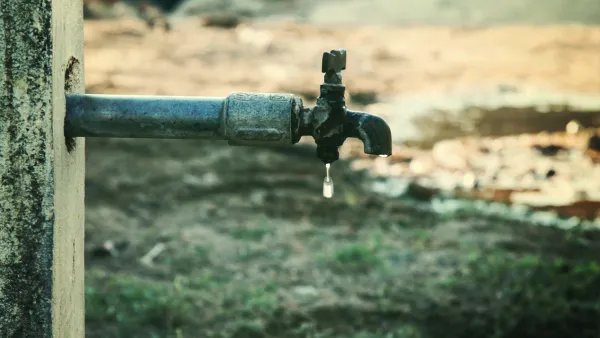
What Droughts Say About Planners and Water Officials
When water policy and land use planning operate in separate spheres, it's more difficult to design for efficient resource use. Better communication is needed in the drought-stricken southwest.
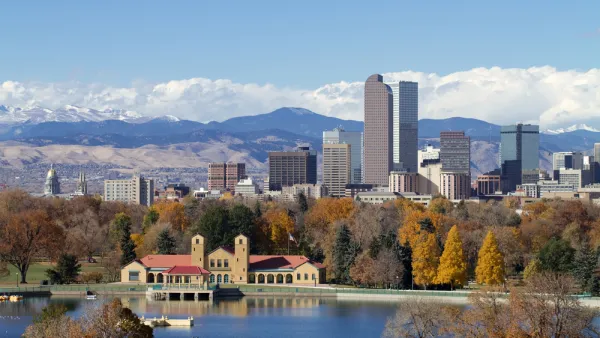
U.S. Cities Find Right Sizes for Their Greenbelts
A favorite in Europe but rare in the United States, urban growth boundaries are intended to keep cities compact and hinterlands green. The few American cities with UGB's are trying to figuring out how to use them effectively.
Household Solar Popularity Builds, As Does Utility Industry Discomfort
Utilities and regulators should be looking forward, not backward, to find ways to invest in progress, rather than trying desperately to cling to yesterday's business model, which is based on encouraging consumption of polluting sources of energy.
Trees Dying by the Millions During California's Drought
A U.S. Forest Service survey has revealed the high costs of the California drought to one of the state's most treasured features: its sprawling forests.
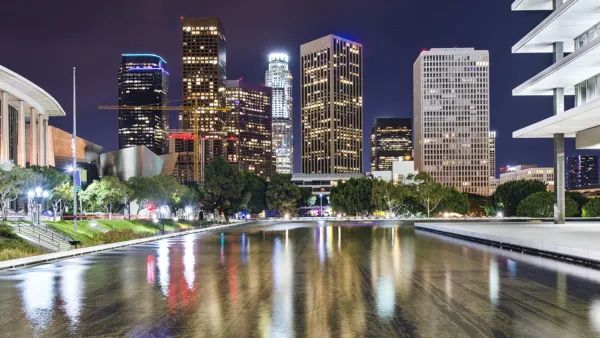
Los Angeles pLAn Shoots for STAR
The newly released Los Angeles Sustainability pLAn aspires to Lead by Example by committing to STAR Communities certification by 2017. Other major cities may now feel compelled to pursue STAR as part of their sustainability plans and program.
Local Opposition Growing to Atlantic Coast Drilling Plans
Back in January 2015, the Obama Administration pitched a proposal to allow offshore oil exploration along the Atlantic Coast. As more local stakeholders reveal their verdicts on the idea, some are finding reason to oppose.
Carbon Dioxide Levels Reach Record Level in March
The last time carbon dioxide levels were this high was a million years ago. The global community needs to reduce emissions by 80 percent to stop the increase in CO2 levels. The data was reported by the National Oceanic and Atmospheric Administration.
Battle Over Federal 'Clean Water Rule' Heats Up
The U.S. Environmental Protection Agency and the Army Corps of Engineers have drafted a new Clean Water Rule to clarify the regulatory powers of the Clan Water Act. In response, some members of Congress authored opposing legislation.
The Lake Mead Water Crisis Explained
The water level in Lake Mead dropped to an all-time low at the end of April, falling below 1080 feet above sea level for the first time in 78 years.
Highlights from CNU 23 Dallas
Having just wrapped up a great CNU in Dallas, April 29 through May 2, a collection of urbanists share some of the ideas that resonated the most.
FEMA to States: Want Disaster Mitigation Funds? Then Plan for Climate Change
A policy adopted earlier this year and due to go into effect next March would require states to plan for climate change before they are eligible to receive grant funding to plan for disasters.
Older Oil Tank Rail Cars Face Three-Year Deadline to be Replaced
Following up on last month's emergency rule addressing trains speeds, the Transportation Department issued new rules addressing tanker car standards, long thought to be one of the most important factors contributing to fiery oil tank car explosions.

Cities Try to Turn on the Dark
Of all the inventions of the modern world, few have been so embraced as artificial light. But constant light, like that which floods city streets and illuminates buildings, is not necessarily healthy or safe. Some cities are trying to go dark.

FREE Course: Walkable City 1: Why Walkability?
After describing his path towards focusing on walkability as the essence of good planning, Jeff Speck marches through his five principal reasons for making more walkable places.
Reinventing Malls: Planning Alchemy—Turning Gray Fields Into Gold
The course focuses on the opportunities and imperatives that shape reinvention of mall sites.

City of Rosemead
Rutgers University, Edward J. Bloustein School of Planning and Public Policy
One Hundred Miles
University of Michigan School for Environment and Sustainability (SEAS)
Hunter College, City University of New York (CUNY)
The Architects Foundation
City of Cambridge
The Pocatello Development Authority
The Urban Renewal Agency of the City of Pocatello









