Two projects proposed for the South Rim plateau of the Grand Canyon have raised alarms at the National Park Service, who see a serious threat from impacts to the views, water supply, and ecology of the canyon.


"Looking eastward from the canyon's popular South Rim, visitors could soon see a hive of construction as workers build restaurants, hotels and shops on a distant mesa on the Navajo Indian reservation," reports Julie Cart.
"The developers also plan a gondola ride from those attractions to whisk tourists to the canyon floor, where they would stroll along an elevated riverside walkway to a restaurant at the confluence of the Colorado and Little Colorado rivers."
"That project and a second, unrelated development proposed for just south of the canyon have set off alarms at the National Park Service, which sees them as the most serious threat the park has faced in its 95-year history."
The first, tourist-oriented project is in the planning process and will require approval of the Navajo tribal government. The second development, called Tusayan, is the work of Tom De Paolo and the Stilo Development Group, who have been pushing the project for 20 years. Tusayan would be built just outside the boundaries of the park near the South Rim, adding 2,200 homes and 3,000 square feet of commercial space.
Read the full story: National Park Service calls development plans a threat to Grand Canyon

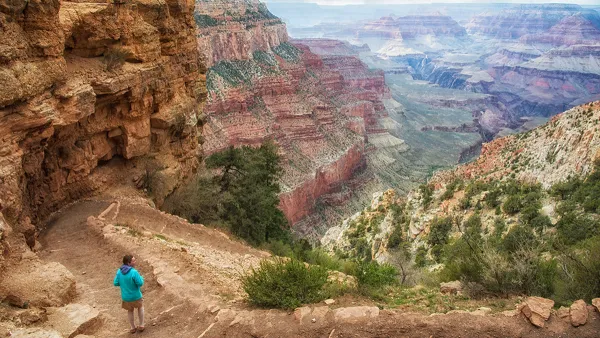
Grand Canyon Development Plans Will Wait Another Year
The Navajo Nation is not moving forward with a controversial plan to build a tram that would connect tourists from the rim of the bottom of the Grand Canyon, along with commercial and retail space. The proposal isn't totally dead yet, however.
A Battle Over Grand Canyon Development Nears A Grand Finale
Ken Belson reports on a massive development planned for a town located five miles from the south rim of the Grand Canyon, and the decades long battle amongst high powered interests and 600 local townspeople over the future of the area.
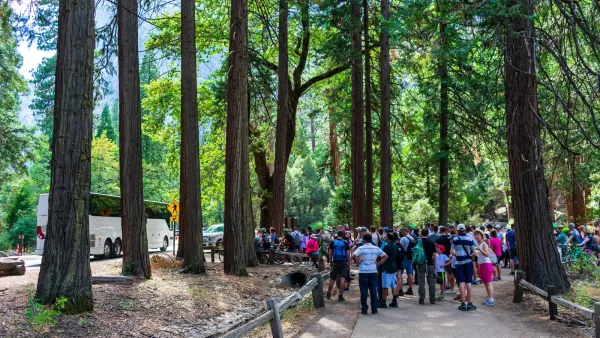
Yosemite crowds wait hours to enter park after NPS ends reservation system
Bumper-to-bumper traffic and a lack of parking foreshadowed a potentially chaotic summer.

Planetizen Federal Action Tracker
A weekly monitor of how Trump’s orders and actions are impacting planners and planning in America.

‘Going backwards:’ Baltimore mayor, students rally against state's transit funding plan
Maryland's proposed six-year plan provides no funding for Baltimore’s BMORE bus program and reduces its road maintenance funding.

Detroit to transform waterfront with $2.2 billion investment
Developers will convert about 18 acres of unused parking lot space into civic spaces.

Data center developers are using lawsuits, cash offers to ‘overwhelm’ rural America
Newsrooms in five states worked together to uncover the tactics big tech developers use to buy land from reluctant communities.

U.S.-Iran war may have ‘devastating’ impact on cost to warm homes
Vermont and Maine residents may see a 76% increase in the cost of warming their homes this winter.

Senate bill would ‘overhaul’ environmental permitting laws
Under the proposed act, government agencies would also not be able to suspend or rescind permits after granting them.

FREE Course: Walkable City 1: Why Walkability?
After describing his path towards focusing on walkability as the essence of good planning, Jeff Speck marches through his five principal reasons for making more walkable places.
Reinventing Malls: Planning Alchemy—Turning Gray Fields Into Gold
The course focuses on the opportunities and imperatives that shape reinvention of mall sites.

One Hundred Miles
County of Mendocino
planning NEXT
The Architects Foundation
University of Cincinnati Online
Montrose County
Northern Illinois Transit Authority (NITA)
The Pocatello Development Authority