Environment
The National Park Service Turns 99 Today
The big birthday means admission is free to national parks today as well.
Federal Bill Would Enable Waterfront Community Resilience Planning
A bill proposed in the U.S. Senate provides a model for how the federal government could support resilience planning in waterfront and coastal communities.
Gray Wolves Return to the Golden State—After 91 Years
Two adults and five pups have been photographed in Northern California by the California Department of Fish and Wildlife. They are protected by the federal and state Endangered Species Act, which is credited for their return.

America's Largest 'Crop': the Lawn
A NASA study finds that no irrigated vegetation covers more surface in the United States than the collection of lawns that are so important to the American identity.
The Incredible Sinking Central Valley
Parts of the nation's food basket, the San Joaquin Valley in California, are sinking at two inches per month, not per year. Known as subsidence, it results from over-pumping of groundwater by farmers desperate to save their crops in the epic drought.
Should Architects Be Citizen Scientists?
Can self-contained urban food systems exist in the core of our cities? Architect Darrick Borowski of New York based firm ARExA developed a model to determine just that.
Two L.A. River Experts On Funding, Governance, and Gehry
Los Angeles made progress toward revitalizing the L.A. River when the preferred restoration plan won an important approval. But the project also saw a jump in price and a change in cost-share, leaving some wondering where the money will come from.
California Cap-And-Trade Surprise: Cash Flows Out-of-State to Reduce Emissions
California industries are buying offsets in lieu of purchasing carbon allowances or reducing carbon emissions, and most of the offsets are spent out-of-state, assisting the recipients economically as well as reducing greenhouse gas emissions.
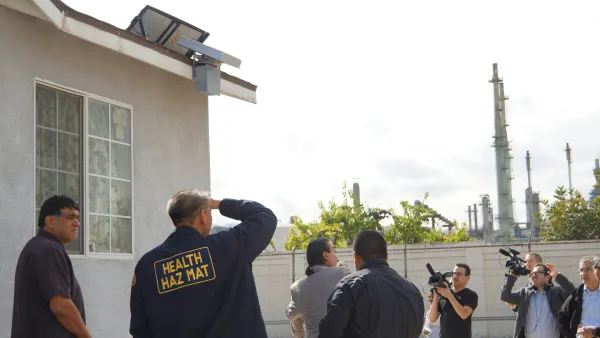
The EPA's Lackluster Environmental Justice Record
The Center for Public Integrity has released a report criticizing the EPA's environmental justice competence. In only 12 cases has the agency taken official action on behalf of communities affected disproportionately by polluters.
EPA Proposes Rule to Reduce Methane Emissions from New Oil and Gas Wells
On the heels of President Obama's Clean Power Plan rule that reduces carbon dioxide emissions from power plants, the new rule focuses on the other major greenhouse gas, methane, and rather than coal, it is focused on oil and gas drilling.
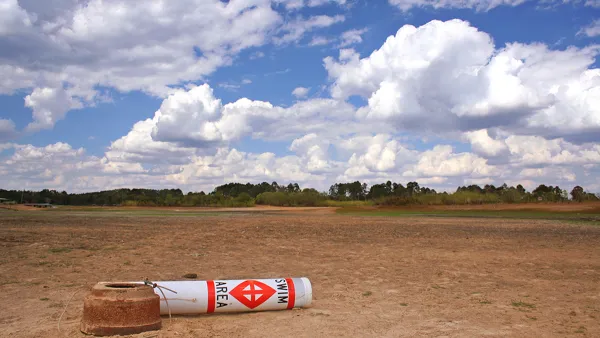
A State of Thirst
In the middle of a population boom, Texas is looking across state lines for more water. The U.S. Supreme Court said no the first time; does that mean it will say no again?
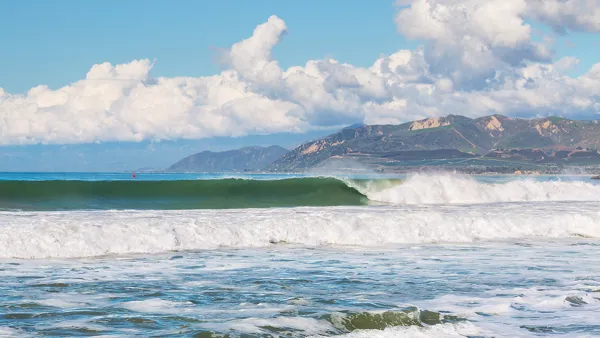
Mapping (and Ranking) the Natural Amenities of U.S. Counties
Wonkblog illustrates the results of a "Natural Amenities Index" created by the federal government.
Heart of the Arctic: Reflections
Even remote nature reinforces the need for compact settlement patterns.

Sacramento Reconsiders Ban on Artificial Turf
Brown lawns may be less aesthetically pleasing than synthetic lawns, but are they safer?
Interactive Maps Track Drought and More
A researcher from the Bill Lane Center for the American West at Stanford University explains how to use interactive maps to track climate change.

Atlantic City Could Become Empire of Innovation
Atlantic City, New Jersey, has been down on its luck lately. But, in the wake of Superstorm Sandy, AC could become the ideal laboratory for developing technologies and practices to help coastal cities build resiliency in the face of climate change.
Can California Cut Oil Use in Half by 2030?
A bill working its way through the California State Legislature would require the state to reduce petroleum its consumption by half in 15 years. CALmatters, a nonprofit journalism venture, seeks to find out if it is even possible.
'Digital Coast' Connects Planners and Data for Coastal Resilience
A new resource created by the National Oceanic and Atmospheric Administration in partnership with the APA makes it easier for planners to access the data necessary to plan for climate adaptation, sea level rise, and other forms of coastal resilience.
Take a Digital Tour of Pennsylvania's Urban Waterfronts
Keystone Crossroads has produced an interactive series about Pennsylvania's urban waterfronts. A storymap and in-depth reporting provide waterfront access from afar.
S&P Report: Man-Made Earthquakes Are Bad for Credit
The credit rating agency Standard & Poor's released a report that raises the threat level on the trend of earthquakes in areas around Oklahoma and Texas.

FREE Course: Walkable City 1: Why Walkability?
After describing his path towards focusing on walkability as the essence of good planning, Jeff Speck marches through his five principal reasons for making more walkable places.
Reinventing Malls: Planning Alchemy—Turning Gray Fields Into Gold
The course focuses on the opportunities and imperatives that shape reinvention of mall sites.

City of Rosemead
Rutgers University, Edward J. Bloustein School of Planning and Public Policy
One Hundred Miles
University of Michigan School for Environment and Sustainability (SEAS)
Hunter College, City University of New York (CUNY)
The Architects Foundation
City of Cambridge
The Pocatello Development Authority
The Urban Renewal Agency of the City of Pocatello









