Trees are a vital element of urban design, one that must considered at every stage of planning, design and development.


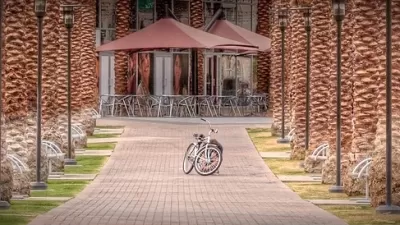
Paul Crabtree, President of Crabtree Group, Inc., a Civil Engineering and Town Planning firm and Lysistrata "Lyssa" Hall, an ISA certified Arborist and Neighborhood Specialist of the City of Phoenix, Arizona recently presented their paper "Trees in Urban Design" at StormCon 2014 in Portland, Oregon, the largest stormwater pollution prevention conference and exposition of it’s kind.
The report blends a variety of new urban and green infrastructure principles that can be used in tandem to develop cost effective urban designs that create beautiful places. The paper compares the installation, maintenance, and net lifecycle costs of common urban tree planting techniques. Additionally, the paper explores the urban tree’s potential for an immense return on investment through intercepted stormwater, increased property value, and conserved energy.
This paper is a useful reference for planners, advocates of urban design, street designers looking to better understand and employ trees in the design of their communities. The full report can be viewed or downloaded here [pdf].
'Trees in Hard Landscapes': Guide for High-Performance Urban Infrastructure
A new cross-disciplinary report cites 32 case studies to offer practical solutions for integrating trees into civic spaces and surface car parks.
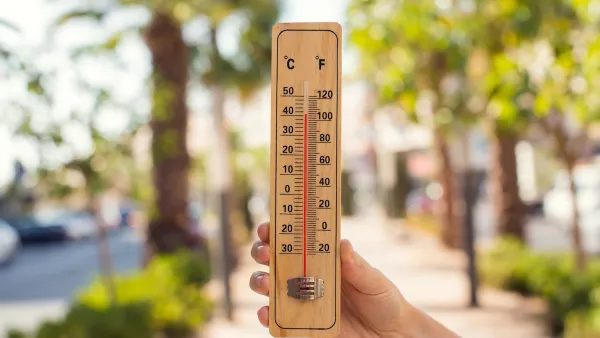
Study: Urban Trees Lose Cooling Benefits in Extreme Heat
A robust tree canopy can help reduce the urban heat island effect and lower air temperatures, but the impact is reduced as temperatures rise.
Invasive Beetles Put Oregon Forests at Risk
Two recently discovered borer beetles could lead to a significant loss of tree canopy.

Planetizen Federal Action Tracker
A weekly monitor of how Trump’s orders and actions are impacting planners and planning in America.

California plans to bury El Niño’s downpour
If the state plays its cards right, it may be able to store a billion acre-feet of El Niño’s water in aquifers.

Desperate measures: Advocates weigh draining Lake Powell to fill Colorado River
Draining the reservoir could reduce evaporation losses by a couple hundred thousand acre-feet.

Mamdani’s pied-à-terre tax survives legal challenge
A panel of judges found that the plaintiffs failed to demonstrate injury as a result of New York City's implementation of the tax.

Eastern Nebraska is running out of electricity
Data centers and electrification are straining eastern Nebraska’s grid, throttling economic development.

Seattle passes record-breaking transit services expansion
Proposition 1 will double the city’s transit tax to add 95,000 more bus trips and preserve 180,000 bus trips annually.

FREE Course: Walkable City 1: Why Walkability?
After describing his path towards focusing on walkability as the essence of good planning, Jeff Speck marches through his five principal reasons for making more walkable places.
Reinventing Malls: Planning Alchemy—Turning Gray Fields Into Gold
The course focuses on the opportunities and imperatives that shape reinvention of mall sites.

City of Rosemead
Rutgers University, Edward J. Bloustein School of Planning and Public Policy
One Hundred Miles
University of Michigan School for Environment and Sustainability (SEAS)
Hunter College, City University of New York (CUNY)
The Architects Foundation
City of Cambridge
Montrose County
The Pocatello Development Authority