Alan G. Brake writes an editorial calling on the architecture and urbanism fields to push even further to reduce carbon emissions by designing (and upgrading) efficient buildings.


Alan G. Bake cites the memory of Hurricane Sandy and the People's Climate March in an appeal to architects and other urbanism professionals to move beyond their already substantial leadership on the issue:
Climate change is one area where the architecture/design/urbanism communities have taken the lead. The professions can and must do much more. In already dense areas, like New York, improving the efficiency of our buildings has the greatest potential to reduce our already modest (by U.S. standards) emissions.
Brake joins the American Institute of Architects New York chapter in supporting a climate change plan announced recently by New York Mayor Bill de Blasio:
Nearly three quarters of the city’s greenhouse gases can be traced to its buildings. As a first step, the mayor created a plan to upgrade 3,000 city owned buildings, and pledged to work with the private sector in incentivize efficiency upgrades. Though these upgrades will come with upfront costs, the city estimates a savings of $1.4 billion in energy costs by 2025.
Read the full story: Editorial>Real Change for a Changing Planet


NYC Approves Carbon Neutrality Plan
The zoning amendment, part of the ‘City of Yes’ plan, will make it easier and more affordable to make efficiency retrofits and reduce emissions.
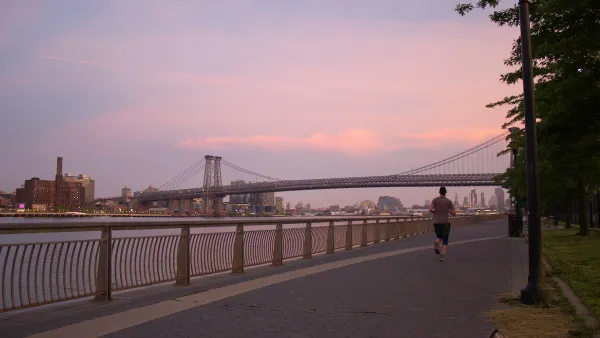
East River Floodgates Rising in NYC
A tour of new infrastructure designed to protect the city’s East Side from catastrophic flooding.

‘Passive House’ Development Brings 275 Affordable, Efficient Units to Brooklyn
A 14-story tower uses the ‘Passive House’ approach to drastically reduce energy use and improve quality of life for residents.

Planetizen Federal Action Tracker
A weekly monitor of how Trump’s orders and actions are impacting planners and planning in America.

Amtrak, CN end decades-long dispute with eight-year agreement
The new operating agreement establishes an updated framework for the companies to work together, including processes to resolve disputes.

Judges permit Denver to divert 77,000 acre feet from the Colorado River for reservoir expansion
Overuse and climate change have caused the Colorado River’s water levels to plummet.

Atlanta City Council unanimously backs $3.5 billion Beltline light rail project
The resolution was drafted after Atlanta Mayor Andre Dickens pulled support for the Atlanta Streetcar extension last year.

SEPTA to bring nearby frequent transit to over 1 million new riders as part of decade-long plan
The agency's Accelerate plan will also bring frequent transit to twice the amount of jobs that are currently located near it.

NYC plants over 18,000 trees, the most new foliage in a decade
Many of the trees were planted in communities vulnerable to extreme heat.

FREE Course: Walkable City 1: Why Walkability?
After describing his path towards focusing on walkability as the essence of good planning, Jeff Speck marches through his five principal reasons for making more walkable places.
Reinventing Malls: Planning Alchemy—Turning Gray Fields Into Gold
The course focuses on the opportunities and imperatives that shape reinvention of mall sites.

City of Thousand Oaks
City of Wisconsin Rapids
Harvard University Graduate School of Design
The Architects Foundation
University of Cincinnati Online
The Pocatello Development Authority
The Urban Renewal Agency of the City of Pocatello