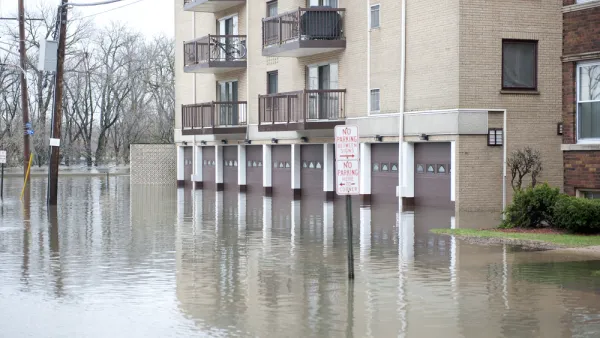
As federal law shifts to address resilience in post-Hurricane Sandy New York, the Department of City Planning has released a new manual to help residents and landowners understand options for retrofitting their buildings to prepare for floods.


"On October 8th, 2014, the Department of City Planning released Retrofitting Buildings for Flood Risk, the most comprehensive analysis of retrofit options available for buildings in the New York City floodplain to date," according to the New York City Department of City Planning website.
The manual "is designed to shed light on retrofitting strategies that will enable home and property owners to reduce the risk of damage and disruption from coastal flooding. The manual also highlights the limitations of current Federal regulations for buildings in urban environments like New York City," according to a press release announcing the manual.
The press release goes on to describe some of the changing laws and regulations regarding flood zones in New York City. For instance: "Recent Congress legislation reforming the [National Flood Insurance Program] will increase flood insurance premiums for buildings that are not retrofitted to protect against flooding."
Read the full story: Retrofitting Buildings for Flood Risk

New Study Reveals Massive, Unaccounted Flood Risk
The Federal Emergency Management Agency undercounts the humber of homes at substantial risk of flooding by some 70 percent, according to a report released this week.

Where Cities Flout Flood Protection Rules, the Public Still Subsidizes Insurance
An investigation by the New York Times reveals the ongoing neglect of flood considerations in developing parts of the United States—practice that comes with large costs to the taxpaying public.

Hurricane Harvey and the Failure of the National Flood Insurance Program
Houston's most recent natural disaster is only the latest example of how a program created to help homeowners has been a greater benefit to the industries that profit from them.

Planetizen Federal Action Tracker
A weekly monitor of how Trump’s orders and actions are impacting planners and planning in America.

‘Going backwards:’ Baltimore mayor, students rally against state's transit funding plan
Maryland's proposed six-year plan provides no funding for Baltimore’s BMORE bus program and reduces its road maintenance funding.

Detroit to transform waterfront with $2.2 billion investment
Developers will convert about 18 acres of unused parking lot space into civic spaces.

Exemption applications for NYC’s pied-à-terre tax see 55% success rate
The city sent nearly 40% of its initial pied-à-terre tax warnings erroneously.

MTA invests $1.1 billion in ‘nearly-impossible’-to-evade fare gates
The new technology marks the Metropolitan Transit Authority's first turnstile redesign in decades.

HUD modernizes 50-year-old manufactured housing framework
The Next Generation Manufactured Housing Action Plan establishes new energy-efficiency standards for manufactured homes, and new guidelines for anchoring them.

FREE Course: Walkable City 1: Why Walkability?
After describing his path towards focusing on walkability as the essence of good planning, Jeff Speck marches through his five principal reasons for making more walkable places.
Reinventing Malls: Planning Alchemy—Turning Gray Fields Into Gold
The course focuses on the opportunities and imperatives that shape reinvention of mall sites.

One Hundred Miles
County of Mendocino
planning NEXT
The Architects Foundation
University of Cincinnati Online
Montrose County
Northern Illinois Transit Authority (NITA)
The Pocatello Development Authority