Community / Economic Development
Interpreting the 'Timeless and Time-Bound' in Cities
In his latest essay on interpretation of the urban environment, Chuck Wolfe suggests that if we take away context clues cities become matrices -- with blank cells to complete -- where each of us personalizes how space meets time.
Social Mobility in America: Reality or Dream?
Richard Reeves explains the factors that limit or assist social mobility for people born into the lowest economic quintile in American society.
White Flight Patterns Continue Within the Suburbs
According to a recent study, white flight proliferates even in the suburbs, as suburbs attract large numbers of middle-class minority residents and white residents flee so-called 'ethnoburbs'.
Bloomberg Offers $1 Million Annually for 'Innovation Delivery Teams'
Former New York City Mayor Michael Bloomberg began a new program via Bloomberg Philanthropies to invest $45 million for shaking up city halls.
Nine Women Leading the Public Interest Design Field
Rennie Jones of Architizer highlights nine women pioneering a variety of successful and poignant public interest design projects around the world.
Jane Jacobs' Sidewalk Ballet, Gone Forever in New York City?
Alex Marshall discusses whether Jane Jacobs' famous "Sidewalk Ballet" is dead on the streets of New York City.
Lean Urbanism: A Century-Old Practice?
A short case study in Lean Urbanism, compliments of Victoria Beach, Manitoba.
Can Chicago's Tech Boom Benefit the South Side?
With tech businesses setting up shop in Chicago's Loop, what it will take to attract companies out to neighborhoods like Garfield Park and Englewood?
Tourism's Negative Effects in Italian Art Cities
With about 353 tourists per resident in the historic city center of Venice, many residents are fleeing the crowds and moving onto the mainland, making the city a "monument-attraction," rather than a viable living space.
The Many Benefits of a 'Downtown Ward 7' in Washington D.C.
Efforts to grow a downtown in a historically neglected part of Washington, D.C. would do more than bring business to the area. Studies show that the built environment has huge impacts on health—obesity, asthma, and even teen pregnancy.
America's Energy Bust
Unlike Texas and N.D, Alaska's oil production peaked in 1988 and continues to decline. An upcoming referendum on oil taxes threatens to reduce energy investment. The North Slope pipeline is carrying such low oil volumes to endanger its safety.
Good Design Sparks Rural Community Development
Now more than ever, creative professionals are turning their attention to community development. While this trend toward good design is exciting, it’s harder to find in rural areas. Here are a few ideas from the forefront of rural design.
7 Essential Books on the Local Food Movement
Marianne Peters lists seven "classic, must-read" books about the evolving role of locally grown and sold food in the American economy.
Income Inequality Worse in 2 of 3 American Metropolitan Areas
A new report by the U.S. Conference of Mayors highlights the growing income divide, breaking the data down to the local level and finding that income inequality grew in two out of three metro areas between 2005 and 2012.
The Death of Neighborhoods
In the same vein that Robert Putnam explored decaying community and social capital in American in his work, Bowling Alone, Brian Bethune discusses how the decay of Western communities shapes our health and political realms.
Millennial Fever: Taking Stock of Denver Placemaking
Denver's investments in placemaking—guided by the city's great appeal to Millennials—are a mixed bag of hits, misses, and open questions.
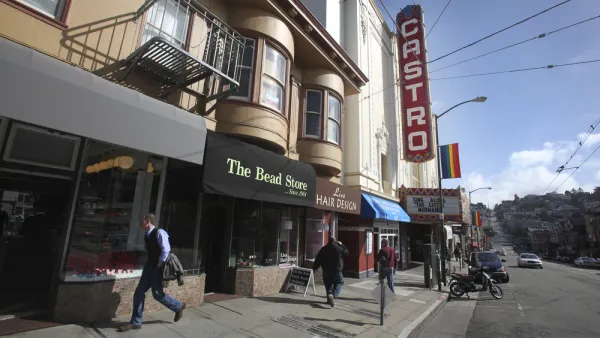
Do Evolving Neighborhoods Mean Dissolving Communities?
Exploding housing costs and changing social attitudes are altering the demographics of established gay neighborhoods in several big cities. As communities become more fluid, do we risk losing their culture?
Using Music to Create Community
Can outdoor concerts transform a neglected place into a beloved city center? "Creative placemaking" is trendy now, but Levitt Pavilions, a national non-profit, has been making places vibrant by building outdoor concert venues for seven years now.
Multi-Generational Housing not only for Oldest Adults, Also Young Adults.
The Great Recession spiked the amount of young adults (aged 25-34) living in multi-generational housing, which has now surpassed the share of oldest adults (age 85+) living in these types of household structures.
Can the Walton Family Help Reverse Arkansas Sprawl?
Led by the Walton Family Foundation, Northwest Arkansas officials look to "sense of place" and walkable urban solutions for future economic growth and attraction of talent.

FREE Course: Walkable City 1: Why Walkability?
After describing his path towards focusing on walkability as the essence of good planning, Jeff Speck marches through his five principal reasons for making more walkable places.
Reinventing Malls: Planning Alchemy—Turning Gray Fields Into Gold
The course focuses on the opportunities and imperatives that shape reinvention of mall sites.

City of Rosemead
Rutgers University, Edward J. Bloustein School of Planning and Public Policy
One Hundred Miles
University of Michigan School for Environment and Sustainability (SEAS)
Hunter College, City University of New York (CUNY)
The Architects Foundation
City of Cambridge
Montrose County
The Pocatello Development Authority









