Lyft and Uber will begin including autonomous vehicles in their networks in Atlanta and Arlington, Texas starting later this year.


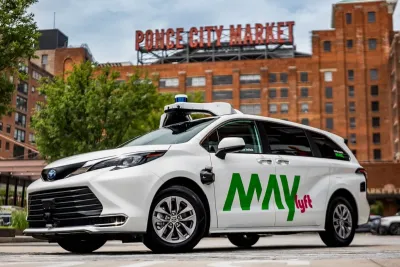
Lyft and Uber will begin using robotaxis in their rideshare fleets in Atlanta and Arlington, Texas, respectively, later this year, reports Dan Zukowski in Smart Cities Dive.
The autonomous vehicles are operated by May Mobility, and deployments will begin with ‘standby operators’ in the car. May currently operates fleets in Detroit, Grand Rapids, Minnesota, and Martinez, California and primarily serve older residents and people with mobility challenges. “The company says its AV technology can handle narrow city streets, provides more human-like maneuvering around obstacles like double-parked cars and delivers smoother accelerations and braking.”
Other self-driving car operators, such as Waymo and Cruise, have run into problems with regulators after their vehicles blocked emergency vehicles and, in one case, dragged and seriously injured a pedestrian. GM shut down its Cruise self-driving division at the end of 2024. In June, Tesla announced its plans to deploy self-driving taxis in Austin, where the city is barred by state law from regulating autonomous cars.
FULL STORY: May Mobility’s robotaxis will come to 2 more US cities this year

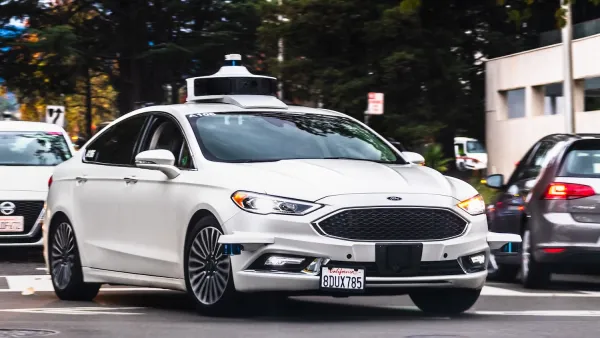
Lyft CEO: Drivers Won’t be Replaced by Robots in ‘Any Reasonable Time Frame’
The head of the ride-hailing giant says neither the technology, regulators, nor consumers are quite ready for widespread deployment of self-driving cars.
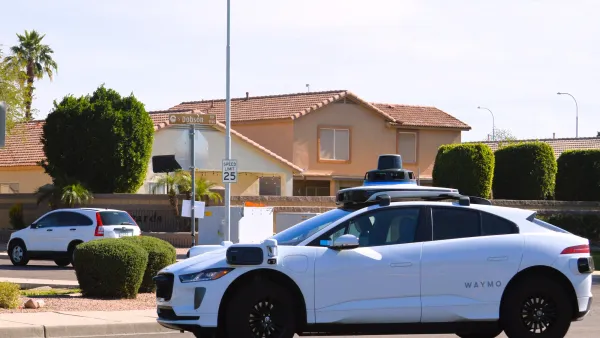
Uber and Waymo part ways in Phoenix
The companies ended a three-year pilot program, with Waymo saying it plans to keep its Phoenix robotaxi fleet available through its own app.
Tesla Reveals Remote Drivers Temporarily Control its Robotaxis
The company admitted human drivers sometimes remotely take over robotaxi operations “if necessary.”

Planetizen Federal Action Tracker
A weekly monitor of how Trump’s orders and actions are impacting planners and planning in America.

The state-sanctioned urbicide of Austin
People don’t kill cities. Freeways do.

US to reduce Colorado River water deliveries to Mexico
A new Colorado Treaty amendment reduces Mexico’s Colorado River water allocation by 250,000 acre feet.

5 New England states march closer to 800 megawatt wind energy project
Securing federal approval for the project may be complicated under the Trump administration, which has historically been hostile towards domestic wind power.

Baltimore to break ground on $50 million Transit Priority Project
The project will bring faster bus trips, safer streets and better bike connections to Baltimore.

Airbnb launches $250 million 'last-dollar financing' housing accelerator, makes first investment in Austin
The company will put $6.4 million towards affordable housing development in Texas’ capital.

FREE Course: Walkable City 1: Why Walkability?
After describing his path towards focusing on walkability as the essence of good planning, Jeff Speck marches through his five principal reasons for making more walkable places.
Reinventing Malls: Planning Alchemy—Turning Gray Fields Into Gold
The course focuses on the opportunities and imperatives that shape reinvention of mall sites.

Eagle County Government
Harvard University Graduate School of Design
Nashville Planning Department
The Architects Foundation
University of Cincinnati Online
The Pocatello Development Authority
The Urban Renewal Agency of the City of Pocatello
Journal of the American Planning Association