A recent article on the Stanford Social Innovation Review blog argues that instead of chasing gleaming skyscrapers, planners in developing cities should build a new model of the "world class" city.


Oren Ahoobim, Laura Goldman, and Shanti Mahajan want to “redefine the ‘world-class city’ as an inclusive city.” After surveying many developing cities chasing the model of Singapore and Dubai, “a modern skyline, a high level of efficiency, and an absence of visible signs of poverty,” the team finds many examples of cities misplacing priorities and deepening social chasms.
“Municipal leaders pursue this ‘world-class’ vision to attract investment, to cultivate their cities’ integration into the global economy, and to improve the quality of living standards. Too often, however, those benefits accrue only to the wealthiest and most powerful residents of a city.”
Ahoobim, Goldman, and Mahajan site the suppression of informal economies and the funding of commercial properties at the expense of infrastructure as two examples of the misplaced priorities of developing cities. The propose their own inclusive vision for development in response.
FULL STORY: What Makes a “World-Class” City?

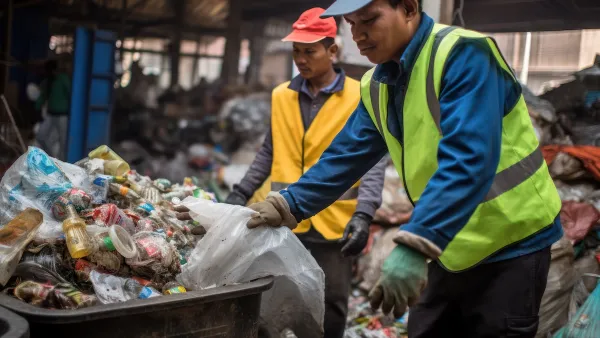
How the Informal Economy Can Build Resilience
Building sustainable, equitable cities of the future, must take into account the important and often overlooked tasks performed by informal workers.

D.C. Passes New Street Vending Rules
The District’s new regulations lower permit fees, reduce barriers to entry for vendors, and decriminalize vending offenses.

How Does an Economic Downturn Impact City Infrastructure?
From budget cuts to delayed maintenance projects, cities adapt, prioritize, and innovate amidst financial challenges to ensure sustainable and resilient urban environments.

Planetizen Federal Action Tracker
A weekly monitor of how Trump’s orders and actions are impacting planners and planning in America.

The state-sanctioned urbicide of Austin
People don’t kill cities. Freeways do.

US to reduce Colorado River water deliveries to Mexico
A new Colorado Treaty amendment reduces Mexico’s Colorado River water allocation by 250,000 acre feet.

5 New England states march closer to 800 megawatt wind energy project
Securing federal approval for the project may be complicated under the Trump administration, which has historically been hostile towards domestic wind power.

Baltimore to break ground on $50 million Transit Priority Project
The project will bring faster bus trips, safer streets and better bike connections to Baltimore.

Airbnb launches $250 million 'last-dollar financing' housing accelerator, makes first investment in Austin
The company will put $6.4 million towards affordable housing development in Texas’ capital.

FREE Course: Walkable City 1: Why Walkability?
After describing his path towards focusing on walkability as the essence of good planning, Jeff Speck marches through his five principal reasons for making more walkable places.
Reinventing Malls: Planning Alchemy—Turning Gray Fields Into Gold
The course focuses on the opportunities and imperatives that shape reinvention of mall sites.

Eagle County Government
Harvard University Graduate School of Design
Nashville Planning Department
The Architects Foundation
University of Cincinnati Online
The Pocatello Development Authority
The Urban Renewal Agency of the City of Pocatello
Journal of the American Planning Association