Community / Economic Development
Adding the Environment to the 'Progressive Agenda'
The 13-point 'Progressive Agenda' announced by high profile liberal political leadership earlier this week neglected environmental policies. Can progressives get two birds with one stone?
How Regulatory Changes Facilitate Transit Oriented Development
Darnell Grisby makes the case for focusing on ridership and boardings (rather than travel time) and clarifying joint development rules to better facilitate transit oriented development and transit oriented communities.
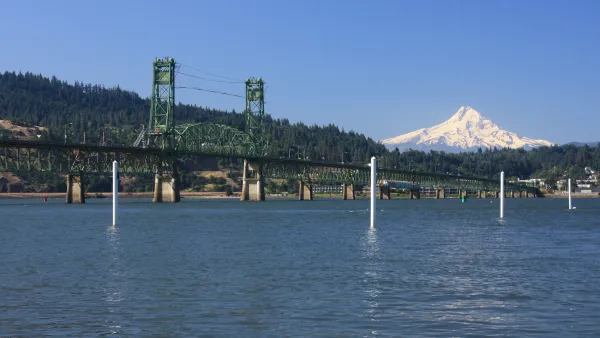
One Suburban County's Search for Land to Support Employment
Amid concerns about lackluster growth, Oregon's Clackamas County plans to create 10,000 new family wage jobs by 2019. But the county lacks the zoned land it needs to accomplish its goals.
Study: NIMBYs Stunt the National Economy
A new study calculates the national consequences of restrictive housing regulations in three cities: San Francisco, New York, and San Jose.
ULI Takes the Country's Pulse with 'America in 2015' Report
With the recently released America in 2015 report, the Urban Land Institute undertakes a broad survey to discover what Americans are looking for in their communities.
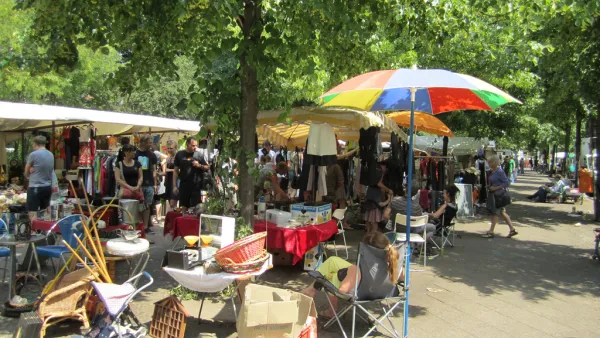
The Promise of Pop-Up Placemaking
With the support of its executive leadership, Adelaide, Australia's experimentalist city council has encouraged ephemeral projects to enliven streets. "Splash Adelaide" projects can even override council policy.
Planners Reboot Public Health Efforts in South Los Angeles
A law passed to combat obesity and diabetes in South Los Angeles by slowing the proliferation of fast food restaurants has done little to change the landscape of the area.

The Key to Escaping Poverty: Transportation
A recent study that connected place to opportunity also includes findings about the factor most likely to influence economic success: access to transportation.
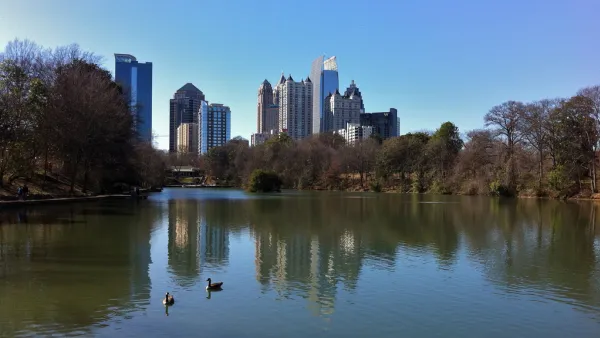
Atlanta Beltline Symbolizes Efforts to Reverse Tide of Sprawl
Famously far-flung Atlanta is finding a comforting psychic barrier in the BeltLine, a 45-mile greenbelt in the place of former railroad tracks. The city and developers are trying to make the urban core more functional and attractive.
$4.1 Billion Return on Riverfront Parks Investments in Pittsburgh
According to a recent study, $130 million invested in the Three River Park has multiplied into $4.1 billion in development around the riverfront.
A Call for Mayor de Blasio to Fund New York's Public Libraries
The New York Times editorial board questions the priorities of a city that can support sports facilities with hundreds of millions of dollars in taxpayer funds but neglects its libraries.
Cities Chase Elusive 'Innovation Economy'
In many places, anchor institutions and local industries are old news. New companies, new ideas, and brand-new industries are creating wealth and vibrancy. Professor Enrico Moretti explains how cities can get in on the 'innovation economy.'
Affordable Housing Strikes Back
Has George Lucas discovered the ultimate anti-NIMBY weapon? Hint: It's not a lightsaber
Highlights from CNU 23 Dallas
Having just wrapped up a great CNU in Dallas, April 29 through May 2, a collection of urbanists share some of the ideas that resonated the most.
Washington, D.C.'s Downtown Playground Desert
D.C.'s fast-growing downtown neighborhoods have new restaurants, offices and apartments—but few playgrounds. With thousands of children expected to be born in the District in the next five years, where will they all play?
Atlanta's Big Mistake: Rushing Movie Studio Deal for Fort McPherson
Checking in on the status of negotiations for the redevelopment of Fort McPherson's 488 acres of rolling hills, historic buildings, and a lake, among much more, the Saporta Report argues that Atlanta has been far too accommodating.
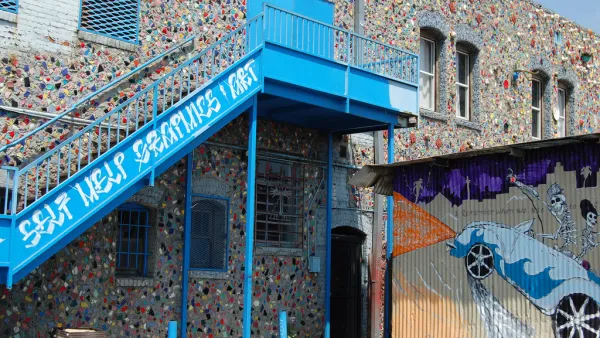
On the Natural Urbanism of East L.A. Artists
The planning process often suffers from a lack of community engagement. According to James Rojas, planners can learn from the on-the-ground urbanism of artists in East L.A.
Lessons from Baltimore: Civic Action, Not Defensive Architecture, Needed
Baltimore was only beginning to undo the ill effects of the architecture and planning response to the riots of 1968 when the protests and unrest of 2015 struck. Can the architecture field produce a more positive response to violence this time?
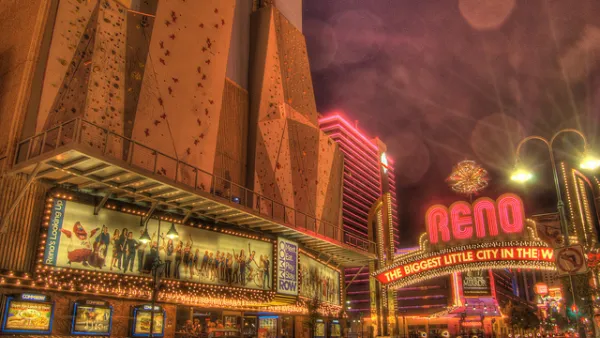
Nevada's Most Interesting City: Reno
Long considered a desert backwater and second fiddle to Las Vegas, the city of Reno is having a resurgence. Small entrepreneurs, industrial giants like Tesla, and artists inspired by Burning Man are converging to overshadow the fading casino economy.
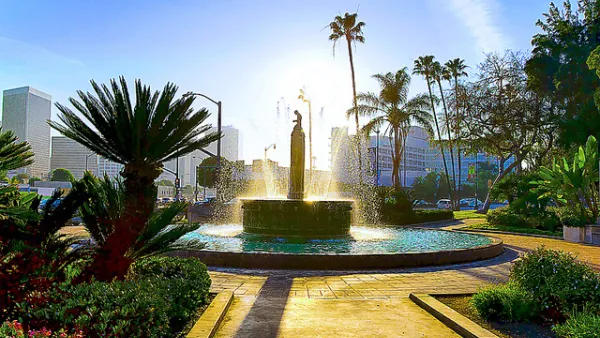
How Capitalists View Cities
The Milken Institute Global Conference brought hoards of business leaders to Beverly Hills last week. Sessions included some high praise for cities and buoyant predictions about innovation, development, and accommodating six billion city-dwellers.

FREE Course: Walkable City 1: Why Walkability?
After describing his path towards focusing on walkability as the essence of good planning, Jeff Speck marches through his five principal reasons for making more walkable places.
Reinventing Malls: Planning Alchemy—Turning Gray Fields Into Gold
The course focuses on the opportunities and imperatives that shape reinvention of mall sites.

KFH Group Inc.
Greater Baltimore Committee
Eagle County Government
The Architects Foundation
University of Cincinnati Online
The Pocatello Development Authority
The Urban Renewal Agency of the City of Pocatello