Community / Economic Development
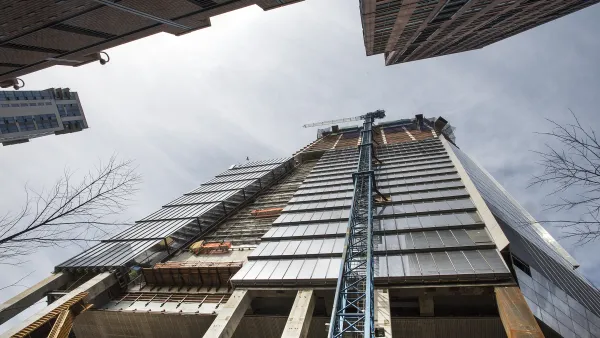
Manhattan's Hudson Yards 'Mini-City' Back on Track
Stymied for a time by lackluster investment, planned redevelopment of Hudson Yards on Manhattan's West Side is picking up speed. Joining residential buildings and budget hotels, office towers will bring municipal revenues back up.
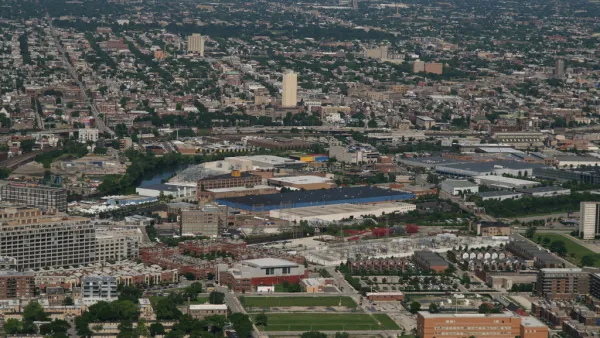
Chicago's Golden Goose
Once known as "Little Hell" for its copious industrial plants, Goose Island is a rare, relatively undeveloped investment opportunity. Centrally located, it may one day house swanky offices.
An In-Depth Look at One of America's Preeminent Landscape Architects
The Atlantic's Eric Jaffe centers on James Corner's latest work in Cleveland's Public Square, and goes to describe his other well-known projects, including the High Line, and transformations of public parks and urban spaces throughout the country.
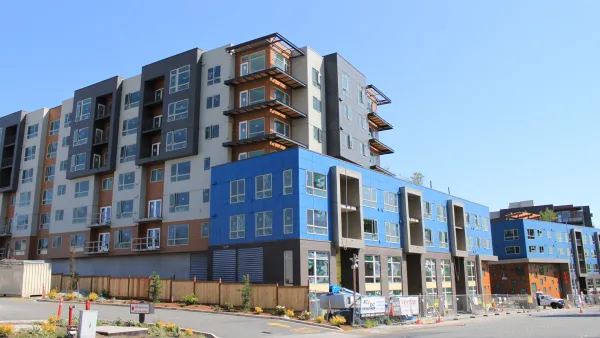
Sunday Funday: Game Simulates the Development Experience
Even though it's simplified, Inside the Rent provides a window into the logic of developers trying to get apartments built in New York City. The game's creators emphasize its educational value.
Pope Goes Global: Let's Talk Local
Pope Francis, sticking to his job description, is out to save the world and all its creatures. Maybe we can help in our own little universes, where we can influence planning and design that makes for swell places and for reduced contributions to GHG.
Detroit's M-1 Rail Line Credited for Delivering Investment—A Year Before Opening
The 3.3-mile M-1 Rail line in Detroit has been described as a boondoggle of unparalleled proportions. Boosters of the project, however, have gathering evidence of investment in neighborhoods along the route.
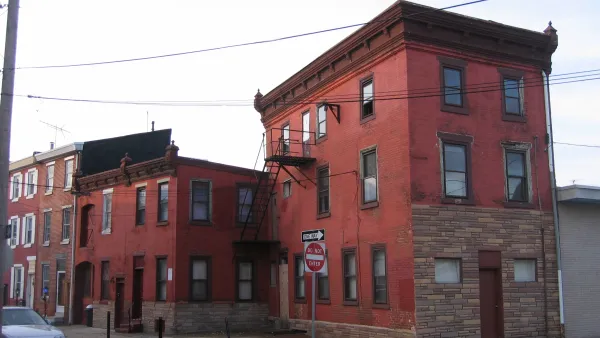
Philadelphia's Rowhouse Remedy for Gentrification
Blessed with an innate resilience, Philadelphia's brick rowhouses risk disrepair and redevelopment. Local nonprofits are looking for ways to keep this resource equitable.
A Case Study in Planning for Inclusion and Affordability
New federal programs are enabling planning processes that deliver positive outcomes for a broader scope of the population. Seattle provides an example of how federal money is supporting the success of inclusive planning processes.
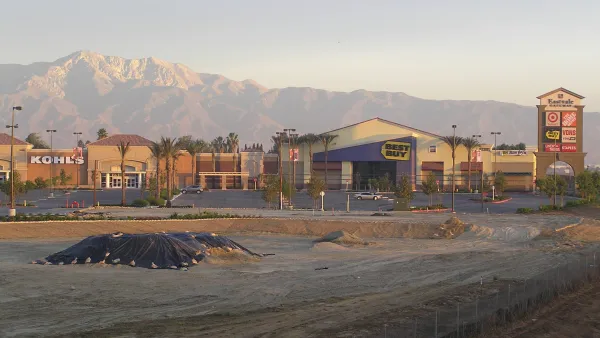
For Cities, Big-Box Stores Are Becoming Even More of a Terrible Deal
Big-box retailers' new tactic to slash their taxes is the latest example of why cities are better off saying no to the boxes and cultivating Main Streets instead.
Support for Walmart Grows Nationally
Opposition to Walmart is now holding at just 50 percent, when people are asked how they would feel if a Walmart was proposed "in your community." Support for Walmart is up 16 percentage points since 2006.
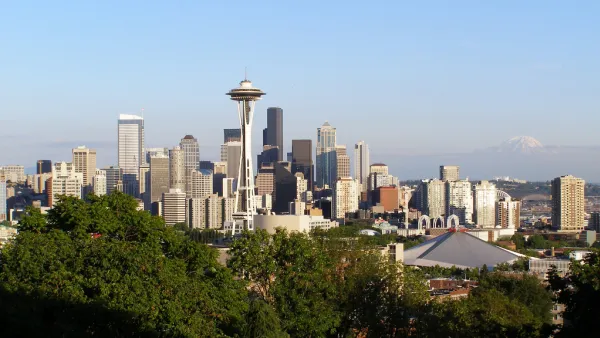
What Cities Can Learn From Companies Migrating to Downtown
The Core Values: Why American Companies are Moving Downtown report, released on June 18, 2015, provides in-depth analysis of a powerful trend of companies investing in urban downtowns.
Paterson: A Postindustrial Portrait
Once a major industrial hub, Paterson, NJ has experienced urban decline since the end of World War II. But the city is rich with history and opportunities for revival. The article chronicles how the city can avail these opportunities through design.
Learning from New York City's Economic Development Engine
Since 2012, New York City has implemented its vision for economic development through NYCEDC, a non-profit corporation charged with deploying city assets to stimulate economic growth.
'Funding Drought' Declared Over for Economic Development in Cincinnati
A year after Ohio community development groups received $0 in New Market Tax Credits for the first time ever, the Cincinnati Center City Development Corp. is ready to declare the end of the funding drought.
Responsible Tourism
Communities across America are competing for tourist dollars, but what can they do to stand out from the crowd? Ed McMahon shares ten principles to "preserve the goose that lays the golden egg."
Mo' Money, Mo' Problems: Community Edition
Do we ever reach a point as a community wherein our problems are behind us? Sorry, but no. If anything, it gets more complicated.
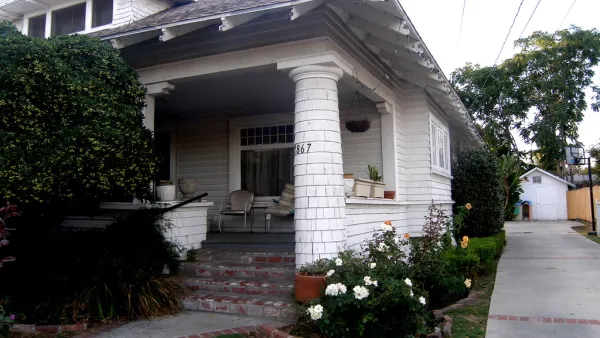
Residents Want a Say as Los Angeles Neighborhood Changes
The big market forces of Los Angeles long ignored Elysian Valley, colloquially called Frogtown. But now the neighborhood has hip cachet and residents are organizing to have a say as the area changes.
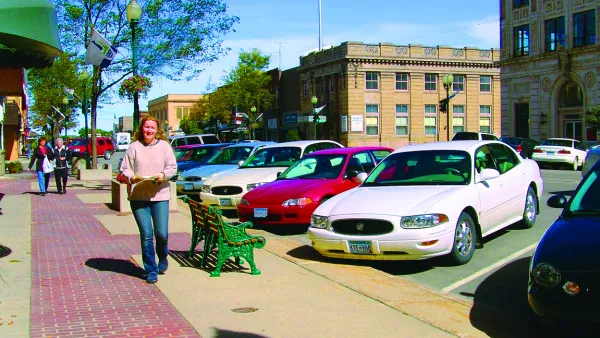
The Walkable, Healthy Rural Community: A Case Study
Albert Lea, Minnesota proves that small towns can reinvent themselves—often faster than big cities—and that walkable communities aren't only possible in urban neighborhoods.
Harvard Report: Fracking Yields Equity Gains for American Workforce
A new Harvard Business School report lays the economic and equity case for fracking—through direct and indirect job creation, America's middle class is reaping substantial wage gains and reduced energy costs. Renewables are also discussed.
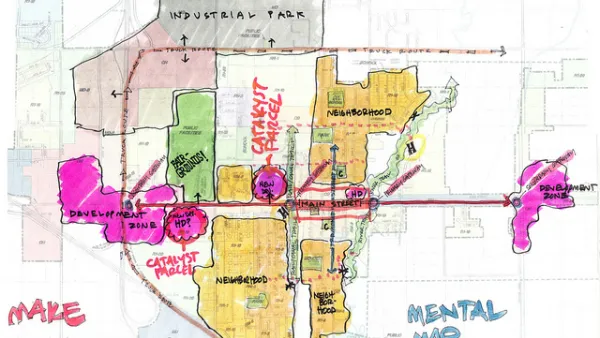
Using Neuroscience to Build Neighborhoods
The brain has a complex, ancient relationship with place. Mental maps are the manifestation of our brains' perception of place and wayfinding. These maps can have profound impacts on how residents appreciate, and improve, their neighborhoods.

FREE Course: Walkable City 1: Why Walkability?
After describing his path towards focusing on walkability as the essence of good planning, Jeff Speck marches through his five principal reasons for making more walkable places.
Reinventing Malls: Planning Alchemy—Turning Gray Fields Into Gold
The course focuses on the opportunities and imperatives that shape reinvention of mall sites.

KFH Group Inc.
Greater Baltimore Committee
Eagle County Government
The Architects Foundation
University of Cincinnati Online
The Pocatello Development Authority
The Urban Renewal Agency of the City of Pocatello