In recent years, tactical urbanism has helped reinvent many streets and sidewalks in center cities, creating new public spaces. But many spaces remain untouched. Anuj Gupta argues that reinvented schoolyards can be the next great public spaces.


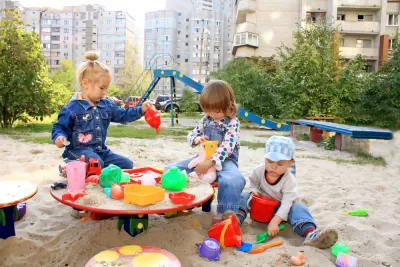
The city of Philadelphia has some historic public spaces, some fantastic new public spaces, and a wealth of vibrant street life. It also has dozens of schools, with countless acres of open space, which, though they are physically integrated with their neighborhoods, are not the assets that they could be.
"Unfortunately, too often schoolyards are in deplorable condition, with pockmarked pavement, aging play equipment and few amenities. And yet they exude potential. There is more than sufficient evidence to suggest that safe, inviting and engaging play areas allow children to get the exercise they need, develop social skills and ultimately perform better in the classroom."
Anuj Gupta, director of a nonprofit community development corporation in Philadelphia, argues that the city's schoolyards represent a wealth the city's next great public spaces, which can serve not only the city's schoolchildren but also residents at large. He wants them to be greener, more attractive, more fun, and open to public uses. He suggests that efforts to renovate schoolyards will have ripple effects throughout the neighborhoods -- which will gain amenities -- and throughout the school district, which is losing students to charter schools. Schoolyards can give campuses "curb appeal." Parents, homeowners, and environmentalists alike can appreciate more attractive, better designed schoolyards.
Gupta calls for the creation of nonprofits to raise money and implement redesigns; citywide master plans and community plans that embrace, rather than ignore, schools; "friends" groups to maintain and promote redesigned schoolyards; leadership from sources other than the beleaguered school district; and tax-increment financing to pay for it and, ideally, capture increased property values that will result from attractive, healthy schoolyards/playgrounds/parks/community centers that will result.
Read the full story: Philly’s Next Great Public Space? Schoolyards.

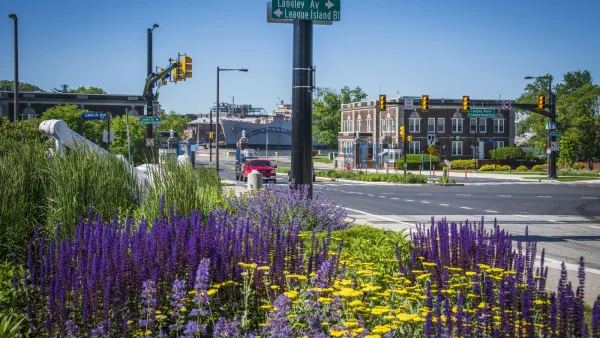
Philadelphia sees 29% drop in gun violence near new green spaces
A city-backed program that cleans up blighted and vacant lots is creating new public spaces and reducing crime in surrounding communities.
Los Angeles County Moves to Open Schoolyards to Public Uses
The Los Angeles County Board of Supervisors just approved a motion to extend and expand an agreement with the L.A. Unified School District for the use of recreational facilities at Walnut Park Elementary School.
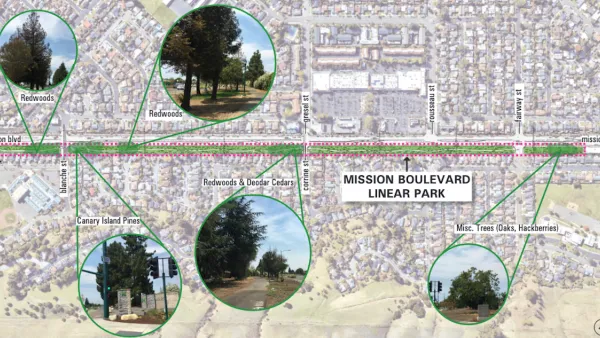
Parks Departments Try to Build New Green Spaces on Shrinking Budgets
Even as the role of parks and urban green space in public and ecological health becomes more apparent, city budgets are hard-pressed to meet the costs of park construction and maintenance.

Planetizen Federal Action Tracker
A weekly monitor of how Trump’s orders and actions are impacting planners and planning in America.

Amtrak, CN end decades-long dispute with eight-year agreement
The new operating agreement establishes an updated framework for the companies to work together, including processes to resolve disputes.

Northwest rail fans eager for Sept. 30 debut of Amtrak’s Airo fleet
Get ready for that new train smell and more seats. But they won’t go faster or run more frequently on the Cascades route in Washington and Oregon.

Brightline Florida files for bankruptcy
The transit company is over $5 billion in debt.

St. Louis Metro to test if single-car trains can reduce operating costs, maintain rider satisfaction
The pilot program will run from October to spring 2027, and begin with one single-car train operating on Metrolink’s Red and Blue lines.

Pennsylvania is building data centers in abandoned mines
Housing data centers in mines provides an alternative to destroying local forests and may spare residents from data centers’ noise and air pollution.

FREE Course: Walkable City 1: Why Walkability?
After describing his path towards focusing on walkability as the essence of good planning, Jeff Speck marches through his five principal reasons for making more walkable places.
Reinventing Malls: Planning Alchemy—Turning Gray Fields Into Gold
The course focuses on the opportunities and imperatives that shape reinvention of mall sites.

City of Thousand Oaks
City of Wisconsin Rapids
Harvard University Graduate School of Design
The Architects Foundation
University of Cincinnati Online
The Pocatello Development Authority
The Urban Renewal Agency of the City of Pocatello