The Los Angeles County Board of Supervisors just approved a motion to extend and expand an agreement with the L.A. Unified School District for the use of recreational facilities at Walnut Park Elementary School.


Increasing access to recreational facilities that already exist at schools is one of the oldest and most effective ways to provide more opportunities for physical activity and play in neighborhoods. After all, even the most under-served areas have schools. At a time of budget cuts and shortfalls, maximizing access to existing facilities is an efficient and economical use of public resources.
The Los Angeles County Board of Supervisors recently approved a motion by Supervisor Janice Hahn that opens the door to continued and expanded shared use by the County of a Los Angeles Unified School District (LAUSD) campus in Southeast Los Angeles. Specifically, the Walnut Park Elementary School campus has been home to Walnut Nature Park operated by the County’s Department of Parks and Recreation (DPR) on evenings and weekends for many years. The approved Board motion authorizes DPR to initiate a new agreement with LAUSD to extend the agreement for use of the nature park for ten years as well as expand it to include the school’s playground and multi-use field.
According to the 2016 Los Angeles Countywide Parks Needs Assessment, Walnut Park is an area with a very high level of park need. Walnut Nature Park had been the only park in the community for many years until Nogales Park opened late last year. Los Angeles County and LAUSD first entered into an agreement to share the Walnut Park Elementary School site in the late 1990s, when a first-of-its-kind Joint Use Agreement (JUA) was signed. This JUA was a model and template for subsequent JUAs.
Read the full story: Board of Supervisors Greenlights Expansion of Shared Use of LAUSD Campus

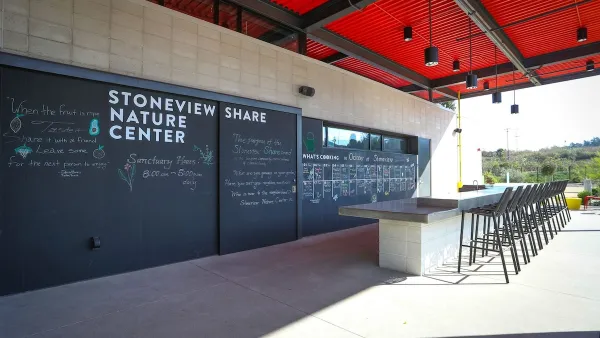
How LA County Parks are Fostering Equity
Los Angeles County's Department of Parks and Recreation actively engages the public through diverse methods to ensure parks and recreation programming align with community needs and priorities.
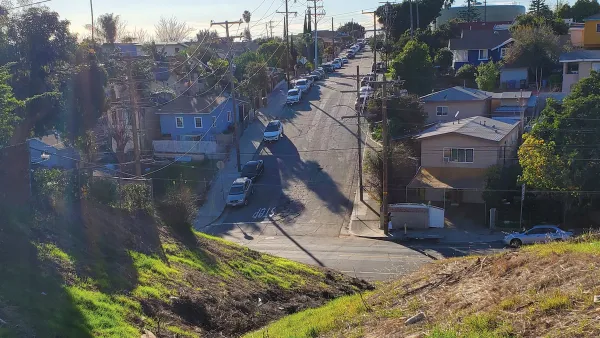
Envisioning a New Park in East Los Angeles
Los Angeles County is working towards transforming underutilized land into a vibrant pocket park in the City Terrace neighborhood of East LA.
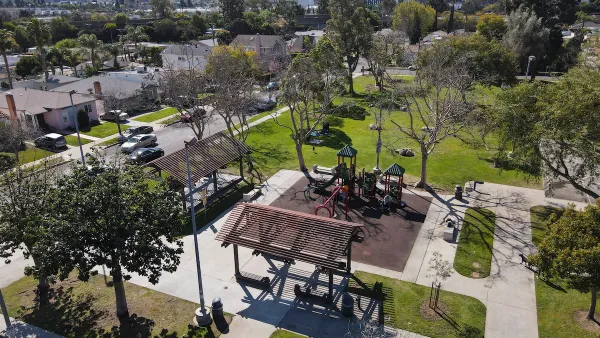
LA County Releases Funding for Parkland Acquisition in Underserved Communities
Los Angeles County has released $14.5 million in Measure A grant funds to support parkland acquisition in high-need areas, aiming to create additional green spaces and advance environmental justice and equity.

Planetizen Federal Action Tracker
A weekly monitor of how Trump’s orders and actions are impacting planners and planning in America.

The state-sanctioned urbicide of Austin
People don’t kill cities. Freeways do.

Colorado’s Largest Data Center Could Rise Next to Homes — Without a Public Hearing
The proposed campus would consume 11 times the power of Denver International Airport; as it has across the country, opposition mounts.

Nation's most wind-powered state turns to coal as data centers increase energy demand
For the first time in decades, Iowa has increased its generation of coal power.

NYC cools commuters with city's first rain garden above a bus stop
New York City officials say the plants in the rain garden can absorb 16 gallons of rainwater during heavy storms.

Brightline West’s future may rely on $6 billion federal loan
The company has until Nov. 2 to make a $400 million equity investment into its proposed high-speed rail line.

FREE Course: Walkable City 1: Why Walkability?
After describing his path towards focusing on walkability as the essence of good planning, Jeff Speck marches through his five principal reasons for making more walkable places.
Reinventing Malls: Planning Alchemy—Turning Gray Fields Into Gold
The course focuses on the opportunities and imperatives that shape reinvention of mall sites.

Greater Baltimore Committee
Eagle County Government
Harvard University Graduate School of Design
The Architects Foundation
University of Cincinnati Online
The Pocatello Development Authority
The Urban Renewal Agency of the City of Pocatello
Journal of the American Planning Association