Instead of "Bikers First!" or "Creative Class First!" James Siegel, president of Kaboom!, proposes an alternative for cities: "Kids First!"


"Our nation’s future is inextricably tied to the future of kids in cities," writes James Siegel in response to a controversial series of articles in Governing and the Washington Post questioning the necessity of building kid-friendly cities. Or as, Siegel put it: "Skeptics argue that cities should focus on attracting young professionals without kids because it’s easier to meet their needs."
Siegel's response, in a nutshell: "Unfortunately, those who want to turn cities into childless playgrounds for young adults fail to distinguish between cost and value. Yes, it costs money to invest in good schools and parks, playgrounds, and other opportunities to play. But it also generates a significant return on investment — economically and civically."
As a new rallying cry to counter the more popular narratives of urban development that supports young, affluent professionals, Siegel proposes a new rallying cry: "Kids First!" He also goes on to detail some of the projects around the country living up to that model.
Read the full story: Kids First: What’s Good for Kids Is Good for Cities

How Urban Design Can Benefit Parents and Kids
Designing thoughtful, child-friendly public spaces can ease the burdens of modern parenting and offer safe spaces for children to learn self-reliance and resilience.
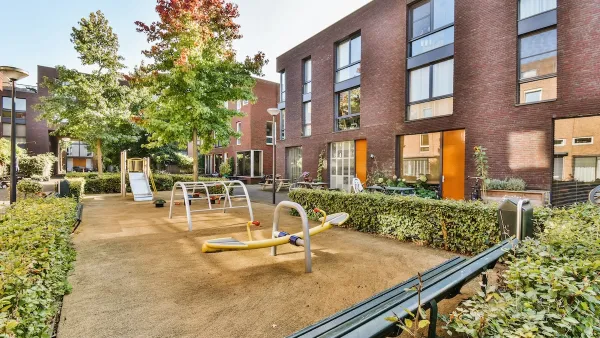
How Courtyard Apartments Make Cities More Family-Friendly
Apartment buildings with interior courtyards can offer safe, affordable, and functional spaces for urban households with children.

Opinion: Car-Centric Cities Hurt Kids
Designing neighborhoods with children in mind could reduce traffic fatalities and improve the health and well-being of kids.

Planetizen Federal Action Tracker
A weekly monitor of how Trump’s orders and actions are impacting planners and planning in America.

California plans to bury El Niño’s downpour
If the state plays its cards right, it may be able to store a billion acre-feet of El Niño’s water in aquifers.

Desperate measures: Advocates weigh draining Lake Powell to fill Colorado River
Draining the reservoir could reduce evaporation losses by a couple hundred thousand acre-feet.

US buildings threatened, destroyed by fires set to triple by 2060
Researchers found a high fire risk for socioeconomically vulnerable neighborhoods in the American West.

LA residents may be allowed to paint their own crosswalks
Councilwoman Katy Yaroslavsky put out a motion instructing the Los Angeles Department of Public Transportation to study the feasibility of allowing volunteers to paint crosswalks.

Dallas moves to overhaul its zoning code
The city's zoning reform will allow more multi-family and mixed-use developments.

FREE Course: Walkable City 1: Why Walkability?
After describing his path towards focusing on walkability as the essence of good planning, Jeff Speck marches through his five principal reasons for making more walkable places.
Reinventing Malls: Planning Alchemy—Turning Gray Fields Into Gold
The course focuses on the opportunities and imperatives that shape reinvention of mall sites.

City of Rosemead
Rutgers University, Edward J. Bloustein School of Planning and Public Policy
One Hundred Miles
Hunter College, City University of New York (CUNY)
The Architects Foundation
University of Cincinnati Online
City of Cambridge
Montrose County
The Pocatello Development Authority