D.C.'s fast-growing downtown neighborhoods have new restaurants, offices and apartments—but few playgrounds. With thousands of children expected to be born in the District in the next five years, where will they all play?


An official map of D.C.’s parks blooms like a colorful garden, with the flower-shaped asterisks used to represent new playground projects forming a bright circle over the city. A second look, however, reveals a problem: the circle is more like a wreath, with park and playground improvements planned for the outer neighborhoods, and lots of blank spaces left downtown. There's parkland, but almost no outdoor play space for kids in the center of the District, and parents say this poses a challenge to the city’s livability.
"When you have a kid between 18 months and three years old, you suddenly realize that you need space for them to run and play," says Danielle Pierce, a playground advocate and co-founder of Downtown DC Kids, an online group dedicated to making D.C. accessible and livable for families. "You can’t just put a kid down on the ground in Dupont Circle and expect them not to eat condoms."
Read the full story: How to fix DC's downtown "playground desert"


D.C. Tops the 2021 ParkScore List
The Trust for Public Land has published the most recent version of its annual ranking of parks and open space. A new twist for 2021includes a new metric to consider equity.
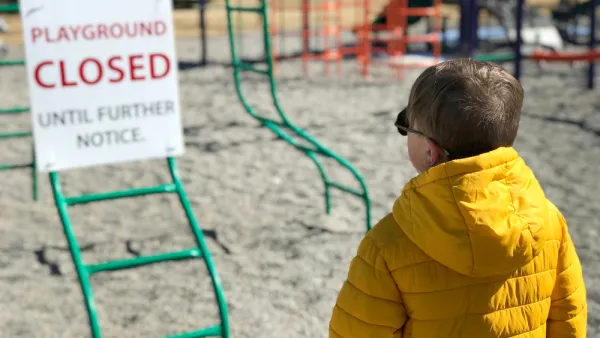
Why Playgrounds Need to Stay Open
California has reversed its decision to close playgrounds as part of the state's stay-at-home order after some legislators and parents complained and argued that children need outdoor play for their health and well-being.
The Battle for Playgrounds
New York City parents are unhappy that fitness enthusiasts are turning to playgrounds for their workouts.

Planetizen Federal Action Tracker
A weekly monitor of how Trump’s orders and actions are impacting planners and planning in America.

Amtrak, CN end decades-long dispute with eight-year agreement
The new operating agreement establishes an updated framework for the companies to work together, including processes to resolve disputes.

Northwest rail fans eager for Sept. 30 debut of Amtrak’s Airo fleet
Get ready for that new train smell and more seats. But they won’t go faster or run more frequently on the Cascades route in Washington and Oregon.

Brightline Florida files for bankruptcy
The transit company is over $5 billion in debt.

St. Louis Metro to test if single-car trains can reduce operating costs, maintain rider satisfaction
The pilot program will run from October to spring 2027, and begin with one single-car train operating on Metrolink’s Red and Blue lines.

Pennsylvania is building data centers in abandoned mines
Housing data centers in mines provides an alternative to destroying local forests and may spare residents from data centers’ noise and air pollution.

FREE Course: Walkable City 1: Why Walkability?
After describing his path towards focusing on walkability as the essence of good planning, Jeff Speck marches through his five principal reasons for making more walkable places.
Reinventing Malls: Planning Alchemy—Turning Gray Fields Into Gold
The course focuses on the opportunities and imperatives that shape reinvention of mall sites.

City of Thousand Oaks
City of Wisconsin Rapids
Harvard University Graduate School of Design
The Architects Foundation
University of Cincinnati Online
The Pocatello Development Authority
The Urban Renewal Agency of the City of Pocatello