Checking in on the status of negotiations for the redevelopment of Fort McPherson's 488 acres of rolling hills, historic buildings, and a lake, among much more, the Saporta Report argues that Atlanta has been far too accommodating.


Maria Saporta pens an op-ed decrying a potential deal that would allow entertainment mogul Tyler Perry to locate Tyler Perry Studios on two-thirds of the grounds at Fort McPherson in Atlanta.
Saporta is highly skeptical of Mayor Kasim Reed's support for the deal, pushing the McPherson Implementing Local Redevelopment Authority (MILRA) "to give Perry what he wants":
"That is how Atlanta has ended up with what may become known as one of the worst transactions in the city’s history. Perry is getting 330 acres for $30 million (a bargain by any measure), and he is getting the fort’s prime real estate."
As evidence of the "precious little in return" the city will get in the deal Saporta asks the following questions and others:
- "Has the city set a height restriction on how high a wall or fence Tyler Perry can build around his 330 acres to keep people out?"
- "What guarantees exist that Perry will maintain the historic properties on the site?"
- "[W]hat kind of job guarantees will Tyler Perry provide, and how many will be local residents?"
Saporta goes on to point out more of the risks involved in diving in headfirst with Tyler Perry, and offers a strategic, master planning effort led by the Integral Group in redeveloping a 165-acre Doraville GM plant as an alternative way of doing land use business.
Read the full story: Fort McPherson-Tyler Perry deal not in the city’s best interest

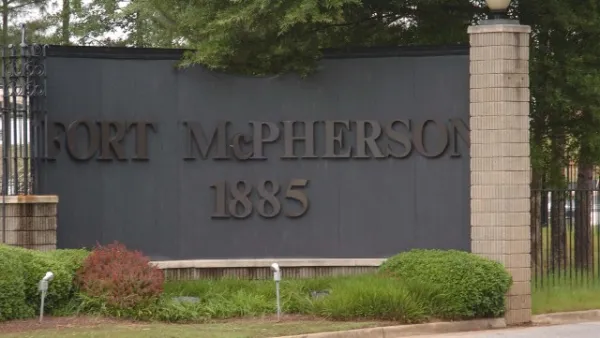
New Plans Take Shape for Atlanta's Fort McPherson
The land adjacent to Tyler Perry Studios will be developed into an entertainment district with offices, restaurants, and retail.
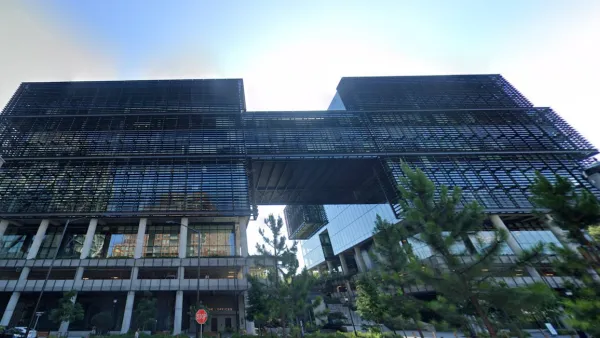
Fourth Ward Project Aims for Sustainability on Atlanta's Beltline
A new megaproject hopes to bring new life to a former industrial site.
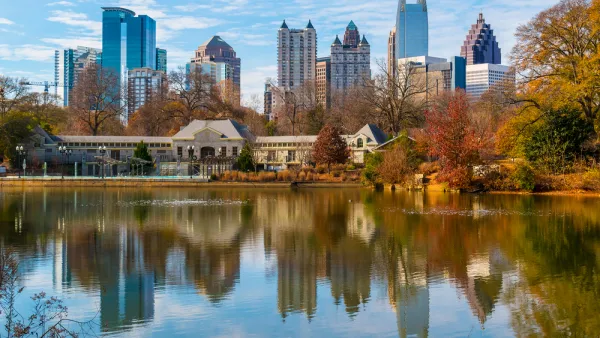
Mixed-Use Project Planned for Southeast Atlanta Neighborhood
A nonprofit-led housing development will include 72 housing units and retail space.

Planetizen Federal Action Tracker
A weekly monitor of how Trump’s orders and actions are impacting planners and planning in America.

Amtrak, CN end decades-long dispute with eight-year agreement
The new operating agreement establishes an updated framework for the companies to work together, including processes to resolve disputes.

Judges permit Denver to divert 77,000 acre feet from the Colorado River for reservoir expansion
Overuse and climate change have caused the Colorado River’s water levels to plummet.

Boston has spent millions making the Green Line more accessible — and there’s no end in sight
While the city has invested millions into expanding and adding platforms to the Green Line to make it more accessible, new train cars set to arrive next year will be too tall for disabled passengers to board without raising the current platforms.

Idaho may see an 18% drop in federal surface transit funding — the largest estimated cut in the US
Transit systems in rural communities are much more reliant on federal funding to provide their services.

How ‘post-disaster gentrification’ alters neighborhoods after natural calamities
After hurricanes, fires or other calamities, the original residents of a community are often replaced by younger, wealthier residents.

FREE Course: Walkable City 1: Why Walkability?
After describing his path towards focusing on walkability as the essence of good planning, Jeff Speck marches through his five principal reasons for making more walkable places.
Reinventing Malls: Planning Alchemy—Turning Gray Fields Into Gold
The course focuses on the opportunities and imperatives that shape reinvention of mall sites.

City of Wisconsin Rapids
Harvard University Graduate School of Design
KFH Group Inc.
The Architects Foundation
University of Cincinnati Online
The Pocatello Development Authority
The Urban Renewal Agency of the City of Pocatello