United States
America's Rail Station Renaissance
The latter half of the twentieth century saw the slow decline of train travel and the deterioration of America's grand railroad stations. Amid growing rail readership, the country is embarking on a new era of station construction.
Why Don't We Allow Designers to Create Cites for People?
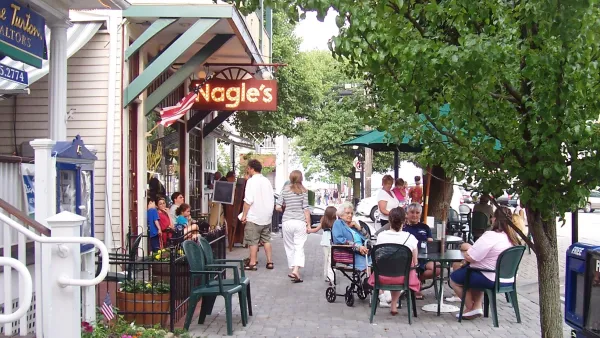
Cars kill us and drive us crazy; while walking and biking improve our mental and physical health. So why do we design our cities for cars, asks Jeffrey Tumlin.

New Study: More Urban = More Safe
A new study by researchers at Children's and the University of Pennsylvania concludes that, contrary to popular perception, cities are safer than rural or suburban areas. Higher rates of fatal car accidents outside cities are largely to blame.
America's Geography of Opportunity
A new study presents the 'most detailed portrait yet' of the places in America where opportunities for, and obstacles to, upward mobility abound. The Southeast and industrial Midwest are the most difficult places to rise out of poverty.
Inner-Ring Reboot
Urban Land looks at the reinvention of America's inner-ring suburbs. The authors explore the challenges of mixing uses, integrating cars and attaining authenticity as planners and developers seek the right recipe for the next big wave of development.
Amtrak's New Outdated Trains
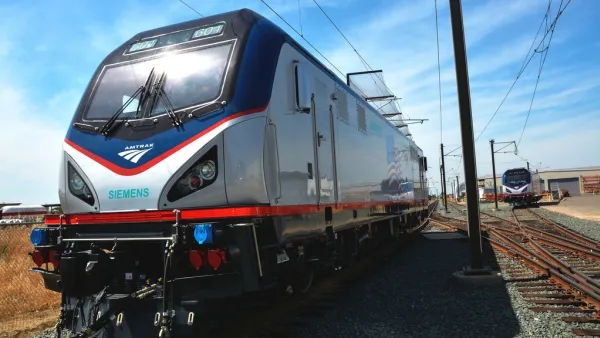
Why is Amtrak spending $500 million on new locomotives for the Northeast Corridor that are "fat, expensive and slow"? Americans have the the Federal Railroad Administration's "globally-unique crash safety standards" to thank.
How Can Cities Manage the Post-Growth Transition?
While cities are growing, it's comparatively easy to keep a healthy balance sheet. But for cities like Charlotte, managing the transition from a growth economy to economic sustainability is a treacherous one. Aaron Renn delivers a cautionary tale.
Confirmed! Gina McCarthy Is Now EPA Administrator
Gina McCarthy's confirmation has been stalled by Senate Republicans who claimed she hadn't answered the 1,000 questions they gave her. Her confirmation vote, 59-40 on Thursday, results from a filibuster compromise that the Senate reached on Tuesday.
How a Private-Sector Approach Can Save Your Transit System
Is your city's transit agency caught in a cycle of rising fares, declining service, and chronic financial problems? Mark Aesch has used an innovative approach to turn around the bus systems in Rochester and Detroit. Could it work in your city?
Single Households: Older, Urban, Increasing, and More Sustainable
The number of single households has grown three-fold since the 1950s. More sustainable and more likely to live in cities than married households, singles experience a major problem: metro areas are not planned for them but for nuclear families.
Can the CIA Control Climate Change?
The CIA, in partnership with other U.S. government agencies, is funding a $630,000 scientific study into the plausibility and potential effects of climate engineering to reduce global warming. Let the conspiracy theories begin.
Focusing a Place-Based Lens on America's Health Disparities
In the U.S., were used to comparing our life expectancies with other countries, says Emily Badger, but in many cities one only needs to travel a mile to see decades of difference in average life spans. Stark new maps make these discrepancies clear.
Can the Cycle of Concentrated Poverty Be Broken?
A recent book examines the causes and effects of the 'persistent and long standing problem of concentrated poverty in the inner city' and offers recommendations for breaking the cycle. Do we have the commitment to fix the problem?
The Newest Thing in Mobile Commerce: The Book Truck
Inspired by the food truck movement, book-publisher Penguin Group (USA) has rolled out two new book-buying venues: the Penguin Book Truck, and the Penguin Book Pushcart.
America's Most Effective Urban Revitalization Incentives Under Threat
The low-income housing and new-markets tax credits are two of the most effective tools for stimulating affordable housing creation and the revitalization of low-income neighborhoods. Don't let them fall victim to tax reform, argues Michael Rubinger.
The High Cost of Free Curb and Gutter
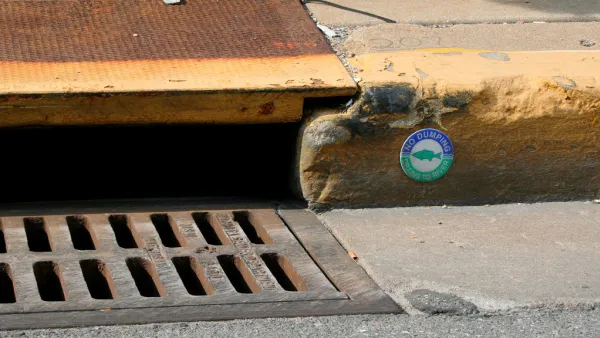
The U.S. is in need of new approaches to managing stormwater. Though the EPA has been slow to provide guidance, there's plenty that can be done now. Parking reform provides a handy model for solving seemingly intractable entitlement problems.
Pursuing the 'American Dream' Can Be a Real Downer
Tight housing inventories, rising prices, and conservative mortgage lenders are preventing many would-be homeowners from buying their piece of the 'American Dream'. Michelle Higgins explains why this may actually be a good thing.
Foxx's First Goal: Find the Money!
Keith Laing, with help from Josh Schank of the Eno Center for Transportation, describes the reality facing the new Secretary of the Department of Transportation. With gas tax revenue dwindling and MAP-21 expiring next year, securing funds is crucial.
The Revolution Transforming America's Strained Water Systems
In the first in a series of articles exploring 'infrastructure solutions for the next generation', Cynthia Barnett examines the creative ways that communities are solving the problems caused by old and overtaxed water systems.
Climate-Caused Blackouts Ahead, Warns DOE
John M. Broder writes about a new U.S. Department of Energy report released July 11th that details the vulnerability of the nation's entire energy system to climate change effects - from droughts, intense storms, rising seas, lower river levels...

FREE Course: Walkable City 1: Why Walkability?
After describing his path towards focusing on walkability as the essence of good planning, Jeff Speck marches through his five principal reasons for making more walkable places.
Reinventing Malls: Planning Alchemy—Turning Gray Fields Into Gold
The course focuses on the opportunities and imperatives that shape reinvention of mall sites.

One Hundred Miles
County of Mendocino
planning NEXT
The Architects Foundation
University of Cincinnati Online
Montrose County
Northern Illinois Transit Authority (NITA)
The Pocatello Development Authority









