United States
Cars Still Essential for Economic Opportunity
Recent data shows that workers need cars to access jobs and economic opportunity. What can planners do to expand access to jobs via other alternative modes of transportation?
Bikeshare's Income Disparity Problem
A new report sheds light on the income gap in the use of bikeshare systems around the world.
Tolls vs Taxes and the State of the American Highway
Making up only seven percent of U.S. interstate miles, the future of toll roads is bright according to Brooking's Robert Puentes and Diane Rehm's other guests in a 52-minute, wide ranging discussion on gas taxes, toll roads, and privatization.
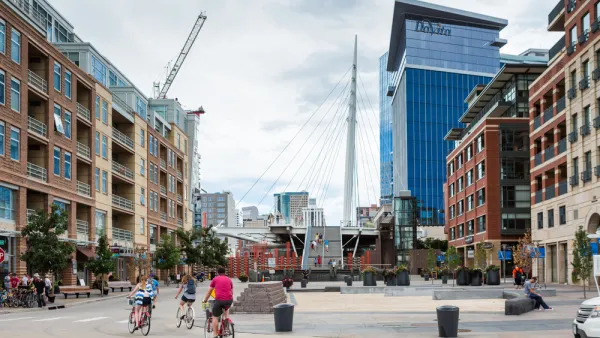
Q&A: A Career at the Cutting Edge of Long Range Planning
The following interview, as published in the 4th Edition of the Planetizen Guide to Graduate Urban Planning Programs, features Peter Park, owner of Peter J Park, LLC and an instructor at the University of Colorado-Denver and Harvard University.

The Best Sentences of the Week (Volume 3)
By no means authoritative or comprehensive, here's a collection of noteworthy phrases, paragraphs, commentaries, observations, and more from the recent week in the planning and urbanism discussion.
Bloomberg Editors Propose a 'Flexible' Federal Gas Tax
Bloomberg's editors ask rhetorically, with gas prices falling due to crashing oil prices, will the federal government raise the gas tax to fund badly needed road infrastructure? They suggest tying the gas tax to oil prices in reverse direction.
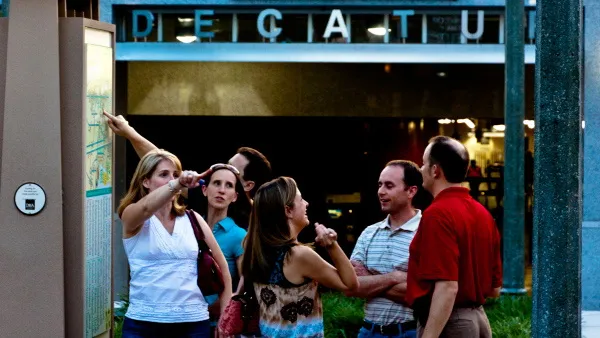
Majority of Americans Favor Funding for Transit Over Funding for Roads
In a poll conducted by ABC News and the Washington Post, Americans were found to prefer allocating transportation funding towards transit expansion rather than road widening.
Recalling Our Basic Pride of Place
In the fifth of his "place-decoding" series from France, Chuck Wolfe recalls how we carry with us the ability to mine pride from place, even in places that are, perhaps, least expected to shine.
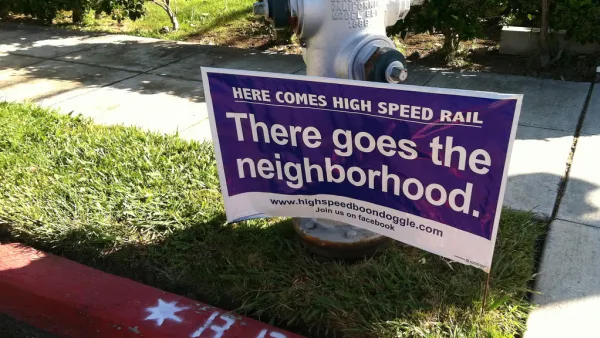
Op-Ed: End the Pejorative Use of 'NIMBY'
Harvard University professor Naomi Oreskes writes a defense of NIMBYism, asking that we rethink he use of the term by considering the community-protecting motives of many NIMBYs.
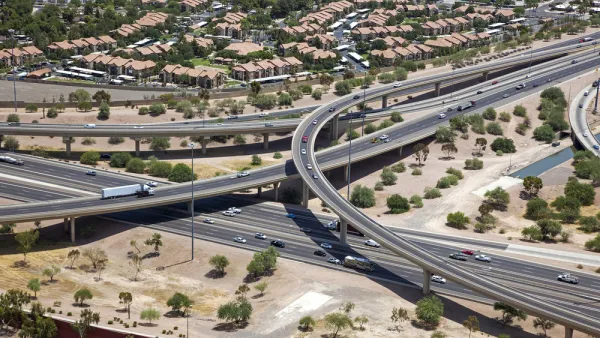
Research: Women Living Near Freeways Increase Risk of Sudden Cardiac Death
New research from the American Heart Association measures sudden cardiac death and proximity to major roadways, showing that cardiac risks posed by environmental exposure have been under-appreciated. The next step is to find the specific cause.

Mapping the Skill Sets Unique to Cities
The skills and location data of over 175 million LinkedIn members were mined to produce a map displaying the industries most common in major cities throughout the United States and Europe.
Rethinking the Spectrum of American Multi-Modality
A new study from Virginia Tech reclassifies what defines multi-modal commuters.
How Twitter Identifies Public Sentiment
Rebecca Tuhus-Dubrow asks the question of whether the data produced by Twitter could be used to understand and plan cities?
Architecture Billings Index Shows Continued Growth for Design Industry
Improvements in architecture billings, an economic indicator of future construction activity, mean that more investments in cities and towns. Lately, institutional billings have led the resurgent industry.

Ranking the Cities with the Largest Rat Problem
Some cities have a reputation for rats, but all cities have them. Where does your major metropolitan center rank among the rattiest cities?

Deadly Highway Guardrail Design Questioned
After five deaths, several states have stopped installing FHWA-approved guardrails which have been said "to turn into spears" when hit by vehicles. An Oct. 20 jury verdict awarded $175 million to a whistleblower to be paid by the rail manufacturer.
Employment Growth in Large, Dense Cities Paces Recovery
A study from the Oregon Office of Economic Analysis finds evidence that large, dense metropolitan areas have experienced the most complete recovery following the Great Recession.

The 'Young and Restless' Choosing to Live in Cities
A report by new think tank City Observatory about where young college graduates are choosing to live inspired plenty of commentary this week.
Report: Cities Not Yet out of the Fiscal Woods
A report by the National League of Cities finds that although fiscal conditions are improving for most cities, they have a long way to go to achieve full recovery amid a sluggish economy.
Calling on Urban Designers to Lead the Fight Against Climate Change
Alan G. Brake writes an editorial calling on the architecture and urbanism fields to push even further to reduce carbon emissions by designing (and upgrading) efficient buildings.

FREE Course: Walkable City 1: Why Walkability?
After describing his path towards focusing on walkability as the essence of good planning, Jeff Speck marches through his five principal reasons for making more walkable places.
Reinventing Malls: Planning Alchemy—Turning Gray Fields Into Gold
The course focuses on the opportunities and imperatives that shape reinvention of mall sites.

One Hundred Miles
County of Mendocino
planning NEXT
The Architects Foundation
University of Cincinnati Online
Montrose County
Northern Illinois Transit Authority (NITA)
The Pocatello Development Authority









