Impact investing isn't just a new source of funding for nonprofits from the private sector. The government can (and should!) be a catalyst in shaping the market through policies that support investments with a greater social impact.


David Wood outlines the ways government can support private sector impact investing. In some cases, some mandates from the government direct the private sector toward investments with a social benefit.
For example, says Wood, "Green building mandates in large American cities have spurred the development of sustainable property investment strategies, and indirectly supported mission-oriented green developers and investors by increasing the market for their activities."
The private sector is also drawn to impact investing through tax credits and other subsidies and by offering support to the investees with technical help and job training programs so that both sides get the most out of the investment.
And last but not least, there's education.
From Wood, "The creation of the Obama administration’s Office of Social Innovation and Civic Participation (SICP) in 2009 is one such effort. SICP has organized a series of meetings around impact investing with a range of stakeholders, in an effort to build awareness of impact investing and various key aspects of its implementation, such as impact investing and fiduciary duty, the emerging sector of pay-for-performance investments, or the role that philanthropy plays in supporting the field."
Read the full story: The Role of Government in Impact Investing
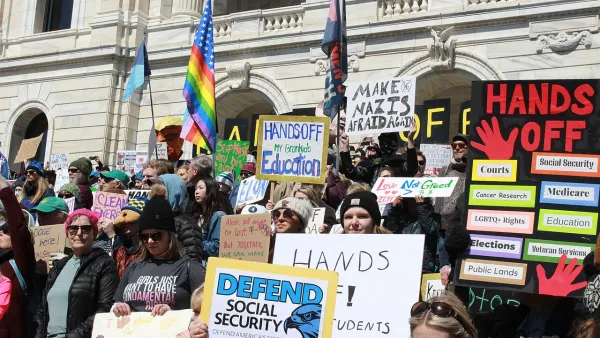
Commentary: Our Silence Will Not Protect Us
Keeping our heads down and our language inoffensive is not the right response to the times we’re in. Solidarity and courage is.
Philadelphia's Grand New Dilworth Park—How a Public-Private Partnership Delivered
Dilworth Park, on the front door of Philadelphia's City Hall, made a splashy debut yesterday, but just as impressive as the design of the park is the work of a non-profit in achieving the grand vision for the park.
Federal 'EB-5' Visa Program Driving Investment in the Rust Belt
The EB-5 Immigrant Investor Program has significant potential to drive more resources into America’s distressed urban cores, according to a recent report authored by Initiative for a Competitive Inner City.

Desperate measures: Advocates weigh draining Lake Powell to fill Colorado River
Draining the reservoir could reduce evaporation losses by a couple hundred thousand acre-feet.

Eastern Nebraska is running out of electricity
Data centers and electrification are straining eastern Nebraska’s grid, throttling economic development.

Move over, LA: St. Louis gears up for Olympics, invests millions in downtown redevelopment
The Missouri city will host the 2028 Olympic soccer group stage and knockout matches.

‘No clear next steps’ for Chicago's permanent festival grounds
Eleventh Ward Ald. Nicole Lee has suggested Soldier Field as a possible location for the permanent event space.

California, Hawaii, Rhode Island approve housing propositions
Hawaii and Rhode Island each approved their sole proposition, while California approved two of its three.

Officials claim feds 'rushed' Amtrak environmental review
Amtrak plans to move their Chicago maintenance facility from an industrial area to a residential one.

FREE Course: Walkable City 1: Why Walkability?
After describing his path towards focusing on walkability as the essence of good planning, Jeff Speck marches through his five principal reasons for making more walkable places.
Reinventing Malls: Planning Alchemy—Turning Gray Fields Into Gold
The course focuses on the opportunities and imperatives that shape reinvention of mall sites.

City of Rosemead
Rutgers University, Edward J. Bloustein School of Planning and Public Policy
One Hundred Miles
University of Michigan School for Environment and Sustainability (SEAS)
Hunter College, City University of New York (CUNY)
The Architects Foundation
City of Cambridge
Montrose County
The Pocatello Development Authority