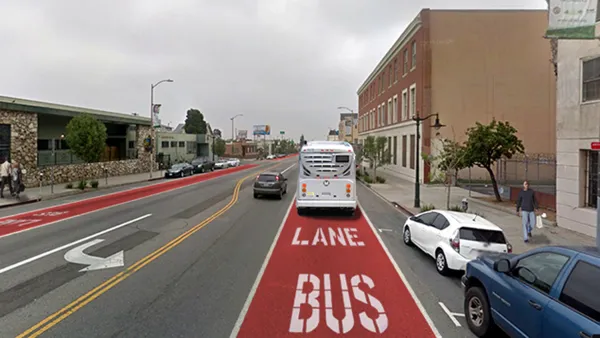
Bus Rapid Transit (BRT) is controversial all over the country. Controversy can often lead to compromises, such as mixing the buses into traffic. A recent article makes the case for overcoming controversy and committing to BRT in downtowns.


"American cities that fail to extend true BRT through the downtown area ensure that the systems receive their greatest visibility in places where they experience their lowest effectiveness," writes Eric Jaffe. "The result can be to sour public opinion on BRT at large, making subsequent expansions — there or elsewhere around the country — all the more difficult."
The article cites the work of the Institute for Transportation and Development Policy (ITDP) in establishing a global standard for BRT design. While BRT tends to find controversy because of the high premium on space in urban areas, "the problem is largely illusory," explains Jaffe. "In technical terms, any street 40-feet wide can handle BRT. Drivers and businesses often fear the loss of traffic lanes or parking and delivery areas, but traffic patterns and customers tend to find a way of rerouting themselves."
ITDP has also found evidence that BRT that runs into downtowns is much more likely to leverage transit oriented development.
Read the full story: The Importance of Running True BRT Through Downtown

To Regain Transit Ridership, Policymakers Must Address Land Use and Housing
More buses and trains alone won't bring back riders; other incentives are needed to boost ridership and encourage new users.
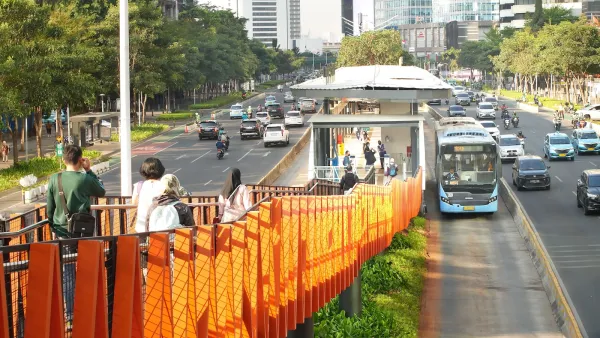
How Jakarta built the world's largest BRT system
Once known for total gridlock, the Indonesian capital has transformed itself into a public transit leader.
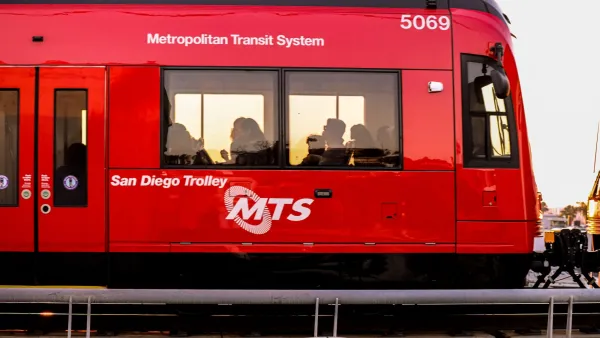
San Diego Regional Transportation Plan Shifts Away From Big Projects to Focus on Improving Existing Infrastructure
SANDAG’s 2025 Regional Plan scales down plans for new rail lines in favor of expanding rapid bus service.

Planetizen Federal Action Tracker
A weekly monitor of how Trump’s orders and actions are impacting planners and planning in America.

‘Going backwards:’ Baltimore mayor, students rally against state's transit funding plan
Maryland's proposed six-year plan provides no funding for Baltimore’s BMORE bus program and reduces its road maintenance funding.

Detroit to transform waterfront with $2.2 billion investment
Developers will convert about 18 acres of unused parking lot space into civic spaces.

U.S.-Iran war may have ‘devastating’ impact on cost to warm homes
Vermont and Maine residents may see a 76% increase in the cost of warming their homes this winter.

Senate bill would ‘overhaul’ environmental permitting laws
Under the proposed act, government agencies would also not be able to suspend or rescind permits after granting them.

Exemption applications for NYC’s pied-à-terre tax see 55% success rate
The city sent nearly 40% of its initial pied-à-terre tax warnings erroneously.

FREE Course: Walkable City 1: Why Walkability?
After describing his path towards focusing on walkability as the essence of good planning, Jeff Speck marches through his five principal reasons for making more walkable places.
Reinventing Malls: Planning Alchemy—Turning Gray Fields Into Gold
The course focuses on the opportunities and imperatives that shape reinvention of mall sites.

One Hundred Miles
County of Mendocino
planning NEXT
The Architects Foundation
University of Cincinnati Online
Montrose County
Northern Illinois Transit Authority (NITA)
The Pocatello Development Authority