California

Seattle's Envy? San Francisco's Big Alma Outperforms Big Bertha
Big Alma is one of two boring machines used to tunnel under the streets of San Francisco to construct the new Central Subway to Chinatown. Big Bertha, Seattle's infamous tunnel borer, has been stalled since December. Big Alma emerged on June 11.
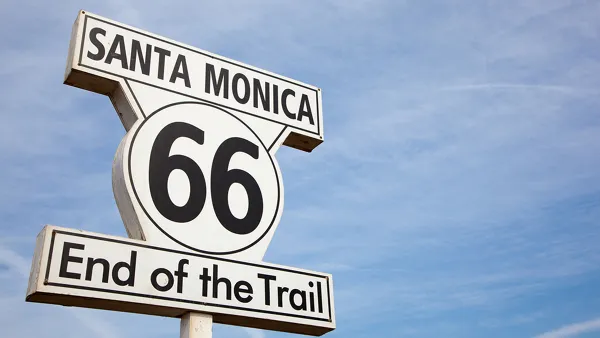
Anatomy of a NIMBYcide in Santa Monica
A look at how the previous approval of the Hines Bergamont Transit Village project was rescinded after pressure from community activists, by real estate developer and consultant Michael Russell.
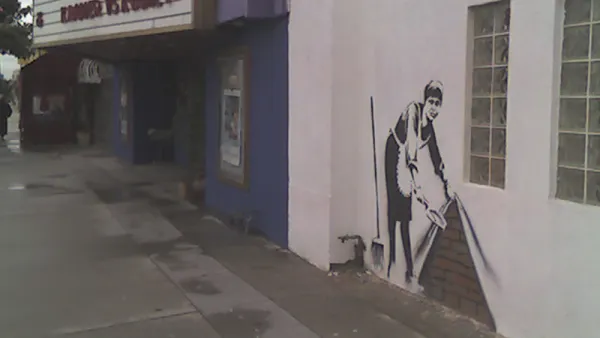
No Fix for Rundown Sidewalks and Streets in Los Angeles
The city of Los Angeles has been searching for years for a fiscal solution to the deplorable conditions of its streets and sidewalks, but a recent proposal to increase sales taxes by a half-cent to 9.5 percent is now dead.
CEQA Crusader or CEQA Bounty Hunter?
Liam Dillon tells the story of Cory Briggs, a notorious lawyer in Southern California famous for opposing projects under the auspices of the California Environmental Quality Act.
The Death of a Bridge in Los Angeles
The demolition of the Riverside-Figueroa Bridge spanning the Los Angeles River between Elysian Valley and Cypress Park has commenced. Advocates lament a lost opportunity for open space as well as the car-centric design of the replacement span.
The Demographics of Pedestrian Safety
While pedestrian safety affects all areas, it disproportionately affects cities with large minority populations because they are more likely to walk than whites. Santa Ana, Calif. a majority "minority" city, is taking steps to make walking safer.
Reviewing San Francisco’s Presidio Conversion
The conversion of San Francisco’s Presidio military base to parkland is reviewed by Los Angeles County park planner Clement Lau.
California Takes Legislative Steps to Address Growing Crude-by-Rail Shipments
While regulated on the federal level, there is still much that can be done on a state level, including adding per-barrel fees to pay for cleanup plans. Plus, a new regulation took effect requiring railroads to notify states about Bakken crude trains.
Los Angeles Paying Hollywood Community Plan Opponents $1.5 Million
Picking up the pieces from Los Angeles' failed attempt at implementing a community plan for Hollywood now involves paying off the lawyers who shot down the ordinance to the tune of $1.5 million.
Homeland Security Data Reveals the Origins and New Homes of Naturalized Citizens
Dara Lind provides insight on new data on U.S. naturalizations released by the U.S. Department of Homeland Security. In all, 779,929 immigrants became U.S. citizens in 2013.
Supply, Demand, and Affordable Housing
Bill Witte, president of Related California, one of the most active developers of residential and commercial properties on the West Coast, talks about real estate, affordable housing, and a squeezed middle class with The Planning Report.
Green Light for Red Light Cameras in California
A decisive California Supreme Court ruling on June 5 made life easier for jurisdictions to enforce red-light laws using traffic camera technology by stating that the photos have the "same presumption of validity as other types of photos and videos."
Adaptive Reuse Driving San Francisco's Tech Boom
Tech firms have taken over more than three million square feet of existing office and industrial space in San Francisco—nearly the equivalent of New York City's new 1 World Trade Center building.
Tracking the Rate of Sprawl for U.S. Cities between 2000 and 2010
Many studies have measured and compared the sprawl of U.S. metropolitan areas. A recent study tracks the rate at which the same cities grew either less compact or more compact for the decade between 2000 and 2010.
How to Prevent National Forests Becoming 'National Ashtrays'
An editorial calls for innovative policy in post-fire recovery and reforestation. The recent release of the Environmental Impact Statement for the recovery of the Rim Fire should serve as a barometer for a "new public forestry."
Study Evaluates Protected Bike Lanes in the United States
The National Institute for Transportation and Communities released a new study this week called "Lessons from the Green Lanes: Evaluating Protected Bike Lanes in the U.S."
California Water Suppliers Respond to Drought and Climate Change
Jeff Kightlinger, General Manager of the Metropolitan Water District of Southern California, details the ongoing preparation and response his regional water agency has championed in the face of the driest calendar year in the state's history.
Rainwater Capture as a Game Changer for Drought-Prone Cities
During Australia's 12-year drought, cities like Brisbane cut water usage per-person-per-day by more than half. Andy Lipkis, the founder and president of TreePeople, believes Los Angeles can follow this example.
San Francisco Approves Prop B Height Restrictions
The eventuality predicted since San Francisco's Prop. B qualified for the ballot has come to pass, with more than 59 percent of San Francisco voters approving the ordinance that will require votes on developments exceeding existing height limits.
Arguing for More Housing in the Silicon Valley
San Francisco Chronicle architecture critic John King criticizes the housing policy of cities like Mountain View, Silicon Valley home to companies like Google and LinkedIn.

FREE Course: Walkable City 1: Why Walkability?
After describing his path towards focusing on walkability as the essence of good planning, Jeff Speck marches through his five principal reasons for making more walkable places.
Reinventing Malls: Planning Alchemy—Turning Gray Fields Into Gold
The course focuses on the opportunities and imperatives that shape reinvention of mall sites.

City of Rosemead
Rutgers University, Edward J. Bloustein School of Planning and Public Policy
One Hundred Miles
University of Michigan School for Environment and Sustainability (SEAS)
Hunter College, City University of New York (CUNY)
The Architects Foundation
City of Cambridge
Montrose County
The Pocatello Development Authority









