Urban Development
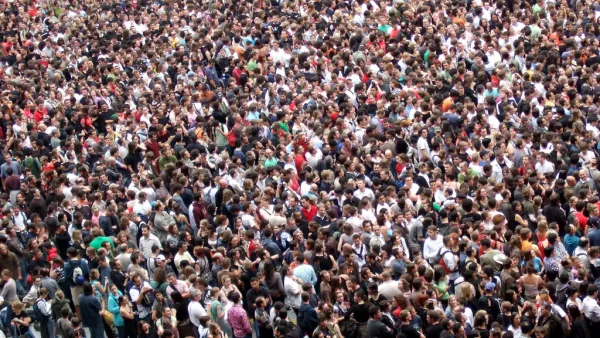
Whatever Happened to the Population Bomb?
Biology Professor Paul Ehrlich's 1968 book, "The Population Bomb," took America and the world by storm. The apocalyptic vision based of population outgrowing its resources appeared to make inherent sense.
High-Rise Approval Secures $220 Million for Grand Central Terminal Improvements
In exchange for the approval to build One Vanderbilt, a 63-story office tower adjacent to Grand Central Terminal, the developer will give the MTA $220 million for upgrades to entrances of the Metro-North Railroad and the terminal's subway entrances.
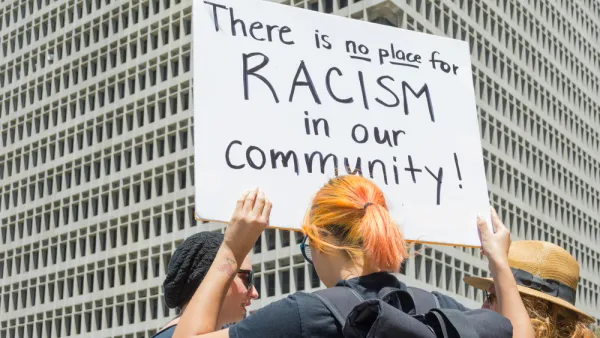
Composing Cosmopolis
It’s wise to search widely across time and space for good examples of processes and products for intercultural city building.
Does Portland's Urban Growth Need a Course Correction?
To curb suburban "sprawl on steroids" and foster higher density infill in Portland, a shift in planning strategy is needed, according to Rick Potestio, the principal of Potestio Studio, an architecture and design firm based in the city.
Stunning Views of New York Offered from North America's Tallest Observatory
One World Trade Center's long-awaited observatory opened May 29. Located on floors 100, 101 and 102 of the tower, the 47-second elevator trip is as remarkable as the sites from the 1,250 foot high observatory.
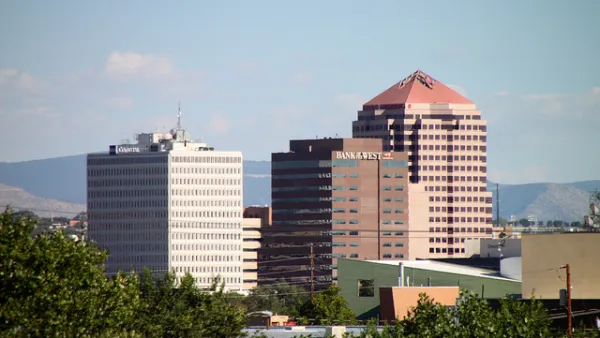
British-Backed Megadevelopment Slated for...Albuquerque
A master-planned community proposed for land owned by the British bank Barclay's on the outskirts of Albuquerque would be New Mexico's second-largest city on full build-out. Opponents say it would also be a major water hog in a painfully arid state.

Street Performers: Nuisance or Necessity?
With its eclectic music scene, Asheville, North Carolina is a popular spot for street musicians. They can bring a vibrancy the town might suffer without. But some residents fear a rise in panhandling and homelessness.

Report Finds Weak Spots in the Los Angeles Water Grid
A "water atlas" compiled by UCLA's Luskin Center for Innovation reveals the patchwork that is Los Angeles' water supply system. Neighborhoods reliant on small providers and groundwater sources may be vulnerable.
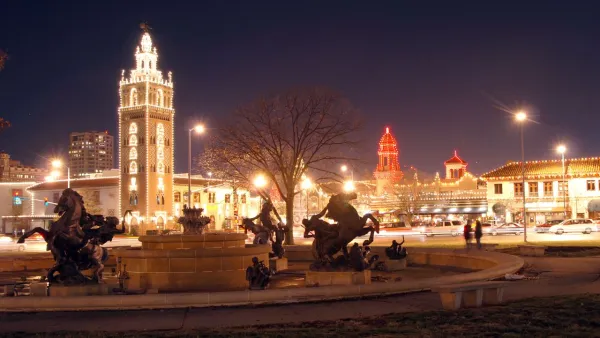
How Kansas City Over-Subsidized Downtown
Eager for downtown development, Kansas City signed a deal subsidizing Cordish Companies to the tune of $295 million. The rejuvenated district should be self-sustaining. So why is the city still funding Cordish?
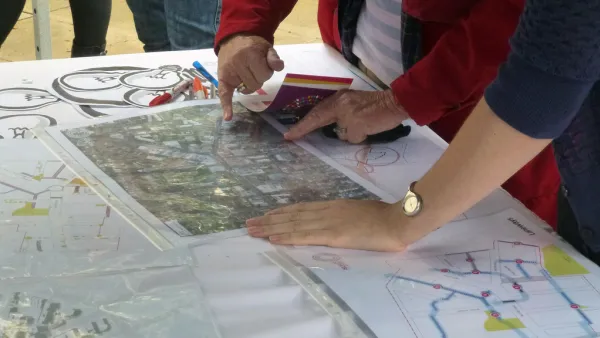
Students Answer the Big Question: 'What Is Planning?'
Urban planning is taken for granted. Urban planning is misunderstood. Urban planning is overlooked. Urban planning is, wait … what is urban planning? Students from the University of Michigan explain.
How 'Affordance Theory' Informs Great Streets and Public Places
The affordance theory, a combination of environment psychology and art, can be tapped to help make the design of urban neighborhoods more appealing to a community, writes Phil Myrick, MIG’s head of placemaking and performance design.
Environmental Criticism for the Seattle 2035 Comprehensive Plan
The Seattle 2035 will manage growth for one of the fastest growing cities in the country. But shouldn't it also mitigate the greenhouse gas emissions of this famously eco-conscious city?
How Cities Are Stopping the Blight Contagion
Every city with neighborhoods in decline and a lack of demand for new investment is faced with the challenge of how to address blight. Each city's challenges are unique, but many are finding new and effective strategies to end the spread of blight.
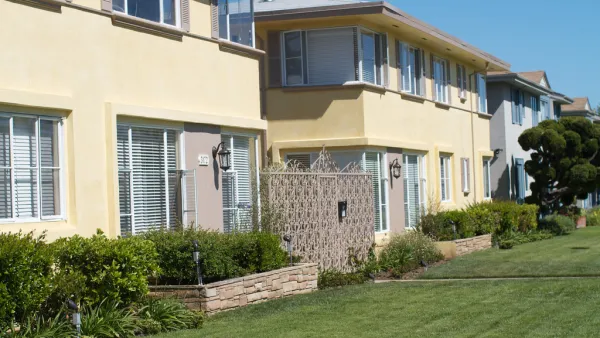
Does $15 an Hour Mean Higher Rents?
Los Angeles will raise its minimum wage incrementally to $15 an hour by 2020. But with an inadequate supply of new housing, will this new spending power simply enable landlords to charge more? Some economists say yes.
Who Is the Smart City For?
In India, smart cities are being built with much fanfare and government support. However, critics rightfully worry that such models could end up excluding the very people who need its benefits the most.
$400 Million Needed for Oakland NFL Stadium Deal Lacks Political Support
One city is prioritizing fiscal sanity over a new football stadium—at least for now.
Ideas for Housing Opportunity: Some Sorta Oldish, Lots Very NUish
The latest in a list of tip-of-the-spear practitioners combining their own experience and expertise with the lessons of others who share similar commitments to the easy-to-grasp, hard-to-realize ideas driving new urbanism.
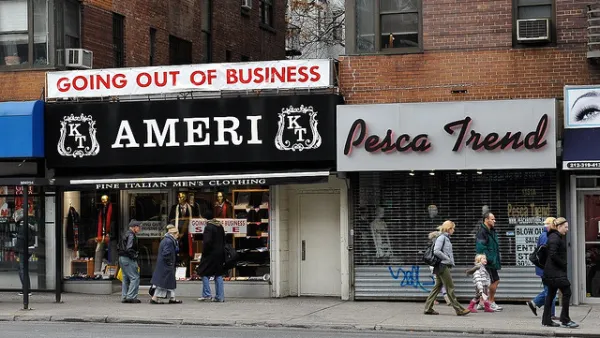
'High-Rent Blight' on the Rise in Manhattan Retail Districts
Why are so many shops closing in New York's richest and best-known neighborhoods?
Neighborhood Activists Mobilize Against Mid-Rise Developments in Toronto
There are neighborhoods where residents are concerned about new developments raising prices, and there are neighborhoods where residents are concerned about new developments lowering home values. Toronto is currently dealing with the latter.
The Real Estate Rebound Comes to Southwest Denver
The Denver Post reports that a forgotten corner of Denver is showing signs of recovery from the foreclosure crisis.

FREE Course: Walkable City 1: Why Walkability?
After describing his path towards focusing on walkability as the essence of good planning, Jeff Speck marches through his five principal reasons for making more walkable places.
Reinventing Malls: Planning Alchemy—Turning Gray Fields Into Gold
The course focuses on the opportunities and imperatives that shape reinvention of mall sites.

City of Rosemead
Rutgers University, Edward J. Bloustein School of Planning and Public Policy
One Hundred Miles
University of Michigan School for Environment and Sustainability (SEAS)
Hunter College, City University of New York (CUNY)
The Architects Foundation
City of Cambridge
Montrose County
The Pocatello Development Authority









