Dwell small; live large. It's something many passionate urbanists have been working on for a decade. Could 2015 finally be the year small goes big?


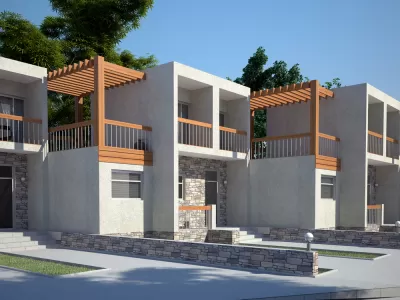
"One of the big lessons of the cottage movement: Design matters. A lot."
"Before they set aside their concerns, most people — especially those who live nearby — need a demonstration of how these small-scale neighborhoods can add to the beauty and function of existing neighborhoods. And the tolerance of neighbors is essential, since cottage-scale communities need to be in places that offer the kinds of amenities already associated with high-value locations — access to work, transit, schools, shops and restaurants within walking or biking distance."
"Simply put: The trade-off for living in small spaces is proximity to most daily needs not far outside your door."
The article includes a run down of some successful cottage courts and pocket neighborhoods, as well as some pointers to where the conversations are happening to generate more small-scale living.
Read the full story: Small to Go Big in 2015? Maybe. Finally. Here’s why.

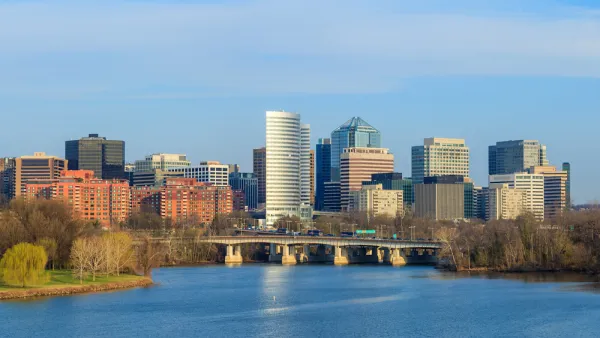
Urban vs. Suburban: The Debate Continues
However your read the tea leaves, if it's true the 'burbs are reinventing themselves in the new era, it’s walkable, compact urbanism that's providing a game plan.
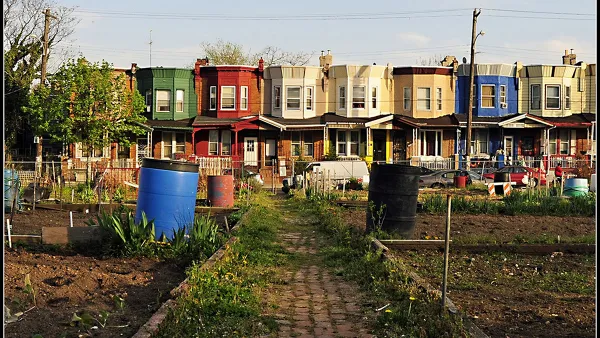
Are We There Yet? Affordability in the 'New Normal'
In the new normal, an affordable lifestyle is suddenly of interest to a larger circle of us. Here's what some interesting innovators are doing about it, between now and when our politics and legal structure fully align with our needs.
What Can Sandy Learn from Katrina about Housing?
As the Sandy clean-up gets underway, could this be an opportunity for the Eastern Seaboard to apply some of the rebuilding lessons learned along the Gulf Coast after Katrina? Ben Brown shares some pointers.

Planetizen Federal Action Tracker
A weekly monitor of how Trump’s orders and actions are impacting planners and planning in America.

California plans to bury El Niño’s downpour
If the state plays its cards right, it may be able to store a billion acre-feet of El Niño’s water in aquifers.

Chicago breaks ground on $3 billion megadevelopment
The new neighborhood, titled Foundry Park, will one day host 3,700 residences.

Want to study the Missouri River? Soon, you may need unanimous approval from 10 states
Legislation would require 10 governors’ permission to study or build projects moving water outside the basin.

Desperate measures: Advocates weigh draining Lake Powell to fill Colorado River
Draining the reservoir could reduce evaporation losses by a couple hundred thousand acre-feet.

This road in NYC is infamously dangerous — and Mamdani can't fix it
New York City's Ocean Parkway is known for reckless driving, but the power to implement safety measures lies with the state rather than the city.

FREE Course: Walkable City 1: Why Walkability?
After describing his path towards focusing on walkability as the essence of good planning, Jeff Speck marches through his five principal reasons for making more walkable places.
Reinventing Malls: Planning Alchemy—Turning Gray Fields Into Gold
The course focuses on the opportunities and imperatives that shape reinvention of mall sites.

City of Rosemead
Rutgers University, Edward J. Bloustein School of Planning and Public Policy
One Hundred Miles
Hunter College, City University of New York (CUNY)
The Architects Foundation
University of Cincinnati Online
City of Cambridge
Montrose County
The Pocatello Development Authority