In the new normal, an affordable lifestyle is suddenly of interest to a larger circle of us. Here's what some interesting innovators are doing about it, between now and when our politics and legal structure fully align with our needs.


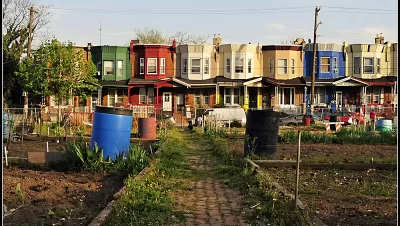
"The ways in which we’ve designed, financed, constructed and regulated land use development need some serious tweaking if we’re to align the ambitions of families and businesses in the new era with the infrastructure of community essential to their success."
"The trouble is, investing so much of our energy and so many of our resources in fine-tuning the Ponzi scheme has left us bummed and broke. If only there were some quick and easy way to reverse the trend and put us all back on track to enjoying the happiness and prosperity we were deprived of during the recent unpleasantness."
"Well, good luck with that."
Ben Brown goes on to use stories from his friends to address the recalcitrance in the economic recovery:
- Aligning affordable scale with design worthy of high-end, mixed-use infill in town sets standard for future growth in Chico, California, a la R John Anderson.
- Demographic change and economic pressures challenge communities to accommodate the reset Richard Florida predicts.
- Mercy Housing & Human Development (Hurricane Katrina) and Next Step (Hurricane Sandy) show the way toward design savvy affordable housing, thanks to Bruce Tolar and others.
- Affordable lifestyle isn't necessarily that affordable per square foot, as Ross Chapin shows in his beautifully-designed pocket neighborhoods of the Pacific Northwest.
Read the full story: Are We There Yet? Affordability in the ‘New Normal’
What Can Sandy Learn from Katrina about Housing?
As the Sandy clean-up gets underway, could this be an opportunity for the Eastern Seaboard to apply some of the rebuilding lessons learned along the Gulf Coast after Katrina? Ben Brown shares some pointers.
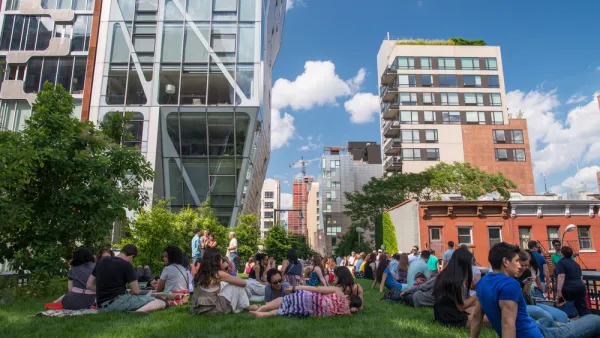
'The New Urban Crisis' and the High Line
A PBS NewsHour two-fer: an interview of urbanologist Richard Florida conducted in a walking tour of New York's famed High Line in the gentrifying West Chelsea neighborhood, a fitting backdrop for his new book, "The New Urban Crisis."
Florida, Florida, Florida
In his new book, Richard Florida worries about segregation and redefines "the creative class."

Planetizen Federal Action Tracker
A weekly monitor of how Trump’s orders and actions are impacting planners and planning in America.

California plans to bury El Niño’s downpour
If the state plays its cards right, it may be able to store a billion acre-feet of El Niño’s water in aquifers.

Desperate measures: Advocates weigh draining Lake Powell to fill Colorado River
Draining the reservoir could reduce evaporation losses by a couple hundred thousand acre-feet.

Voters across the country reject data centers
Dozens of communities voted on measures to restrict the buildout of data centers.

US buildings threatened, destroyed by fires set to triple by 2060
Researchers found a high fire risk for socioeconomically vulnerable neighborhoods in the American West.

LA residents may be allowed to paint their own crosswalks
Councilwoman Katy Yaroslavsky put out a motion instructing the Los Angeles Department of Public Transportation to study the feasibility of allowing volunteers to paint crosswalks.

FREE Course: Walkable City 1: Why Walkability?
After describing his path towards focusing on walkability as the essence of good planning, Jeff Speck marches through his five principal reasons for making more walkable places.
Reinventing Malls: Planning Alchemy—Turning Gray Fields Into Gold
The course focuses on the opportunities and imperatives that shape reinvention of mall sites.

City of Rosemead
Rutgers University, Edward J. Bloustein School of Planning and Public Policy
One Hundred Miles
Hunter College, City University of New York (CUNY)
The Architects Foundation
University of Cincinnati Online
City of Cambridge
Montrose County
The Pocatello Development Authority