As the Sandy clean-up gets underway, could this be an opportunity for the Eastern Seaboard to apply some of the rebuilding lessons learned along the Gulf Coast after Katrina? Ben Brown shares some pointers.


"If there's one upside in the succession of devastating weather events over the last decade, it's the opportunity to build on lessons learned. Time between disasters dulls response capacities; shorter gaps refine best practices. And for my money, no lessons are worth more than those connected with the evolution of sustainable neighborhood design."
As a leader in coastal resilience, Ben Brown applies lessons he's learned as Communications Director for both the Mississippi Renewal Forum after Hurricane Katrina and of the 90-day charrette for the Coastal Recovery Commission of Alabama after the BP Oil spill.
"First of all, this irony: The housing bust, the Great Recession and some major demographic shifts are likely to force a faster adaptation to reality in 2012 than in 2005. When Katrina hit, the housing and growth bubbles were expanding big time, and expectations - demands even - for a 'return to normal' imagined a recovery that recaptured the delusions."
Ben goes on to give inspiring examples of the people and places overcoming barriers to developing local cottage communities and pocket neighborhoods. As well as identifying the hurdles to remove.
"Since this important transition in neighborhood redevelopment will be driven, at least initially, by local government policy and state and federal funding that tend to default to low-bid processes and innovation-killing bureaucracy, the journey to that better place has a few barriers to overcome."
Thanks to Hazel Borys
Read the full story: Finally Thinkin’ Small: But can we build on what we’ve learned?

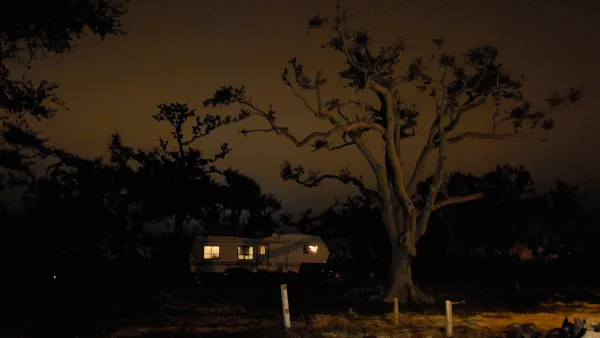
The Katrina Cottage Legacy
The New Urbanist Katrina Cottages initiative for the Gulf Coast appeared to be a failure but their legacy lives on in the SmartDwellings and in the Tiny House movement.
Cottages = Small Scale Infill & Affordability
They've been tough to build, thanks to a market skewed towards suburban-style houses via tax, infrastructure, mortgage, and land value subsidies, says Ben Brown. But six years after the storm, Katrina Cottages offer some hard-won solutions.
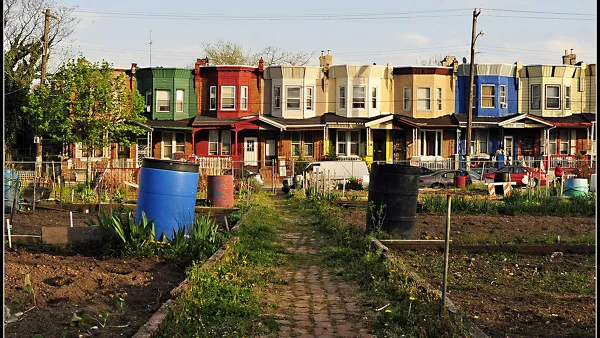
Are We There Yet? Affordability in the 'New Normal'
In the new normal, an affordable lifestyle is suddenly of interest to a larger circle of us. Here's what some interesting innovators are doing about it, between now and when our politics and legal structure fully align with our needs.

Planetizen Federal Action Tracker
A weekly monitor of how Trump’s orders and actions are impacting planners and planning in America.

Amtrak, CN end decades-long dispute with eight-year agreement
The new operating agreement establishes an updated framework for the companies to work together, including processes to resolve disputes.

Northwest rail fans eager for Sept. 30 debut of Amtrak’s Airo fleet
Get ready for that new train smell and more seats. But they won’t go faster or run more frequently on the Cascades route in Washington and Oregon.

LAX SkyLink opening delayed again, contractor won’t commit to new deadline
The project was supposed to open its doors to the public in 2023.

Caltrain may slash over one-third of its stations
If Bay Area voters reject two transit tax measures, Caltrain, BART and AC Transit will see steep service cuts.

A 'dangerous' precedent: North Carolina successfully pressures communities into voting for toll roads
Two mayors resigned from the Charlotte Regional Transportation Planning Organization after it voted in favor of the toll roads.

FREE Course: Walkable City 1: Why Walkability?
After describing his path towards focusing on walkability as the essence of good planning, Jeff Speck marches through his five principal reasons for making more walkable places.
Reinventing Malls: Planning Alchemy—Turning Gray Fields Into Gold
The course focuses on the opportunities and imperatives that shape reinvention of mall sites.

City of Thousand Oaks
City of Wisconsin Rapids
Harvard University Graduate School of Design
The Architects Foundation
University of Cincinnati Online
The Pocatello Development Authority
The Urban Renewal Agency of the City of Pocatello