They've been tough to build, thanks to a market skewed towards suburban-style houses via tax, infrastructure, mortgage, and land value subsidies, says Ben Brown. But six years after the storm, Katrina Cottages offer some hard-won solutions.


Ben Brown notes, "After disasters like Katrina, the spring floods and the recent killer tornadoes, replacement housing needs are severe. The push to immediately get people into some sort of shelter can conflict with another post-disaster hope, to build back better than ever. Katrina Cottages were conceived during the 2005 Forum in Biloxi to provide an alternative to FEMA cottages, offering emergency housing designed and built to transition to permanent dwellings. More importantly, from the "building back better than ever" perspective, the cottages could seed new neighborhoods of safe, appealing and affordable housing.
"Even when there were billions of dollars dedicated to affordable housing from the feds, the results - with the exception of programs like Hope VI - have been unpopular and costly to manage. Now, budget cuts are sure to restrict public sector investments even more."
Thanks to Hazel Borys
Read the full story: Six Years Later: Katrina Cottages take hold

What Can Sandy Learn from Katrina about Housing?
As the Sandy clean-up gets underway, could this be an opportunity for the Eastern Seaboard to apply some of the rebuilding lessons learned along the Gulf Coast after Katrina? Ben Brown shares some pointers.
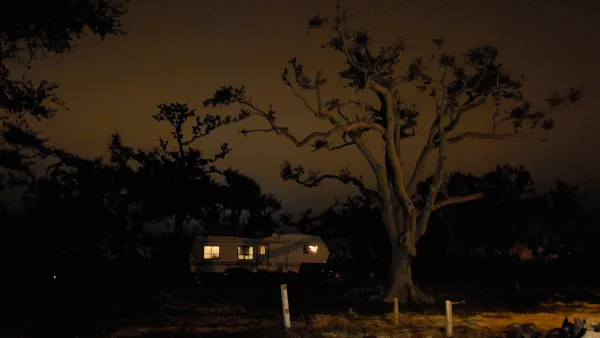
The Katrina Cottage Legacy
The New Urbanist Katrina Cottages initiative for the Gulf Coast appeared to be a failure but their legacy lives on in the SmartDwellings and in the Tiny House movement.
A Hurricane Response Lesson: Disrupt the Cycle of Futility
How do we disrupt the cycle of rebuilding things exactly as they were before—if slightly hardened—after increasingly powerful weather events?

Planetizen Federal Action Tracker
A weekly monitor of how Trump’s orders and actions are impacting planners and planning in America.

Amtrak, CN end decades-long dispute with eight-year agreement
The new operating agreement establishes an updated framework for the companies to work together, including processes to resolve disputes.

Northwest rail fans eager for Sept. 30 debut of Amtrak’s Airo fleet
Get ready for that new train smell and more seats. But they won’t go faster or run more frequently on the Cascades route in Washington and Oregon.

NYC to turn city-owned property into thousands of homes
The city has scheduled a public hearing regarding the development for October.

Buses travel at 5mph along this route in NYC. The Bronx's first-ever busway looks to change that
Prior to the busway, buses on the Bx36 route traveled as slowly as 5 miles per hour.

Pittsburg launches 'EZ permits,' aims for one-day turnaround for low-risk permits
The pilot ‘fast lane’ for permits is part of a bundle of modernization efforts for Pittsburg’s permitting process.

FREE Course: Walkable City 1: Why Walkability?
After describing his path towards focusing on walkability as the essence of good planning, Jeff Speck marches through his five principal reasons for making more walkable places.
Reinventing Malls: Planning Alchemy—Turning Gray Fields Into Gold
The course focuses on the opportunities and imperatives that shape reinvention of mall sites.

City of Thousand Oaks
City of Wisconsin Rapids
Harvard University Graduate School of Design
The Architects Foundation
University of Cincinnati Online
The Pocatello Development Authority
The Urban Renewal Agency of the City of Pocatello