Transportation
Complete Streets Policies: Easy to Adopt and Easy to Ignore
More and more local governments are adopting complete streets policies. But gaps in implementation in these places suggests that the building of actual complete streets is dependent on a true culture shift. Angie Schmitt looks at the obstacles.
D.C.'s Gridlock Has Improved; What Can Be Done to Sustain Recent Gains?
Recent studies report a noted decrease in traffic congestion in the D.C. area. Robert McCartney credits two trends and asks how the area should spend additional transportation revenues that will be generated by recent tax increases.
Proposed Virginia Parkway: Gift to Developers or Necessary for Region's Growth?
In Northern Virginia, where D.C.'s suburbs dissolve into rural landscape, the state's Department of Transportation is planning the Bi-County Parkway. Opponents question whether the state should provide a multi-billion dollar subsidy to developers.
Nation's First VMT Fee Bill Passed By Oregon Legislature
If Gov. John Kitzhaber signs SB 810, as expected, Oregon will create a voluntary program for up to 5,000 motorists who will pay 1.5-cents for every mile they drive instead of the 30-cent state fuel excise tax.
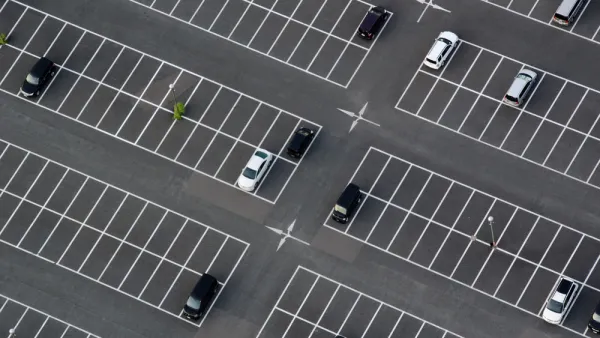
From Peak Car to Peak Parking?
Fewer cars on the road, less driving, why not fewer parking spots? Cities like D.C., L.A., Denver, Philadelphia are responding by reducing or eliminating parking minimums, while Portland, which had already eliminated them, are bringing them back.
Call Off the 'Peak Car' Celebrations
Planners and environmentalists have applauded the seven-year decline in America's auto ownership levels with understandable enthusiasm. But around the world, automobile production has never been higher.
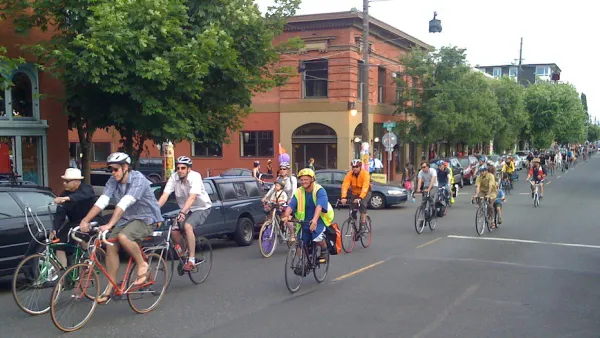
How Did Portland Become North America's Bicycling Capital?
In retrospect, it may seem like Portland’s biking boom was inevitable. But not too long ago the city was eclipsed by other Pac NW cities for share of bicycle commuters. What happened between 2002-2008 to kick-start the city’s bike craze?
The Great Repurposing: Envisioning the City of Driverless Cars
With driverless cars poised to appear in the not-too-distant future, planners and engineers are beginning to envision the effect on the urban landscape and the spaces within cars themselves. Nick Bilton shares some of the predictions.
Is Walkability a Universal Human Right?
An Indian newspaper has started a campaign aimed at making Chennai more accommodating to pedestrians. The issue is particularly acute in the global South, as growing auto ownership threatens the safety of those yet to climb the economic ladder.
Quebec Rail Disaster Revives Oil Pipeline vs. Crude-By-Rail Debate
In a scene reminiscent of the Denzel Washington movie "Unstoppable", but without the heroic ending, an unmanned, 72-car oil train traveled 7 miles to Lac-Mégantic, pop. 6,000, where it derailed, setting off a fireball downtown. 5 fatalities so far.
Despite Lean Budgets, European Transit Goes Green
Despite widespread budget woes and austerity programs, European cities are pushing forward with plans to reduce greenhouse gas emissions by retrofitting existing transit systems in a "slow-motion revolution" in electric transport, reports Erica Gies.
Wash. Gas Tax Legislation Fails in Senate, Killing Columbia River Crossings
Wash. state senate Republicans dealt a crushing blow to governors of both Wash. and Ore. by killing a 10.5-cent gas tax bill needed to tap $850 million in federal funds to finance rebuilding of two, obsolete I-5 spans over the Columbia River.
Cargo Bikes Go Mainstream
Spotted on the front page of Saturday's WSJ is a picture of a Yuba Mundo longtail cargo bike, directing readers to Tom Vanderbilt's feature article of the "Off Guard" section describing the many types of cargo bikes. Main cargo is kids and groceries.
Pa. Budget Passes but Without New Transportation Package
Gov. Tom Corbett's goal of increasing transportation funding was thwarted by political differences in the House. Republicans couldn't agree on lifting the gas tax cap while Democrats wanted more funding for transit. They will try again in the fall.
BART Strike Provides Lessons for Creating a Resilient Bay Area
As news reports indicate, the recent BART strike made a mess out of the Bay Area's morning and evening commutes. For planning think tank SPUR, it has helped to illustrate significant gaps in the region's transportation infrastructure.
Divvy Coasts Onto Chicago Streets
Since we covered the many problems encountered by users of New York's Citi Bike, we though it only fair to share news of a large-scale bike share system that recently launched with far fewer problems (at least according to one reporter).
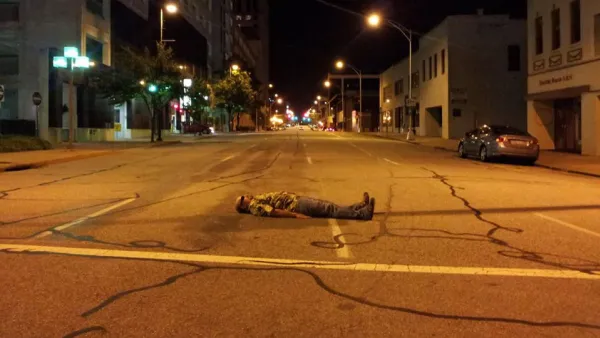
Stroading: A Meme to Advertise America's Overbuilt Streets
Have you heard of stroading? While we don't recommend you try this at home, it behooves us to tell you about the ingenious meme that Charles Marohn and his friends have devised to point out America's over-engineered urban streets.
Outgoing DOT Head Shares His Vision of the Future of Transportation in America
On Tuesday, Anthony Foxx was sworn in as America's 17th transportation secretary. But before he could take over the keys to the department, outspoken DOT head Ray LaHood spoke with Sommer Mathis about the future of transport in America.
Are Electric Cars Any Greener Than Conventional Ones?
As substantial state and federal subsidies for electric cars continue, and the number of vehicles on America's roads climbs, a new article is raising questions about their environmental benefits over conventional cars.
Infrastructural Tourism Takes Off
Shannon Mattern examines how media scholars and environmental artists are working to reveal the material and immaterial infrastructures that shape our lives, from the Interstate to the Internet.

FREE Course: Walkable City 1: Why Walkability?
After describing his path towards focusing on walkability as the essence of good planning, Jeff Speck marches through his five principal reasons for making more walkable places.
Reinventing Malls: Planning Alchemy—Turning Gray Fields Into Gold
The course focuses on the opportunities and imperatives that shape reinvention of mall sites.

City of Rosemead
Rutgers University, Edward J. Bloustein School of Planning and Public Policy
One Hundred Miles
University of Michigan School for Environment and Sustainability (SEAS)
Hunter College, City University of New York (CUNY)
The Architects Foundation
City of Cambridge
The Pocatello Development Authority
The Urban Renewal Agency of the City of Pocatello









