Transportation
54 Ideas for Fixing D.C.
In advance of next year's mayoral race, the Washington City Paper has reached out to local leaders for their suggestions for how to fix one of the city's intractable problems. See their 28 detailed, and 26 simple, solutions.
Infrastructure Investment Pushed by Obama at Jacksonville Port
President Obama used a tour of Jaxport to promote infrastructure investment, e.g. accommodating larger ships and intermodal cargo transfer to trains to stimulate the economy and increase employment, and maybe convert some Republicans to the cause.
Has Critical Mass Ridden Itself to Irrelevance?
The mass ride through city streets was originally intended to increase the visibility of bicyclists. Though it still attracts participants, as bicycling has been embraced as a mainstream mode, Critical Mass has lost its relevance, says Joe Eskenazi.
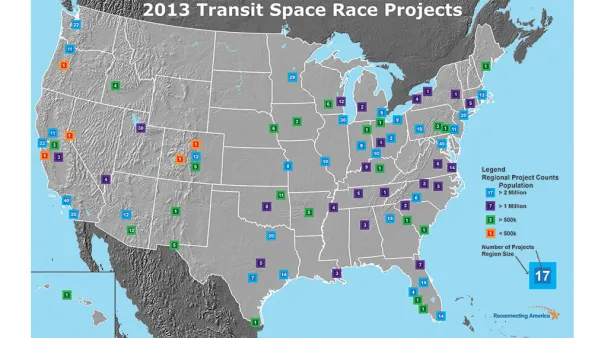
Mapping Every Active Transit Project in America
Reconecting America has assembled its Transit Space Race guide for 2013, a handy interactive map and spreadsheet of the 721 fixed guideway projects being planned or built across the U.S. The projects represent more than $250 billion in investments.
Could Citywide BRT Slow NYC's Growing Transportation Inequity?
With five routes already in operation, New York City leaders are getting the taste for bus rapid transit. This week, one city council member introduced a bill that would require the city to develop a plan for a citywide BRT network.
Excessive Speed Suspected in Deadly Spanish Derailment
79 people are confirmed to have died so far in Spain's most deadly train accident in 40 years. The accident involved an Alvia train traveling from Madrid to Ferrol that was said to be operating at more than twice the advised speed when it derailed.
MTA Studies Millennials to Meet Their Transit Needs
When it comes to meeting the transit needs of millennials, real time information about train arrivals is as important as the transit itself. This is one of the key findings of a New York MTA survey conducted to inform strategies for the future.
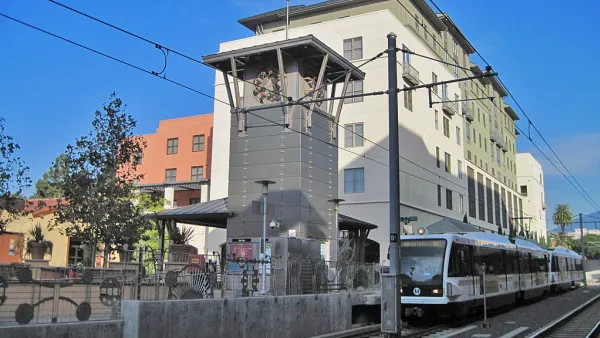
Why the New Urbanist Visionary Who Coined 'TOD' Wants to Retire It
In a wide-ranging interview with Metropolis Magazine, CNU founding member Peter Calthorpe opines on China's planning process, the future of America's suburbs, CA high-speed rail, and why he would retire the term 'transit oriented development'.
America's Best Urban Bike Paths
Mark Lebetkin highlights 19 of the best bike paths to be found in America's cities. From San Deigo to Boston, the paths were chosen for their beauty, accessibility, and functionality.
Should Electric Cars Get Free Parking?
Ideally, the best way to encourage sales of non-polluting electric vehicles would be to price carbon emissions. But if that isn't possible, why not reward EV owners with perks such as free parking; or would that be a distortionary incentive?
San Francisco Aims to Tame Techie Transit
Tired of the private shuttles ferrying tech workers to Silicon Valley campuses clogging city streets and illegally using 250 city bus stops, San Francisco's Municipal Transportation Agency has proposed a plan for regulating their operation.
America's Rail Station Renaissance
The latter half of the twentieth century saw the slow decline of train travel and the deterioration of America's grand railroad stations. Amid growing rail readership, the country is embarking on a new era of station construction.
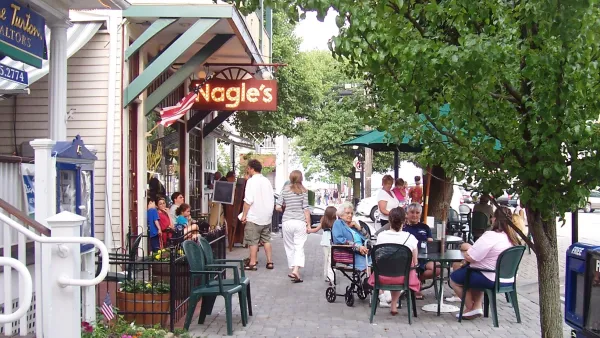
Why Don't We Allow Designers to Create Cites for People?
Cars kill us and drive us crazy; while walking and biking improve our mental and physical health. So why do we design our cities for cars, asks Jeffrey Tumlin.
Mass. Gas Tax Hike Bill Vetoed: Not Big Enough!
In an unusual move for governors loath to increase gas taxes, Mass. Governor Deval Patrick vetoed a bill not because it would raise and index gas taxes by three cents, but because the increase may not be big enough if Rt. 90 tolls are eliminated.
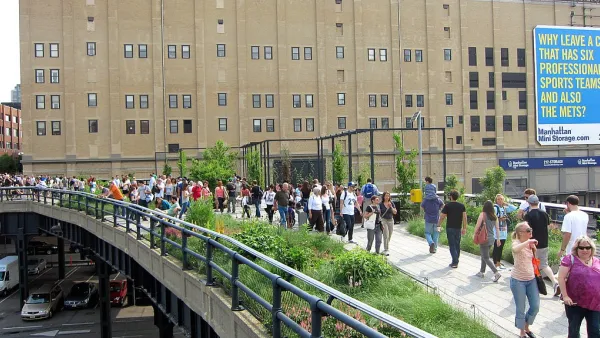
The High Line Highway
One of Manhattan's most popular tourist attractions, the linear, elevated urban park that existed as a freight rail line as late as 1980, is also a means of commuting to work - but only for walkers as cycling is prohibited along the High Line.
How Will Bike-Centric Urbanism Reshape Our Cities?
For the past half-century, the automobile has played a profound role in shaping the form of our cities and suburbs. A new book examines the effects cycle-centric planning will have on the built environment.
Extreme Heat Is Bad News for Transportation
Extreme temperatures aren’t just a public health concern: they also affect how we get around.
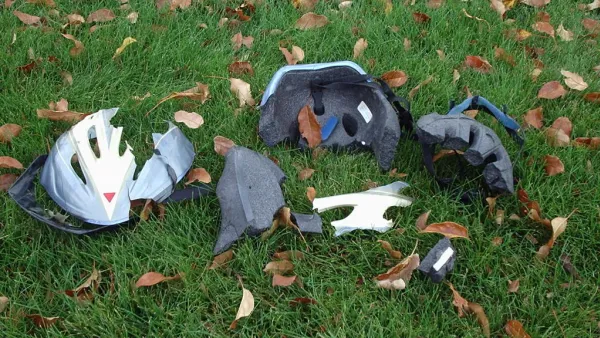
Bike Helmets and Bike Share: Unhappy Marriage in Need of Divorce
The bike helmet requirement will ultimately destroy the success of the planned Seattle bike share program, writes Danny Westneat, Seattle Times staff columnist, after experiencing first-hand the world's most successful bike share program in Paris.
Friday Funny: Citi Bike's Infernal Haters
If you're looking or a sign that Bike Share has hit the big time this may be it: Victoria's Secret Angels have come out firmly against it.
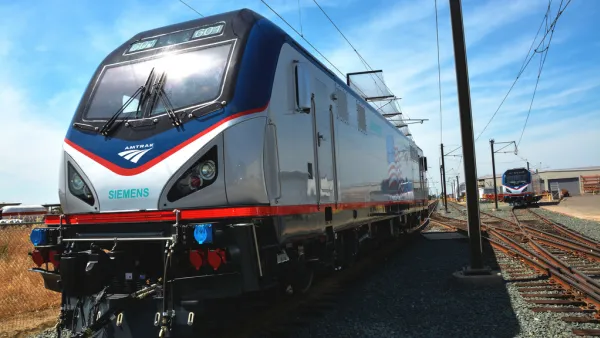
Amtrak's New Outdated Trains
Why is Amtrak spending $500 million on new locomotives for the Northeast Corridor that are "fat, expensive and slow"? Americans have the the Federal Railroad Administration's "globally-unique crash safety standards" to thank.

FREE Course: Walkable City 1: Why Walkability?
After describing his path towards focusing on walkability as the essence of good planning, Jeff Speck marches through his five principal reasons for making more walkable places.
Reinventing Malls: Planning Alchemy—Turning Gray Fields Into Gold
The course focuses on the opportunities and imperatives that shape reinvention of mall sites.

City of Rosemead
Rutgers University, Edward J. Bloustein School of Planning and Public Policy
One Hundred Miles
University of Michigan School for Environment and Sustainability (SEAS)
Hunter College, City University of New York (CUNY)
The Architects Foundation
City of Cambridge
The Pocatello Development Authority
The Urban Renewal Agency of the City of Pocatello









