Why is Amtrak spending $500 million on new locomotives for the Northeast Corridor that are "fat, expensive and slow"? Americans have the the Federal Railroad Administration's "globally-unique crash safety standards" to thank.


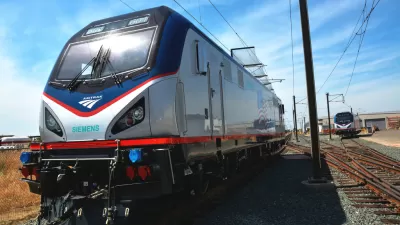
"Northeast Corridor, meet your new locomotives: Amtrak’s Cities Sprinter, a new electric locomotive built by Siemens and commissioned in 2010 for half a billion dollars, has arrived on the East Coast for testing," writes Stephen Jacob Smith. "Like all of Amtrak’s trains, the Amtrak Cities Sprinter will be fatter, slower, more expensive and more difficult to maintain than the models that Siemens sells to other countries."
"The ACS-64, as the new model is known, is based on Siemens’ EuroSprinter, but has been modified to meet American regulators’ globally-unique crash safety standards," he adds. "Many railroads across the world order changes to their trains, but the special requirements of the Federal Railroad Administration go far beyond what others ask."
Read the full story: Amtrak’s Fat, Expensive and Slow New Northeast Corridor Locomotives Arrive for Testing

Amtrak’s Northeast Corridor Awarded $16.4 Billion in Federal Funds
The funding will support track construction, bridge replacement, and other upgrades to make passenger train service faster and more reliable.
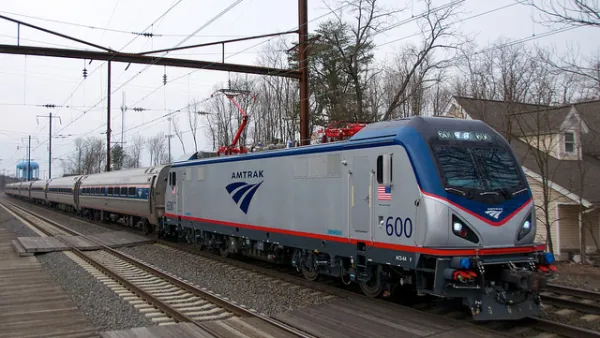
New Locomotives Hit the SEPTA Tracks
Philadelphia regional commuters will get some fancy new trains to ride.
Focus on Positive Train Control after Amtrak Train 501 Derails in Washington
Excessive speed is thought to be the cause of the deadly derailment on Dec. 18. Positive train control, which likely would have slowed down the train, was installed on the tracks and locomotive but was not yet operational.

Planetizen Federal Action Tracker
A weekly monitor of how Trump’s orders and actions are impacting planners and planning in America.

‘Going backwards:’ Baltimore mayor, students rally against state's transit funding plan
Maryland's proposed six-year plan provides no funding for Baltimore’s BMORE bus program and reduces its road maintenance funding.

Detroit to transform waterfront with $2.2 billion investment
Developers will convert about 18 acres of unused parking lot space into civic spaces.

Data center developers are using lawsuits, cash offers to ‘overwhelm’ rural America
Newsrooms in five states worked together to uncover the tactics big tech developers use to buy land from reluctant communities.

U.S.-Iran war may have ‘devastating’ impact on cost to warm homes
Vermont and Maine residents may see a 76% increase in the cost of warming their homes this winter.

Senate bill would ‘overhaul’ environmental permitting laws
Under the proposed act, government agencies would also not be able to suspend or rescind permits after granting them.

FREE Course: Walkable City 1: Why Walkability?
After describing his path towards focusing on walkability as the essence of good planning, Jeff Speck marches through his five principal reasons for making more walkable places.
Reinventing Malls: Planning Alchemy—Turning Gray Fields Into Gold
The course focuses on the opportunities and imperatives that shape reinvention of mall sites.

One Hundred Miles
County of Mendocino
planning NEXT
The Architects Foundation
University of Cincinnati Online
Montrose County
Northern Illinois Transit Authority (NITA)
The Pocatello Development Authority